


Page 178 - The Netter Collection of Medical Illustrations - Integumentary System_ Volume 4 ( PDFDrive )
P. 178
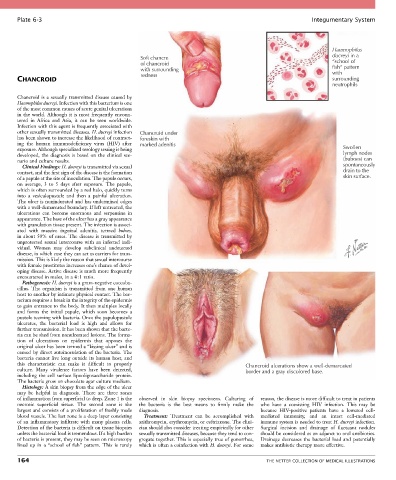
Plate 6-3                                                                                             Integumentary System


                                                                                                                    Haemophilus
                                                  Soft chancre                                                      ducreyi in a
                                                  of chancroid                                                      “school of
                                                  with surrounding                                                  fish” pattern
                                                  redness                                                           with
       CHANCROID                                                                                                    surrounding
                                                                                                                    neutrophils
       Chancroid is a sexually transmitted disease caused by
       Haemophilus ducreyi. Infection with this bacterium is one
       of the most common causes of acute genital ulcerations
       in the world. Although it is most frequently encoun-
       tered  in  Africa  and  Asia,  it  can  be  seen  worldwide.
       Infection with this agent is frequently associated with
       other sexually transmitted diseases. H. ducreyi infection   Chancroid under
       has been shown to increase the likelihood of contract-  foreskin with
       ing  the  human  immunodeficiency  virus  (HIV)  after   marked adenitis
       exposure. Although specialized serology testing is being                                                         Swollen
       developed,  the  diagnosis  is  based  on  the  clinical  sce-                                                   lymph nodes
       nario and culture results.                                                                                       (buboes) can
         Clinical Findings: H. ducreyi is transmitted via sexual                                                       spontaneously
       contact, and the first sign of the disease is the formation                                                     drain to the
       of a papule at the site of inoculation. The papule occurs,                                                      skin surface.
       on  average,  3  to  5  days  after  exposure.  The  papule,
       which is often surrounded by a red halo, quickly turns
       into  a  vesiculopustule  and  then  a  painful  ulceration.
       The ulcer is nonindurated and has undermined edges
       with a well-demarcated boundary. If left untreated, the
       ulcerations  can  become  enormous  and  serpentine  in
       appearance. The base of the ulcer has a gray appearance
       with granulation tissue present. The infection is associ-
       ated  with  massive  inguinal  adenitis,  termed  buboes,
       in about 50% of cases. The disease is transmitted by
       unprotected  sexual  intercourse  with  an  infected  indi-
       vidual.  Women  may  develop  subclinical  undetected
       disease, in which case they can act as carriers for trans-
       mission. This is likely the reason that sexual intercourse
       with female prostitutes increases one’s chance of devel-
       oping disease. Active disease is much more frequently
       encountered in males, in a 4 : 1 ratio.
         Pathogenesis: H. ducreyi is a gram-negative coccoba-
       cillus.  The  organism  is  transmitted  from  one  human
       host to another by intimate physical contact. The bac-
       terium requires a break in the integrity of the epidermis
       to gain entrance to the body. It then multiples locally
       and  forms  the  initial  papule,  which  soon  becomes  a
       pustule teeming with bacteria. Once the papulopustule
       ulcerates,  the  bacterial  load  is  high  and  allows  for
       further transmission. It has been shown that the bacte-
       ria can be shed from nonulcerated lesions. The forma-
       tion  of  ulcerations  on  epidermis  that  opposes  the
       original ulcer has been termed a “kissing ulcer” and is
       caused by direct autoinoculation of the bacteria. The
       bacteria cannot live long outside its human host, and
       this  characteristic  can  make  it  difficult  to  properly                   Chancroid ulcerations show a well-demarcated
       culture.  Many  virulence  factors  have  been  detected,                      border and a gray discolored base.
       including the cell surface lipooligosaccharide protein.
       The bacteria grow on chocolate agar culture medium.
         Histology: A skin biopsy from the edge of the ulcer
       may  be  helpful  in  diagnosis.  There  are  three  zones
       of inflammation from superficial to deep. Zone 1 is the   observed  in  skin  biopsy  specimens.  Culturing  of     reason, the disease is more difficult to treat in patients
       necrotic  superficial  tissue.  The  second  zone  is  the   the  bacteria  is  the  best  means  to  firmly  make  the   who  have  a  coexisting  HIV  infection.  This  may  be
       largest and consists of a proliferation of freshly made   diagnosis.                because  HIV-positive  patients  have  a  lowered  cell-
       blood vessels. The last zone is a deep layer consisting   Treatment:  Treatment  can  be  accomplished  with   mediated  immunity,  and  an  intact  cell-mediated
       of  an  inflammatory  infiltrate  with  many  plasma  cells.   azithromycin, erythromycin, or ceftriaxone. The clini-  immune system is needed to treat H. ducreyi infection.
       Detection of the bacteria is difficult on tissue biopsies   cian should also consider treating empirically for other   Surgical  incision  and  drainage  of  fluctuant  nodules
       unless the bacterial load is tremendous. If a high burden   sexually transmitted diseases, because they tend to con-  should be considered as an adjunct to oral antibiotics.
       of bacteria is present, they may be seen on microscopy   gregate together. This is especially true of gonorrhea,   Drainage  decreases  the  bacterial  load  and  potentially
       lined  up  in  a  “school  of  fish”  pattern.  This  is  rarely   which is often a coinfection with H. ducreyi. For some   makes antibiotic therapy more effective.

       164                                                                                   THE NETTER COLLECTION OF MEDICAL ILLUSTRATIONS

