


Page 182 - The Netter Collection of Medical Illustrations - Integumentary System_ Volume 4 ( PDFDrive )
P. 182
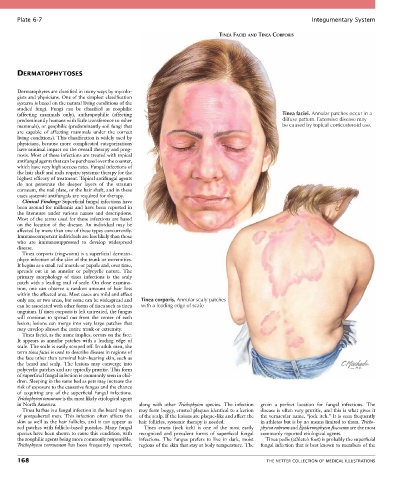
Plate 6-7                                                                                             Integumentary System

                                                                             TINEA FACIEI AND TINEA CORPORIS


       DERMATOPHYTOSES


       Dermatophytes are classified in many ways by mycolo-
       gists and physicians. One of the simplest classification
       systems is based on the natural living conditions of the
       studied  fungi.  Fungi  can  be  classified  as  zoophilic
       (affecting  mammals  only),  anthropophilic  (affecting                                     Tinea faciei. Annular patches occur in a
       predominantly humans with little transference to other                                      diffuse pattern. Extensive disease may
       mammals), or geophilic (predominantly soil fungi that                                       be caused by topical corticosteroid use.
       are  capable  of  affecting  mammals  under  the  correct
       living conditions). This classification is widely used by
       physicians,  because  more  complicated  categorizations
       have minimal impact on the overall therapy and prog-
       nosis. Most of these infections are treated with topical
       antifungal agents that can be purchased over the counter,
       which have very high success rates. Fungal infections of
       the hair shaft and nails require systemic therapy for the
       highest efficacy of treatment. Topical antifungal agents
       do  not  penetrate  the  deeper  layers  of  the  stratum
       corneum, the nail plate, or the hair shaft, and in these
       cases systemic antifungals are required for therapy.
         Clinical Findings: Superficial fungal infections have
       been around for millennia and have been reported in
       the  literature  under  various  names  and  descriptions.
       Most of the terms used for these infections are based
       on  the  location  of  the  disease.  An  individual  may  be
       affected by more than one of these types concurrently.
       Immunocompetent individuals are less likely than those
       who  are  immunosuppressed  to  develop  widespread
       disease.
         Tinea corporis (ringworm) is a superficial dermato-
       phyte infection of the skin of the trunk or extremities.
       It begins as a small red macule or papule and, over time,
       spreads  out  in  an  annular  or  polycyclic  nature.  The
       primary  morphology  of  tinea  infections  is  the  scaly
       patch with a leading trail of scale. On close examina-
       tion,  one  can  observe  a  random  amount  of  hair  loss
       within the affected area. Most cases are mild and affect
       only one or two areas, but some can be widespread and   Tinea corporis. Annular scaly patches
       can be associated with other forms of tinea such as tinea   with a leading edge of scale
       unguium. If tinea corporis is left untreated, the fungus
       will  continue  to  spread  out  from  the  center  of  each
       lesion; lesions can merge into very large patches that
       may envelop almost the entire trunk or extremity.
         Tinea faciei, as the name implies, occurs on the face.
       It  appears  as  annular  patches  with  a  leading  edge  of
       scale. The scale is easily scraped off. In adult men, the
       term tinea faciei is used to describe disease in regions of
       the face other than terminal hair–bearing skin, such as
       the  beard  and  scalp.  The  lesions  may  converge  into
       polycyclic patches and are typically pruritic. This form
       of superficial fungal infection is commonly seen in chil-
       dren. Sleeping in the same bed as pets may increase the
       risk of exposure to the causative fungus and the chance
       of  acquiring  any  of  the  superficial  fungal  infections.
       Trichophyton tonsurans is the most likely etiological agent
       in North America.                         along  with  other  Trichophyton  species.  The  infection   groin  a  perfect  location  for  fungal  infections.  The
         Tinea barbae is a fungal infection in the beard region   may form boggy, crusted plaques identical to a kerion   disease is often very pruritic, and this is what gives it
       of  postpubertal  men.  This  infection  often  affects  the   of the scalp. If the lesions are plaque-like and affect the   the vernacular name, “jock itch.” It is seen frequently
       skin as well  as  the hair follicles,  and it  can appear as     hair follicles, systemic therapy is needed.  in athletes but is by no means limited to them. Tricho-
       red  patches  with  follicle-based  pustules.  Many  fungal   Tinea  cruris  (jock  itch)  is  one  of  the  most  easily   phyton rubrum and Epidermophyton floccosum are the most
       species have been shown to cause this condition, with   recognized  and  prevalent  forms  of  superficial  fungal   commonly reported etiological agents.
       the zoophilic agents being more commonly responsible.   infections.  The  fungus  prefers  to  live  in  dark,  moist   Tinea pedis (athlete’s foot) is probably the superficial
       Trichophyton  verrucosum  has  been  frequently  reported,   regions of the skin that stay at body temperature. The   fungal infection that is best known to members of the

       168                                                                                   THE NETTER COLLECTION OF MEDICAL ILLUSTRATIONS

