


Page 180 - The Netter Collection of Medical Illustrations - Integumentary System_ Volume 4 ( PDFDrive )
P. 180
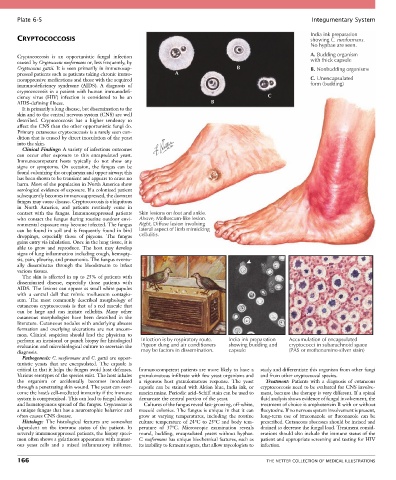
Plate 6-5                                                                                             Integumentary System

                                                                                                            India ink preparation
       CRYPTOCOCCOSIS                                                                                       showing C. neoformans.
                                                                                                            No hyphae are seen.

       Cryptococcosis  is  an  opportunistic  fungal  infection                                             A. Budding organism
       caused by Cryptococcus neoformans or, less frequently, by                                            with thick capsule
       Cryptococcus gattii. It is seen primarily in immunosup-                     B                        B. Nonbudding organisms
       pressed patients such as patients taking chronic immu-  A
       nosuppressive medications and those with the acquired                                                C. Unencapsulated
       immunodeficiency  syndrome  (AIDS).  A  diagnosis  of                                                form (budding)
       cryptococcosis  in  a  patient  with  human  immunodefi-
       ciency  virus  (HIV)  infection  is  considered  to  be  an                            C
       AIDS-defining illness.                                             B
         It is primarily a lung disease, but dissemination to the
       skin and to the central nervous system (CNS) are well
       described.  Cryptococcosis  has  a  higher  tendency  to
       affect the CNS than the other opportunistic fungi do.
       Primary cutaneous cryptococcosis is a rarely seen con-
       dition that is caused by direct inoculation of the yeast
       into the skin.
         Clinical Findings: A variety of infectious outcomes
       can  occur  after  exposure  to  this  encapsulated  yeast.
       Immunocompetent  hosts  typically  do  not  show  any
       signs  or  symptoms.  On  occasion,  the  fungus  can  be
       found colonizing the oropharynx and upper airway; this
       has been shown to be transient and appears to cause no
       harm. Most of the population in North America show
       serological evidence of exposure. If a colonized patient
       subsequently becomes immunosuppressed, the dormant
       fungus may cause disease. Cryptococcosis is ubiquitous
       in  North  America,  and  patients  routinely  come  in
       contact  with  the  fungus.  Immunosuppressed  patients   Skin lesions on foot and ankle.
       who contact the fungus during routine outdoor envi-  Above, Molluscum-like lesion.
       ronmental exposure may become infected. The fungus   Right, Diffuse lesion involving
       can  be  found  in  soil  and  is  frequently  found  in  bird   lateral aspect of limb mimicking
       droppings,  especially  those  of  pigeons.  The  fungus   cellulitis.
       gains entry via inhalation. Once in the lung tissue, it is
       able  to  grow  and  reproduce.  The  host  may  develop
       signs of lung inflammation including cough, hemopty-
       sis, pain, pleurisy, and pneumonia. The fungus eventu-
       ally  disseminates  through  the  bloodstream  to  infect
       various tissues.
         The skin is affected in up to 25% of patients with
       disseminated  disease,  especially  those  patients  with
       AIDS. The lesions can appear as small white papules
       with  a  central  dell  that  mimic  molluscum  contagio-
       sum.  The  most  commonly  described  morphology  of
       cutaneous cryptococcosis is that of a red macule that
       can  be  large  and  can  imitate  cellulitis.  Many  other
       cutaneous  morphologies  have  been  described  in  the
       literature. Cutaneous nodules with underlying abscess
       formation  and  overlying  ulcerations  are  not  uncom-
       mon.  Clinical  suspicion  should  lead  the  physician  to
       perform an incisional or punch biopsy for histological   Infection is by respiratory route.  India ink preparation  Accumulation of encapsulated
       evaluation and microbiological culture to ascertain the   Pigeon dung and air conditioners  showing budding and  cryptococci in subarachnoid space
       diagnosis.                                 may be factors in dissemination.   capsule         (PAS or methenamine-silver stain)
         Pathogenesis: C. neoformans and C. gattii are oppor-
       tunistic  yeasts  that  are  encapsulated.  The  capsule  is
       critical in that it helps the fungus avoid host defenses.   Immunocompetent patients are more likely to have a   study and differentiate this organism from other fungi
       Various serotypes of the species exist. The host inhales   granulomatous infiltrate with few yeast organisms and   and from other cryptococcal species.
       the  organism  or  accidentally  becomes  inoculated   a  vigorous  host  granulomatous  response.  The  yeast   Treatment:  Patients  with  a  diagnosis  of  cutaneous
       through a penetrating skin wound. The yeast can over-  capsule can be stained with Alcian blue, India ink, or   cryptococcosis need to be evaluated for CNS involve-
       come the host’s cell-mediated immunity if the immune   mucicarmine. Periodic acid–Schiff stain can be used to   ment, because the therapy is very different. If a spinal
       system is compromised. This can lead to fungal abscess   demarcate the central portion of the yeast.  fluid analysis shows evidence of fungal involvement, the
       and hematogenous spread of the fungus. Cryptococcus is   Cultures of the fungus reveal fast-growing, off-white,   treatment of choice is amphotericin B with or without
       a unique fungus that has a neurotrophic behavior and   mucoid colonies. The fungus is unique in that it can   flucytosine. If no nervous system involvement is present,
       often causes CNS disease.                 grow  at  varying  temperatures,  including  the  routine   long-term  use  of  itraconazole  or  fluconazole  can  be
         Histology:  The  histological  features  are  somewhat   culture  temperature  of  24°C  to  25°C  and  body  tem-  prescribed. Cutaneous abscesses should be incised and
       dependent  on  the  immune  status  of  the  patient.  In   perature  of  37°C.  Microscopic  examination  reveals   drained to decrease the fungal load. Treatment consid-
       severely immunosuppressed patients, the biopsy speci-  round,  budding,  encapsulated  yeasts  without  hyphae.     erations should also include the immune status of the
       men often shows a gelatinous appearance with numer-  C. neoformans has unique biochemical features, such as   patient and appropriate screening and testing for HIV
       ous  yeast  cells  and  a  mixed  inflammatory  infiltrate.   its inability to ferment sugars, that allow mycologists to   infection.

       166                                                                                   THE NETTER COLLECTION OF MEDICAL ILLUSTRATIONS

