


Page 206 - The Netter Collection of Medical Illustrations - Integumentary System_ Volume 4 ( PDFDrive )
P. 206
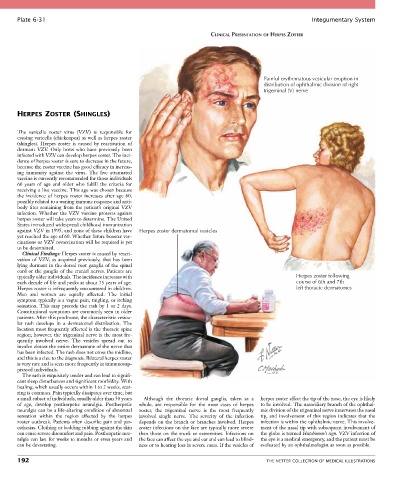
Plate 6-31                                                                                            Integumentary System

                                                                          CLINICAL PRESENTATION OF HERPES ZOSTER


                                                                                            Painful erythematous vesicular eruption in
                                                                                            distribution of ophthalmic division of right
                                                                                            trigeminal (V) nerve


       HERPES ZOSTER (SHINGLES)


       The  varicella  zoster  virus  (VZV)  is  responsible  for
       causing varicella (chickenpox) as well as herpes zoster
       (shingles).  Herpes  zoster  is  caused  by  reactivation  of
       dormant  VZV.  Only  hosts  who  have  previously  been
       infected with VZV can develop herpes zoster. The inci-
       dence of herpes zoster is sure to decrease in the future,
       because the zoster vaccine has good efficacy in increas-
       ing  immunity  against  the  virus.  The  live  attenuated
       vaccine is currently recommended for those individuals
       60  years  of  age  and  older  who  fulfill  the  criteria  for
       receiving a live vaccine. This age was chosen because
       the  incidence  of  herpes  zoster  increases  after  age  60,
       possibly related to a waning immune response and anti-
       body titer remaining from the patient’s original VZV
       infection.  Whether  the  VZV  vaccine  protects  against
       herpes zoster will take years to determine. The United
       States introduced widespread childhood immunization
       against VZV in 1995, and none of these children have   Herpes zoster dermatomal vesicles
       yet reached the age of 60. Whether future booster vac-
       cinations or VZV revaccination will be required is yet
       to be determined.
         Clinical Findings: Herpes zoster is caused by reacti-
       vation  of  VZV,  as  acquired  previously,  that  has  been
       lying dormant in the dorsal root ganglia of the spinal
       cord or the ganglia of the cranial nerves. Patients are
       typically older individuals. The incidence increases with                                       Herpes zoster following
       each decade of life and peaks at about 75 years of age.                                         course of 6th and 7th
       Herpes zoster is infrequently encountered in children.                                          left thoracic dermatomes
       Men  and  women  are  equally  affected.  The  initial
       symptom typically is a vague pain, tingling, or itching
       sensation. This may precede the rash by 1 or 2 days.
       Constitutional symptoms are commonly seen in older
       patients. After this prodrome, the characteristic vesicu-
       lar  rash  develops  in  a  dermatomal  distribution.  The
       location most frequently affected is the thoracic spine
       region; however, the trigeminal nerve is the most fre-
       quently  involved  nerve.  The  vesicles  spread  out  to
       involve almost the entire dermatome of the nerve that
       has been infected. The rash does not cross the midline,
       and this is a clue to the diagnosis. Bilateral herpes zoster
       is very rare and is seen more frequently in immunosup-
       pressed individuals.
         The rash is exquisitely tender and can lead to signifi-
       cant sleep disturbances and significant morbidity. With
       healing, which usually occurs within 1 to 2 weeks, scar-
       ring is common. Pain typically dissipates over time, but
       a small subset of individuals, usually older than 50 years   Although  the  thoracic  dorsal  ganglia,  taken  as  a   herpes zoster affect the tip of the nose, the eye is likely
       of  age,  develop  postherpetic  neuralgia.  Postherpetic   whole,  are  responsible  for  the  most  cases  of  herpes   to be involved. The nasociliary branch of the ophthal-
       neuralgia can be a life-altering condition of abnormal   zoster,  the  trigeminal  nerve  is  the  most  frequently   mic division of the trigeminal nerve innervates the nasal
       sensation  within  the  region  affected  by  the  herpes   involved  single  nerve.  The  severity  of  the  infection   tip, and involvement  of this  region  indicates  that the
       zoster outbreak. Patients often describe pain and par-  depends on the branch or branches involved. Herpes   infection is within the ophthalmic nerve. This involve-
       esthesias. Clothing or bedding rubbing against the skin   zoster infections on the face are typically more severe   ment of the nasal tip with subsequent involvement of
       can cause severe discomfort and pain. Postherpetic neu-  than those on the trunk or extremities. Infections on   the globe is termed Hutchinson’s sign. VZV infection of
       ralgia can last for weeks to months or even years and   the face can affect the eye and ear and can lead to blind-  the eye is a medical emergency, and the patient must be
       can be devastating.                       ness or to hearing loss in severe cases. If the vesicles of   evaluated by an ophthalmologist as soon as possible.

       192                                                                                   THE NETTER COLLECTION OF MEDICAL ILLUSTRATIONS

