


Page 205 - The Netter Collection of Medical Illustrations - Integumentary System_ Volume 4 ( PDFDrive )
P. 205
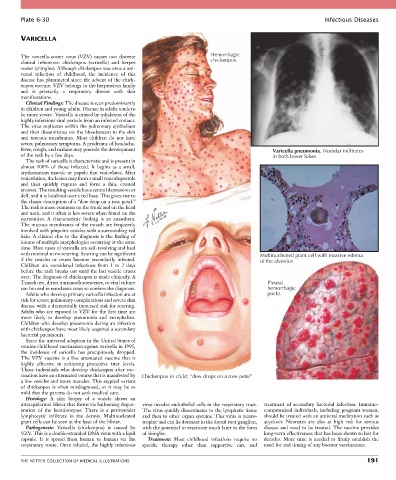
Plate 6-30                                                                                               Infectious Diseases


        VARICELLA


        The  varicella-zoster  virus  (VZV)  causes  two  discrete        Hemorrhagic
        clinical  infections:  chickenpox  (varicella)  and  herpes       chickenpox
        zoster (shingles). Although chickenpox was once a uni-
        versal  infection  of  childhood,  the  incidence  of  this
        disease has plummeted since the advent of the chick-
        enpox vaccine. VZV belongs to the herpesvirus family
        and  is  primarily  a  respiratory  disease  with  skin
        manifestations.
          Clinical Findings: The disease is seen predominantly
        in children and young adults. Disease in adults tends to
        be more severe. Varicella is caused by inhalation of the
        highly infectious viral particle from an infected contact.
        The virus replicates within the pulmonary epithelium
        and then disseminates via the bloodstream to the skin
        and  mucous  membranes.  Most  children  do  not  have
        severe pulmonary symptoms. A prodrome of headache,
        fever, cough, and malaise may precede the development                                  Varicella pneumonia. Nodular infiltrates
        of the rash by a few days.                                                             in both lower lobes
          The rash of varicella is characteristic and is present in
        almost  100%  of  those  infected.  It  begins  as  a  small,
        erythematous macule or papule that vesiculates. After
        vesiculation, the lesion may form a small vesiculopustule
        and  then  quickly  rupture  and  form  a  thin,  crusted
        erosion. The resulting vesicle has a central depression or
        dell, and it is localized over a red base. This gives rise to
        the classic description of a “dew drop on a rose petal.”
        The rash is more common on the trunk and on the head
        and neck, and it often is less severe when found on the
        extremities.  A  characteristic  finding  is  an  enanthem.
        The mucous membranes of the mouth are frequently
        involved with pinpoint vesicles with a surrounding red
        halo. A clinical clue to the diagnosis is the finding of
        lesions of multiple morphologies occurring at the same
        time. Most cases of varicella are self-resolving and heal
        with minimal to no scarring. Scarring can be significant                           Multinucleated giant cell with massive edema
        if  the  vesicles  or  crusts  become  secondarily  infected.                      of the alveolus
        Children  are  considered  infectious  from  1  to  2  days
        before the rash breaks out until the last vesicle crusts
        over. The diagnosis of chickenpox is made clinically. A
        Tzanck test, direct immunofluorescence, or viral culture                             Pleural
        can be used in nonclassic cases to confirm the diagnosis.                            hemorrhagic
          Adults who develop primary varicella infection are at                              pocks
        risk for severe pulmonary complications and severe skin
        disease with a dramatically increased risk for scarring.
        Adults who are exposed to VZV for the first time are
        more  likely  to  develop  pneumonia  and  encephalitis.
        Children who develop pneumonia during an infection
        with chickenpox have most likely acquired a secondary
        bacterial pneumonia.
          Since the universal adoption in the United States of
        routine childhood vaccination against varicella in 1995,
        the  incidence  of  varicella  has  precipitously  dropped.
        The  VZV  vaccine  is  a  live  attenuated  vaccine  that  is
        highly  effective  in  achieving  protective  titer  levels.
        Those  individuals  who  develop  chickenpox  after  vac-
        cination have an attenuated course that is manifested by  Chickenpox in child; “dew drops on a rose petal”
        a few vesicles and more macules. This atypical variant
        of chickenpox is often misdiagnosed, or it may be so
        mild that the parents do not seek medical care.
          Histology:  A  skin  biopsy  of  a  vesicle  shows  an
        intraepidermal blister that forms via ballooning degen-  virus invades endothelial cells in the respiratory tract.   treatment  of  secondary  bacterial  infection.  Immuno-
        eration  of  the  keratinocytes.  There  is  a  perivascular   The virus quickly disseminates to the lymphatic tissue   compromised individuals, including pregnant women,
        lymphocytic  infiltrate  in  the  dermis.  Multinucleated   and then to other organ systems. This virus is neuro-  should be treated with an antiviral medication such as
        giant cells can be seen at the base of the blister.  trophic and can lie dormant in the dorsal root ganglion,   acyclovir.  Neonates  are  also  at  high  risk  for  serious
          Pathogenesis:  Varicella  (chickenpox)  is  caused  by   with the potential to reactivate much later in the form   disease and need to be treated. The vaccine provides
        VZV. This is a double-stranded DNA virus with a lipid   of shingles.                long-term effectiveness that has been shown to last for
        capsule.  It  is  spread  from  human  to  human  via  the   Treatment:  Most  childhood  infections  require  no   decades.  More  time  is  needed  to  firmly  establish  the
        respiratory route. Once inhaled, the highly infectious   specific  therapy  other  than  supportive  care  and     need for and timing of any booster vaccinations.


        THE NETTER COLLECTION OF MEDICAL ILLUSTRATIONS                                                                          191

