


Page 207 - The Netter Collection of Medical Illustrations - Integumentary System_ Volume 4 ( PDFDrive )
P. 207
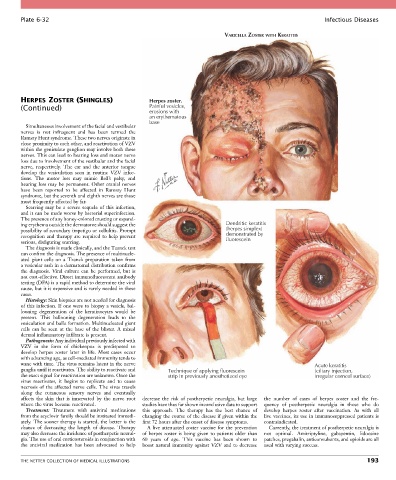
Plate 6-32                                                                                               Infectious Diseases

                                                                               VARICELLA ZOSTER WITH KERATITIS


        HERPES ZOSTER (SHINGLES)                     Herpes zoster.
        (Continued)                                  Painful vesicles,
                                                     erosions with
                                                     an erythematous
                                                     base
          Simultaneous involvement of the facial and vestibular
        nerves  is  not  infrequent  and  has  been  termed  the
        Ramsay Hunt syndrome. These two nerves originate in
        close proximity to each other, and reactivation of VZV
        within the geniculate ganglion may involve both these
        nerves. This can lead to hearing loss and motor nerve
        loss due to involvement of the vestibular and the facial
        nerve,  respectively.  The  ear  and  the  anterior  tongue
        develop  the  vesiculation  seen  in  routine  VZV  infec-
        tions.  The  motor  loss  may  mimic  Bell’s  palsy,  and
        hearing loss may be permanent. Other cranial nerves
        have  been  reported  to  be  affected  in  Ramsay  Hunt
        syndrome, but the seventh and eighth nerves are those
        most frequently affected by far.
          Scarring  may  be  a  severe  sequela  of  this  infection,
        and it can be made worse by bacterial superinfection.
        The presence of any honey-colored crusting or expand-
        ing erythema outside the dermatome should suggest the                  Dendritic keratitis
        possibility of secondary impetigo or cellulitis. Prompt                (herpes simplex)
        recognition  and  therapy  are  required  to  help  prevent            demonstrated by
        serious, disfiguring scarring.                                         fluorescein
          The diagnosis is made clinically, and the Tzanck test
        can confirm the diagnosis. The presence of multinucle-
        ated  giant  cells  on  a  Tzanck  preparation  taken  from
        a vesicular rash in a dermatomal distribution confirms
        the  diagnosis.  Viral  culture  can  be  performed,  but  is
        not cost-effective. Direct immunofluorescent antibody
        testing (DFA) is a rapid method to determine the viral
        cause, but it is expensive and is rarely needed in these
        cases.
          Histology: Skin biopsies are not needed for diagnosis
        of this infection. If one were to biopsy a vesicle, bal-
        looning  degeneration  of  the  keratinocytes  would  be
        present.  This  ballooning  degeneration  leads  to  the
        vesiculation and bulla formation. Multinucleated giant
        cells  can  be  seen  at  the  base  of  the  blister.  A  mixed
        dermal inflammatory infiltrate is present.
          Pathogenesis: Any individual previously infected with
        VZV  in  the  form  of  chickenpox  is  predisposed  to
        develop  herpes  zoster  later  in  life.  Most  cases  occur
        with advancing age, as cell-mediated immunity tends to
        wane with time. The virus remains latent in the nerve                                                 Acute keratitis
        ganglia until it reactivates. The ability to reactivate and   Technique of applying fluorescein       (ciliary injection,
        the exact signal for reactivation are unknown. Once the   strip in previously anesthetized eye        irregular corneal surface)
        virus  reactivates,  it  begins  to  replicate  and  to  cause
        necrosis  of  the  affected  nerve  cells.  The  virus  travels
        along  the  cutaneous  sensory  nerves  and  eventually
        affects  the  skin  that  is  innervated  by  the  nerve  root   decrease  the  risk  of  postherpetic  neuralgia,  but  large   the  number  of  cases  of  herpes  zoster  and  the  fre-
        where the virus became reactivated.       studies have thus far shown inconclusive data to support   quency  of  postherpetic  neuralgia  in  those  who  do
          Treatment:  Treatment  with  antiviral  medications   this  approach.  The  therapy  has  the  best  chance  of   develop  herpes  zoster  after  vaccination.  As  with  all
        from the acyclovir family should be instituted immedi-  changing the course of the disease if given within the   live vaccines, its use in immunosuppressed patients is
        ately. The sooner therapy is started, the better is the   first 72 hours after the onset of disease symptoms.  contraindicated.
        chance  of  decreasing  the  length  of  disease.  Therapy   A  live  attenuated  zoster  vaccine  for  the  pre vention    Currently, the treatment of postherpetic neuralgia is
        may also decrease the incidence of postherpetic neural-  of herpes zoster is being given to patients older than     not  optimal.  Amitriptyline,  gabapentin,  lidocaine
        gia. The use of oral corticosteroids in conjunction with   60  years  of  age.  This  vaccine  has  been  shown  to     patches, pregabalin, anticonvulsants, and opioids are all
        the  antiviral  medication  has  been  advocated  to  help   boost natural immunity against VZV and to decrease   used with varying success.


        THE NETTER COLLECTION OF MEDICAL ILLUSTRATIONS                                                                          193

