


Page 203 - The Netter Collection of Medical Illustrations - Integumentary System_ Volume 4 ( PDFDrive )
P. 203
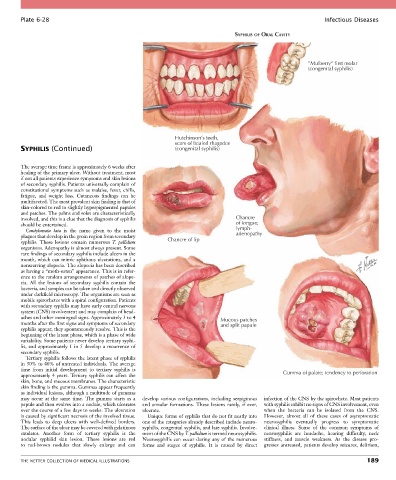
Plate 6-28                                                                                               Infectious Diseases

                                                                                  SYPHILIS OF ORAL CAVITY


                                                                                                           ”Mulberry“ first molar
                                                                                                           (congenital syphilis)


                                                             Hutchinson’s teeth,
                                                             scars of healed rhagades
        SYPHILIS (Continued)                                 (congenital syphilis)


        The average time frame is approximately 6 weeks after
        healing of the primary ulcer. Without treatment, most
        if not all patients experience symptoms and skin lesions
        of secondary syphilis. Patients universally complain of
        constitutional symptoms such as malaise, fever, chills,
        fatigue,  and  weight  loss.  Cutaneous  findings  can  be
        multifaceted. The most prevalent skin finding is that of
        skin-colored to red to slightly hyperpigmented papules
        and patches. The palms and soles are characteristically
        involved, and this is a clue that the diagnosis of syphilis               Chancre
        should be entertained.                                                    of tongue;
          Condylomata  lata  is  the  name  given  to  the  moist                 lymph-
        plaques that develop in the groin region from secondary                   adenopathy
        syphilis.  These  lesions  contain  numerous  T.  pallidum   Chancre of lip
        organisms. Adenopathy is almost always present. Some
        rare findings of secondary syphilis include ulcers in the
        mouth, which can mimic aphthous ulcerations, and a
        nonscarring alopecia. The alopecia has been described
        as having a “moth-eaten” appearance. This is in refer-
        ence to the random arrangements of patches of alope-
        cia.  All  the  lesions  of  secondary  syphilis  contain  the
        bacteria, and samples can be taken and directly observed
        under darkfield microscopy. The organisms are seen as
        mobile spirochetes with a spiral configuration. Patients
        with secondary syphilis may have early central nervous
        system (CNS) involvement and may complain of head-
        aches and other meningeal signs. Approximately 3 to 4                Mucous patches
        months after the first signs and symptoms of secondary               and split papule
        syphilis appear, they spontaneously resolve. This is the
        beginning of the latent phase, which is a phase of wide
        variability. Some patients never develop tertiary syphi-
        lis, and approximately 1 in 5 develop a recurrence of
        secondary syphilis.
          Tertiary syphilis follows the latent phase of syphilis
        in 30% to 40% of untreated individuals. The average
        time  from  initial  development  to  tertiary  syphilis  is                               Gumma of palate; tendency to perforation
        approximately 4 years. Tertiary syphilis can affect the
        skin, bone, and mucous membranes. The characteristic
        skin finding is the gumma. Gummas appear frequently
        as individual lesions, although a multitude of gummas
        may  occur  at  the  same  time.  The  gumma  starts  as  a   develop  various  configurations,  including  serpiginous   infection of the CNS by the spirochete. Most patients
        papule and then evolves into a nodule, which ulcerates   and  annular  formations.  These  lesions  rarely,  if  ever,   with syphilis exhibit no signs of CNS involvement, even
        over the course of a few days to weeks. The ulceration   ulcerate.                  when  the  bacteria  can  be  isolated  from  the  CNS.
        is caused by significant necrosis of the involved tissue.   Unique forms of syphilis that do not fit neatly into   However,  almost  all  of  these  cases  of  asymptomatic
        This  leads  to  deep  ulcers  with  well-defined  borders.   one of the categories already described include neuro-  neurosyphilis  eventually  progress  to  symptomatic
        The surface of the ulcer may be covered with gelatinous   syphilis, congenital syphilis, and late syphilis. Involve-  clinical  illness.  Some  of  the  common  symptoms  of
        exudates.  Another  form  of  tertiary  syphilis  is  the   ment of the CNS by T. pallidum is termed neurosyphilis.   neurosyphilis  are  headache,  hearing  difficulty,  neck
        nodular  syphilid  skin  lesion.  These  lesions  are  red     Neurosyphilis can occur during any of the numerous   stiffness,  and  muscle  weakness.  As  the  disease  pro-
        to  red-brown  nodules  that  slowly  enlarge  and  can   forms  and  stages  of  syphilis.  It  is  caused  by  direct   gresses untreated, patients develop seizures, delirium,


        THE NETTER COLLECTION OF MEDICAL ILLUSTRATIONS                                                                          189

