


Page 201 - The Netter Collection of Medical Illustrations - Integumentary System_ Volume 4 ( PDFDrive )
P. 201
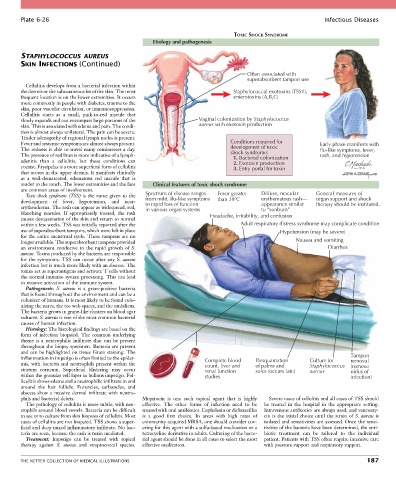
Plate 6-26                                                                                               Infectious Diseases

                                                                                  TOXIC SHOCK SYNDROME
                                                      Etiology and pathogenesis

        STAPHYLOCOCCUS AUREUS
        SKIN INFECTIONS (Continued)
                                                                                      Often associated with
                                                                                      superabsorbent tampon use
          Cellulitis develops from a bacterial infection within
        the dermis or the subcutaneous fat of the skin. The most                  Staphylococcal exotoxins (TSS1),
        frequent location is on the lower extremities. It occurs                  enterotoxins (A,B,C)
        more commonly in people with diabetes, trauma to the
        skin, poor vascular circulation, or immunosuppression.
        Cellulitis  starts  as  a  small,  pink-to-red  macule  that
        slowly expands and can encompass large portions of the        Vaginal colonization by Staphylococcus
        skin. This is associated with edema and pain. The condi-      aureus with exotoxin production
        tion is almost always unilateral. The pain can be severe.
        Tender adenopathy of regional lymph nodes is present.
        Fever and systemic symptoms are almost always present.                   Conditions required for        Early phase manifests with
        The redness is able to travel many centimeters a day.                    development of toxic           flu-like symptoms, fever,
        The presence of red lines is more indicative of a lymph-                 shock syndrome:                rash, and hypotension
                                                                                   1. Bacterial colonization
        adenitis  than  a  cellulitis,  but  these  conditions  can                2. Exotoxin production
        coexist. Erysipelas is a more superficial form of cellulitis               3. Entry portal for toxin
        that occurs in the upper dermis. It manifests clinically
        as  a  well-demarcated,  edematous  red  macule  that  is
        tender to the touch. The lower extremities and the face   Clinical features of toxic shock syndrome
        are common areas of involvement.
          Toxic shock syndrome (TSS) is the name given to the   Spectrum of disease ranges   Fever greater  Diffuse, macular  General measures of
        development  of  fever,  hypotension,  and  near-  from mild, flu-like symptoms   than 39 C  erythematous rash—  organ support and shock
                                                                                           appearance similar
                                                                                                              therapy should be instituted.
                                                   to rapid loss of function
        erythroderma. The rash can appear as widespread, red,   in various organ systems   to “sunburn”
        blanching  macules.  If  appropriately  treated,  the  rash       Headache, irritability, and confusion
        causes desquamation of the skin and return to normal
        within a few weeks. TSS was initially reported after the                    Adult respiratory distress syndrome may complicate condition
        use of superabsorbent tampons, which were left in place                                   Hypotension (may be severe)
        for the entire menstrual cycle. These tampons are no
        longer available. The superabsorbent tampons provided                                          Nausea and vomiting
        an  environment  conducive  to  the  rapid  growth  of  S.                                                Diarrhea
        aureus. Toxins produced by the bacteria are responsible
        for the symptoms. TSS can occur after any S. aureus
        infection but is much more likely with an abscess. The
        toxins act as superantigens and activate T cells without
        the normal immune system processing. This can lead
        to massive activation of the immune system.
          Pathogenesis:  S.  aureus  is  a  gram-positive  bacteria
        that is found throughout the environment and can be a
        colonizer of humans. It is most likely to be found colo-
        nizing the nares, the toe web spaces, and the umbilicus.
        The bacteria grows in grape-like clusters on blood agar
        cultures. S. aureus is one of the most common bacterial
        causes of human infection.
          Histology: The histological findings are based on the
        form  of  infection  biopsied.  The  common  underlying
        theme  is  a  neutrophilic  infiltrate  that  can  be  present
        throughout the biopsy specimen. Bacteria are present
        and can be highlighted on tissue Gram staining. The
        inflammation in impetigo is often limited to the epider-        Complete blood   Desquamation       Culture for   Tampon
                                                                                                                          removal
        mis, with bacteria and neutrophils present within the           count, liver and  of palms and      Staphylococcus  (remove
        stratum  corneum.  Superficial  blistering  may  occur          renal function   soles (occurs late)  aureus      nidus of
        within the granular cell layer in bullous impetigo. Fol-        studies                                           infection)
        liculitis shows edema and a neutrophilic infiltrate in and
        around  the  hair  follicle.  Furuncles,  carbuncles,  and
        abscess show a massive dermal infiltrate with neutro-
        phils and bacterial debris.               Mupirocin  is  one  such  topical  agent  that  is  highly     Severe cases of cellulitis and all cases of TSS should
          The pathology of cellulitis is more subtle, with neu-  effective.  The  other  forms  of  infection  need  to  be   be  treated  in  the  hospital  in  the  appropriate  setting.
        trophils around blood vessels. Bacteria can be difficult   treated with oral antibiotics. Cephalexin or dicloxacillin   Intravenous antibiotics are always used, and vancomy-
        to see or to culture from skin biopsies of cellulitis. Most   is  a  good  first  choice.  In  areas  with  high  rates  of   cin is the initial choice until the strain of S. aureus is
        cases of cellulitis are not biopsied. TSS shows a super-  community-acquired MRSA, one should consider cov-  isolated and sensitivities are assessed. Once the sensi-
        ficial and deep mixed inflammatory infiltrate. No bac-  ering for this agent with a sulfa-based medication or a   tivities of the bacteria have been determined, the anti-
        teria are seen, because the rash is toxin mediated.  tetracycline derivative in adults. Culturing of the bacte-  biotic  treatment  can  be  tailored  to  the  individual
          Treatment:  Impetigo  can  be  treated  with  topical   rial agent should be done in all cases to select the most   patient. Patients with TSS often require intensive care
        therapy  against  S.  aureus  and  streptococcal  species.   effective medication.  with pressure support and respiratory support.


        THE NETTER COLLECTION OF MEDICAL ILLUSTRATIONS                                                                          187

