


Page 212 - The Netter Collection of Medical Illustrations - Integumentary System_ Volume 4 ( PDFDrive )
P. 212
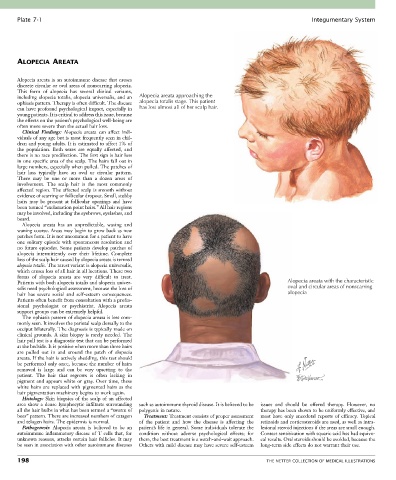
Plate 7-1                                                                                             Integumentary System


       ALOPECIA AREATA

       Alopecia  areata  is  an  autoimmune  disease  that  causes
       discrete circular or oval areas of nonscarring alopecia.
       This  form  of  alopecia  has  several  clinical  variants,
       including alopecia totalis, alopecia universalis, and an   Alopecia areata approaching the
       ophiasis pattern. Therapy is often difficult. The disease   alopecia totalis stage. This patient
       can have profound psychological impact, especially in   has lost almost all of her scalp hair.
       young patients. It is critical to address this issue, because
       the effects on the patient’s psychological well-being are
       often more severe than the actual hair loss.
         Clinical  Findings:  Alopecia  areata  can  affect  indi-
       viduals of any age but is most frequently seen in chil-
       dren and young adults. It is estimated to affect 1% of
       the  population.  Both  sexes  are  equally  affected,  and
       there is no race predilection. The first sign is hair loss
       in one specific area of the scalp. The hairs fall out in
       large numbers, especially when pulled. The patches of
       hair  loss  typically  have  an  oval  or  circular  pattern.
       There  may  be  one  or  more  than  a  dozen  areas  of
       involvement.  The  scalp  hair  is  the  most  commonly
       affected region. The affected scalp is smooth without
       evidence of scarring or follicular dropout. Small, stubby
       hairs  may  be  present  at  follicular  openings  and  have
       been termed “exclamation point hairs.” All hair regions
       may be involved, including the eyebrows, eyelashes, and
       beard.
         Alopecia  areata  has  an  unpredictable,  waxing  and
       waning course. Areas may begin to grow back as new
       patches form. It is not uncommon for a patient to have
       one  solitary  episode  with  spontaneous  resolution  and
       no future episodes. Some patients develop patches of
       alopecia  intermittently  over  their  lifetime.  Complete
       loss of the scalp hair caused by alopecia areata is termed
       alopecia totalis. The rarest variant is alopecia universalis,
       which causes loss of all hair in all locations. These two
       forms  of  alopecia  areata  are  very  difficult  to  treat.
       Patients with both alopecia totalis and alopecia univer-                                     Alopecia areata with the characteristic
       salis need psychological assessment, because the loss of                                     oval and circular areas of nonscarring
       hair  has  severe  social  and  self-esteem  consequences.                                   alopecia
       Patients often benefit from consultation with a profes-
       sional  psychologist  or  psychiatrist.  Alopecia  areata
       support groups can be extremely helpful.
         The ophiasis pattern of alopecia areata is less com-
       monly seen. It involves the parietal scalp dorsally to the
       occiput bilaterally. The diagnosis is typically made on
       clinical  grounds.  A  skin  biopsy  is  rarely  needed.  The
       hair pull test is a diagnostic test that can be performed
       at the bedside. It is positive when more than three hairs
       are  pulled  out  in  and  around  the  patch  of  alopecia
       areata. If the hair is actively shedding, this test should
       be performed only once, because the number of hairs
       removed  is  large  and  can  be  very  upsetting  to  the
       patient.  The  hair  that  regrows  is  often  lacking  in
       pigment  and  appears  white  or  gray.  Over  time,  these
       white  hairs  are  replaced  with  pigmented  hairs  as  the
       hair pigmentation machinery begins to work again.
         Histology:  Skin biopsies  of  the  scalp  of  an  affected
       area  show  a  dense  lymphocytic  infiltrate  surrounding   such as autoimmune thyroid disease. It is believed to be   issues  and  should  be  offered  therapy.  However,  no
       all the hair bulbs in what has been termed a “swarm of   polygenic in nature.       therapy has been shown to be uniformly effective, and
       bees” pattern. There are increased numbers of catagen   Treatment: Treatment consists of proper assessment   most  have  only  anecdotal  reports  of  efficacy.  Topical
       and telogen hairs. The epidermis is normal.  of  the  patient  and  how  the  disease  is  affecting  the   retinoids and corticosteroids are used, as well as intra-
         Pathogenesis:  Alopecia  areata  is  believed  to  be  an   patient’s life in general. Some individuals tolerate the   lesional steroid injections if the areas are small enough.
       autoimmune inflammatory disease of T cells that, for   condition  without  adverse  psychological  effects;  for   Contact sensitization with squaric acid has had equivo-
       unknown reasons, attacks certain hair follicles. It may   them, the best treatment is a watch-and-wait approach.   cal results. Oral steroids should be avoided, because the
       be seen in association with other autoimmune diseases   Others with mild disease may have severe self-esteem   long-term side effects do not warrant their use.

       198                                                                                   THE NETTER COLLECTION OF MEDICAL ILLUSTRATIONS

