


Page 213 - The Netter Collection of Medical Illustrations - Integumentary System_ Volume 4 ( PDFDrive )
P. 213
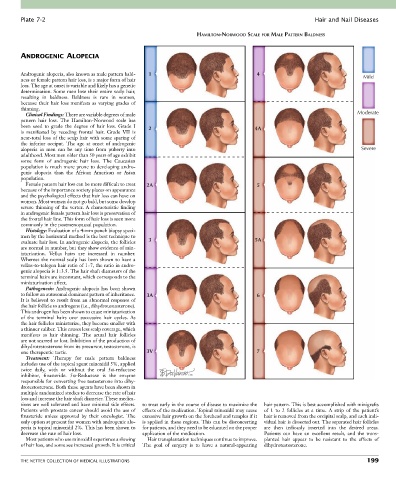
Plate 7-2                                                                                             Hair and Nail Diseases

                                                                     HAMILTON-NORWOOD SCALE FOR MALE PATTERN BALDNESS


        ANDROGENIC ALOPECIA


        Androgenic alopecia, also known as male pattern bald-  1                          4                                   Mild
        ness or female pattern hair loss, is a major form of hair
        loss. The age at onset is variable and likely has a genetic
        determination. Some men lose their entire scalp hair,
        resulting  in  baldness.  Baldness  is  rare  in  women,
        because  their  hair  loss  manifests  as  varying  grades  of
        thinning.
          Clinical Findings: There are variable degrees of male                                                             Moderate
        pattern  hair  loss.  The  Hamilton-Norwood  scale  has
        been  used  to  grade  the  degree  of  hair  loss.  Grade  I     2              4A
        is  manifested  by  receding  frontal  hair.  Grade  VII  is
        near-total loss of the scalp hair with some sparing of
        the  inferior  occiput.  The  age  at  onset  of  androgenic
        alopecia  in  men  can  be  any  time  from  puberty  into                                                            Severe
        adulthood. Most men older than 50 years of age exhibit
        some  form  of  androgenic  hair  loss.  The  Caucasian
        population is much more prone to developing andro-
        genic  alopecia  than  the  African  American  or  Asian
        population.
          Female pattern hair loss can be more difficult to treat   2A                    5
        because of the importance society places on appearance
        and the psychological effects that hair loss can have on
        women. Most women do not go bald, but some develop
        severe thinning of the vertex. A characteristic finding
        in androgenic female pattern hair loss is preservation of
        the frontal hair line. This form of hair loss is seen more
        commonly in the postmenopausal population.
          Histology: Evaluation of a 4-mm punch biopsy speci-
        men by the horizontal method is the best technique to
        evaluate hair loss. In androgenic alopecia, the follicles   3                    5A
        are normal in number, but they show evidence of min-
        iaturization.  Vellus  hairs  are  increased  in  number.
        Whereas  the  normal  scalp  has  been  shown  to  have  a
        vellus-to-telogen hair ratio of 1 : 7, the ratio in andro-
        genic alopecia is 1 : 3.5. The hair shaft diameters of the
        terminal hairs are inconstant, which corresponds to the
        miniaturization affect.
          Pathogenesis:  Androgenic  alopecia  has  been  shown
        to follow an autosomal dominant pattern of inheritance.   3A                      6
        It is believed to result from an abnormal response of
        the hair follicle to androgens (i.e., dihydrotestosterone).
        This androgen has been shown to cause miniaturization
        of  the  terminal  hairs  over  successive  hair  cycles.  As
        the hair follicles miniaturize, they become smaller with
        a thinner caliber. This causes less scalp coverage, which
        manifests  as  hair  thinning.  The  actual  hair  follicles
        are not scarred or lost. Inhibition of the production of
        dihydrotestosterone from its precursor, testosterone, is
        one therapeutic tactic.                     3V                                    7
          Treatment:  Therapy  for  male  pattern  baldness
        includes use of the topical agent minoxidil 5%, applied
        twice  daily,  with  or  without  the  oral  5α-reductase
        inhibitor,  finasteride.  5α-Reductase  is  the  enzyme
        responsible for converting free testosterone into dihy-
        drotestosterone. Both these agents have been shown in
        multiple randomized studies to decrease the rate of hair
        loss and increase the hair shaft diameter. These medica-
        tions are well tolerated and have minimal side effects.   to treat early in the course of disease to maximize the   hair pattern. This is best accomplished with minigrafts
        Patients with prostate cancer should avoid the use of   effects of the medication. Topical minoxidil may cause   of  1  to  2  follicles  at  a  time.  A  strip  of  the  patient’s
        finasteride  unless  approved  by  their  oncologist.  The   excessive hair growth on the forehead and temples if it   hair is removed from the occipital scalp, and each indi-
        only option at present for women with androgenic alo-  is applied in these regions. This can be disconcerting   vidual hair is dissected out. The separated hair follicles
        pecia is topical minoxidil 2%. This has been shown to   for patients, and they need to be educated on the proper   are  then  tediously  inserted  into  the  desired  areas.
        decrease the rate of hair loss.           application of the medication.            Patients  can  have  an  excellent  result,  and  the  trans-
          Most patients who use minoxidil experience a slowing   Hair transplantation techniques continue to improve.   planted  hair  appear  to  be  resistant  to  the  effects  of
        of hair loss, and some see increased growth. It is critical   The  goal  of  surgery  is  to  leave  a  natural-appearing     dihydrotestosterone.


        THE NETTER COLLECTION OF MEDICAL ILLUSTRATIONS                                                                          199

