


Page 217 - The Netter Collection of Medical Illustrations - Integumentary System_ Volume 4 ( PDFDrive )
P. 217
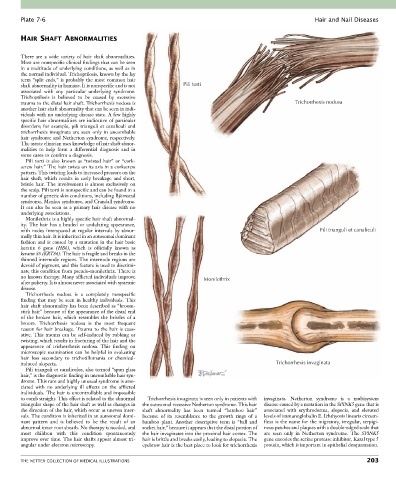
Plate 7-6                                                                                             Hair and Nail Diseases


        HAIR SHAFT ABNORMALITIES


        There  are  a  wide  variety  of  hair  shaft  abnormalities.
        Most are nonspecific clinical findings that can be seen
        in a multitude of underlying conditions, as well as in
        the normal individual. Trichoptilosis, known by the lay
        term “split ends,” is probably the most common hair
        shaft abnormality in humans. It is nonspecific and is not   Pili torti
        associated  with  any  particular  underlying  syndrome.
        Trichoptilosis  is  believed  to  be  caused  by  excessive
        trauma to the distal hair shaft. Trichorrhexis nodosa is                                       Trichorrhexis nodosa
        another hair shaft abnormality that can be seen in indi-
        viduals with no underlying disease state. A few highly
        specific  hair  abnormalities  are  indicative  of  particular
        disorders;  for  example,  pili  trianguli  et  canaliculi  and
        trichorrhexis  invaginata  are  seen  only  in  uncombable
        hair syndrome and Netherton syndrome, respectively.
        The astute clinician uses knowledge of hair shaft abnor-
        malities  to  help  form  a  differential  diagnosis  and  in
        some cases to confirm a diagnosis.
          Pili  torti  is  also  known  as  “twisted  hair”  or  “cork-
        screw hair.” The hair twists on its axis in a corkscrew
        pattern. This twisting leads to increased pressure on the
        hair  shaft,  which  results  in  early  breakage  and  short,
        brittle hair. The involvement is almost exclusively on
        the scalp. Pili torti is nonspecific and can be found in a
        number of genetic skin conditions, including Björnstad
        syndrome, Menkes syndrome, and Crandall syndrome.
        It can also  be  seen as a primary hair  disease  with no
        underlying associations.
          Monilethrix is a highly specific hair shaft abnormal-
        ity.  The  hair  has  a  beaded  or  undulating  appearance,
        with  nodes  interspaced  at  regular  intervals  by  abnor-                                           Pili trianguli et canaliculi
        mally thin hair. It is inherited in an autosomal dominant
        fashion and is caused by a mutation in the hair basic
        keratin  6  gene  (HB6),  which  is  officially  known  as
        keratin 86 (KRT86). The hair is fragile and breaks in the
        thinned internode regions. The internode regions are
        devoid of pigment, and this feature is used to discrimi-
        nate this condition from pseudo-monilethrix. There is
        no known therapy. Many afflicted individuals improve           Monilethrix
        after puberty. It is almost never associated with systemic
        disease.
          Trichorrhexis  nodosa  is  a  completely  nonspecific
        finding that may be seen in healthy individuals. This
        hair shaft abnormality has been described as “broom-
        stick hair” because of the appearance of the distal end
        of  the  broken  hair,  which  resembles  the  bristles  of  a
        broom.  Trichorrhexis  nodosa  is  the  most  frequent
        reason for hair breakage. Trauma to the hair is caus-
        ative. This trauma can be self-induced by rubbing or
        twisting, which results in fracturing of the hair and the
        appearance  of  trichorrhexis  nodosa.  This  finding  on
        microscopic  examination  can  be  helpful  in  evaluating
        hair  loss  secondary  to  trichotillomania  or  chemical-
        induced alopecia.                                                                       Trichorrhexis invaginata
          Pili trianguli et canaliculus, also termed “spun glass
        hair,” is the diagnostic finding in uncombable hair syn-
        drome. This rare and highly unusual syndrome is asso-
        ciated  with  no  underlying  ill  effects  on  the  afflicted
        individuals. The hair is uncontrollable and impossible
        to comb straight. This effect is related to the abnormal   Trichorrhexis invaginata is seen only in patients with   invaginata.  Netherton  syndrome  is  a  multisystem
        triangular shape of the hair shaft as well as changes in   the autosomal recessive Netherton syndrome. This hair   disease caused by a mutation in the SPINK5 gene that is
        the direction of the hair, which occur at uneven inter-  shaft  abnormality  has  been  termed  “bamboo  hair”   associated  with  erythroderma,  alopecia,  and  elevated
        vals. The condition is inherited in an autosomal domi-  because  of  its  resemblance  to  the  growth  rings  of  a   levels of immunoglobulin E. Ichthyosis linearis circum-
        nant  pattern  and  is  believed  to  be  the  result  of  an   bamboo  plant.  Another  descriptive  term  is  “ball  and   flexa is the name for the migratory, irregular, serpigi-
        abnormal inner root sheath. No therapy is needed, and   socket hair,” because it appears that the distal portion of   nous patches and plaques with a double-edged scale that
        most  children  with  this  condition  spontaneously   the hair invaginates into the proximal hair cortex. The   are  seen  only  in  Netherton  syndrome.  The  SPINK5
        improve over time. The hair shafts appear almost tri-  hair is brittle and breaks easily, leading to alopecia. The   gene encodes the serine protease inhibitor, Kazal type 5
        angular under electron microscopy.        eyebrow hair is the best place to look for trichorrhexis   protein, which is important in epithelial desquamation.


        THE NETTER COLLECTION OF MEDICAL ILLUSTRATIONS                                                                          203

