


Page 216 - The Netter Collection of Medical Illustrations - Integumentary System_ Volume 4 ( PDFDrive )
P. 216
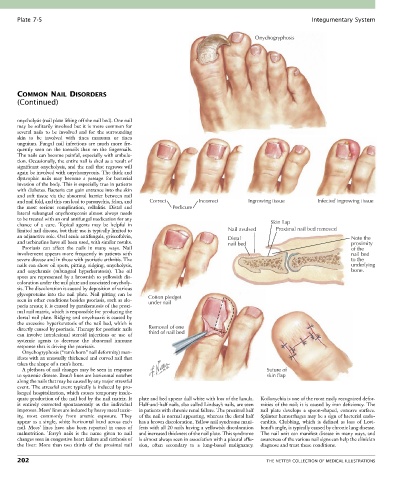
Plate 7-5                                                                                             Integumentary System


                                                                                         Onychogryphosis


       COMMON NAIL DISORDERS
       (Continued)


       onycholysis (nail plate lifting off the nail bed). One nail
       may be solitarily involved but it is more common for
       several  nails  to  be  involved  and  for  the  surrounding
       skin  to  be  involved  with  tinea  manuum  or  tinea
       unguium.  Fungal  nail  infections  are  much  more  fre-
       quently  seen  on  the  toenails  than  on  the  fingernails.
       The nails can become painful, especially with ambula-
       tion. Occasionally, the entire nail is shed as a result of
       significant onycholysis, and the nail that regrows will
       again be involved with onychomycosis. The thick and
       dystrophic  nails  may  become  a  passage  for  bacterial
       invasion of the body. This is especially true in patients
       with diabetes. Bacteria can gain entrance into the skin
       and  soft  tissue  via  the  abnormal  barrier  between  nail
       and nail fold, and this can lead to paronychia, felon, and   Correct  Incorrect  Ingrowing tissue       Infected ingrowing tissue
       the  most  serious  complication,  cellulitis.  Distal  and   Pedicure
       lateral subungual onychomycosis almost always needs
       to be treated with an oral antifungal medication for any
       chance  of  a  cure.  Topical  agents  may  be  helpful  in                             Skin flap
       limited nail disease, but their use is typically limited to              Nail avulsed    Proximal nail bed removed
       an adjunctive role. Oral azole antifungals, griseofulvin,                Distal                                    Note the
       and terbinafine have all been used, with similar results.                nail bed                                  proximity
         Psoriasis  can  affect  the  nails  in  many  ways.  Nail                                                        of the
       involvement appears more frequently in patients with                                                               nail bed
       severe disease and in those with psoriatic arthritis. The                                                          to the
       nails can show oil spots, pitting, ridging, onycholysis,                                                           underlying
       and  onychauxis  (subungual  hyperkeratosis).  The  oil                                                            bone.
       spots are represented by a brownish to yellowish dis-
       coloration under the nail plate and associated onycholy-
       sis. The discoloration is caused by deposition of various
       glycoproteins  into  the  nail  plate.  Nail  pitting  can  be   Cotton pledget
       seen in other conditions besides psoriasis, such as alo-  under nail
       pecia areata; it is caused by parakeratosis of the proxi-
       mal nail matrix, which is responsible for producing the
       dorsal nail plate. Ridging and onychauxis is caused by
       the  excessive  hyperkeratosis  of  the  nail  bed,  which  is
       directly caused by psoriasis. Therapy for psoriatic nails   Removal of one
       can  involve  intralesional  steroid  injections  or  use  of   third of nail bed
       systemic  agents  to  decrease  the  abnormal  immune
       response that is driving the psoriasis.
         Onychogryphosis (“ram’s horn” nail deformity) man-
       ifests with an unusually thickened and curved nail that
       takes the shape of a ram’s horn.
         A plethora of nail changes may be seen in response                                  Suture of
       to systemic disease. Beau’s lines are horizontal notches                              skin flap
       along the nails that may be caused by any major stressful
       event. The stressful event typically is induced by pro-
       longed hospitalization, which causes temporary inade-
       quate production of the nail bed by the nail matrix. It   plate and bed appear dull white with loss of the lunula.   Koilonychia is one of the most easily recognized defor-
       is  entirely  corrected  spontaneously  as  the  individual   Half-and-half nails, also called Lindsay’s nails, are seen   mities of the nail; it is caused by iron deficiency. The
       improves. Mees’ lines are induced by heavy metal toxic-  in patients with chronic renal failure. The proximal half   nail  plate  develops  a  spoon-shaped,  concave  surface.
       ity,  most  commonly  from  arsenic  exposure.  They   of the nail is normal appearing, whereas the distal half   Splinter hemorrhages may be a sign of bacterial endo-
       appear  as  a  single,  white  horizontal  band  across  each   has a brown discoloration. Yellow nail syndrome mani-  carditis.  Clubbing,  which  is  defined  as  loss  of  Lovi-
       nail.  Mees’  lines  have  also  been  reported  in  cases  of   fests with all 20 nails having a yellowish discoloration   bond’s angle, is typically caused by chronic lung disease.
       malnutrition.  Terry’s  nails  is  the  name  given  to  nail   and increased thickness of the nail plate. This syndrome   The nail unit can manifest disease in many ways, and
       changes seen in congestive heart failure and cirrhosis of   is almost always seen in association with a pleural effu-  awareness of the various nail signs can help the clinician
       the  liver:  More  than  two  thirds  of  the  proximal  nail   sion,  often  secondary  to  a  lung-based  malignancy.     diagnose and treat these conditions.

       202                                                                                   THE NETTER COLLECTION OF MEDICAL ILLUSTRATIONS

