


Page 218 - The Netter Collection of Medical Illustrations - Integumentary System_ Volume 4 ( PDFDrive )
P. 218
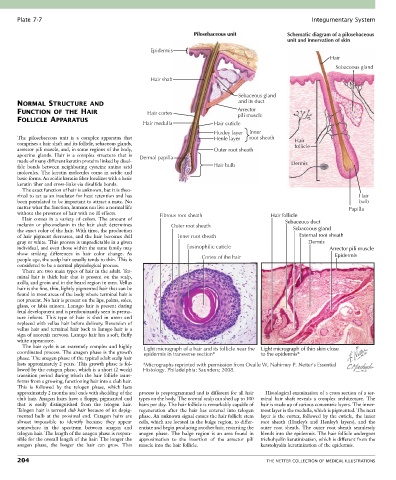
Plate 7-7                                                                                             Integumentary System

                                                                    Pilosebaceous unit              Schematic diagram of a pilosebaceous
                                                                                                    unit and innervation of skin
                                                     Epidermis
                                                                                                                   Hair
                                                                                                                     Sebaceous gland
                                                     Hair shaft


                                                                                   Sebaceous gland
       NORMAL STRUCTURE AND                                                        and its duct
       FUNCTION OF THE HAIR                         Hair cortex                    Arrector
                                                                                   pili muscle
       FOLLICLE APPARATUS
                                                  Hair medulla             Hair cuticle
                                                                           Huxley layer  Inner
       The  pilosebaceous  unit  is  a  complex  apparatus  that           Henle layer  root sheath    Hair
       comprises a hair shaft and its follicle, sebaceous glands,                                      follicle
       arrector pili muscle, and, in some regions of the body,             Outer root sheath
       apocrine  glands.  Hair  is  a  complex  structure  that  is   Dermal papilla
       made of many different keratin proteins linked by disul-                                       Dermis
       fide  bonds  between  neighboring  cysteine  amino  acid            Hair bulb
       molecules. The keratin molecules come in acidic and
       basic forms. An acidic keratin fiber localizes with a basic
       keratin fiber and cross-links via disulfide bonds.
         The exact function of hair is unknown, but it is theo-
       rized to act as an insulator for heat retention and has                                                               Hair
       been postulated to be important to attract a mate. No                                                                 bulb
       matter what the function, humans can live a normal life                                                           Papilla
       without the presence of hair with no ill effects.  Fibrous root sheath                 Hair follicle
         Hair  comes  in  a  variety  of  colors.  The  amount  of
       melanin  or  pheomelanin  in  the  hair  shaft  determines   Outer root sheath               Sebaceous duct
       the exact color of the hair. With time, the production                                         Sebaceous gland
       of hair pigment decreases, and the hair becomes dull    Inner root sheath                        External root sheath
       gray or white. This process is unpredictable in a given                                              Dermis
       individual, and even those within the same family may      Eosinophilic cuticle                             Arrector pili muscle
       show  striking  differences  in  hair  color  change.  As                                                     Epidermis
       people age, the scalp hair usually tends to thin. This is       Cortex of the hair
       considered to be a normal physiological process.
         There are two main types of hair in the adult. Ter-
       minal  hair  is  thick  hair  that  is  present  on  the  scalp,
       axilla, and groin and in the beard region in men. Vellus
       hair is the fine, thin, lightly pigmented hair that can be
       found in most areas of the body where terminal hair is
       not present. No hair is present on the lips, palms, soles,
       glans, or labia minora. Lanugo hair is present during
       fetal development and is predominantly seen in prema-
       ture  infants.  This  type  of  hair  is  shed  in  utero  and
       replaced with vellus hair before delivery. Reversion of
       vellus hair and terminal hair back to lanugo hair is a
       sign of anorexia nervosa. Lanugo hair has a soft, fluffy
       white appearance.
         The hair cycle is an extremely complex and highly   Light micrograph of a hair and its follicle near the  Light micrograph of thin skin close
       coordinated process. The anagen phase is the growth   epidermis in transverse section*   to the epidermis*
       phase. The anagen phase of the typical adult scalp hair
       lasts approximately 2 years. This growth phase is fol-  *Micrographs reprinted with permission from Ovalle W, Nahirney P. Netter’s Essential
       lowed by the catagen phase, which is a short (2 week)   Histology. Philadelphia: Saunders; 2008.
       transition period during which the hair follicle trans-
       forms from a growing, functioning hair into a club hair.
       This  is  followed  by  the  telogen  phase,  which  lasts
       approximately 2 months and ends with shedding of the   process is preprogrammed and is different for all hair   Histological examination of a cross section of a ter-
       club hair. Anagen hairs have a floppy, pigmented end   types on the body. The normal scalp can shed up to 100   minal  hair  shaft  reveals  a  complex  architecture.  The
       that  is  easily  distinguished  from  the  telogen  hair.   hairs per day. The hair follicle is remarkably capable of   hair is made up of various concentric layers. The inner-
       Telogen hair is termed club hair because of its depig-  regeneration  after  the  hair  has  entered  into  telogen   most layer is the medulla, which is pigmented. The next
       mented  bulb  at  the  proximal  end.  Catagen  hairs  are   phase. An unknown signal causes the hair follicle stem   layer  is  the  cortex,  followed  by  the  cuticle,  the  inner
       almost  impossible  to  identify  because  they  appear   cells, which are located in the bulge region, to differ-  root  sheath  (Huxley’s  and  Henley’s  layers),  and  the
       somewhere  in  the  spectrum  between  anagen  and   entiate and begin producing another hair, restarting the   outer  root  sheath.  The  outer  root  sheath  seamlessly
       telogen hair. The length of the anagen phase is respon-  anagen  phase.  The  bulge  region  is  an  area  found  in   blends into the epidermis. The hair follicle undergoes
       sible for the overall length of the hair: The longer the   approximation  to  the  insertion  of  the  arrector  pili   trichohyalin keratinization, which is different from the
       anagen  phase,  the  longer  the  hair  can  grow.  This   muscle into the hair follicle.  keratohyalin keratinization of the epidermis.

       204                                                                                   THE NETTER COLLECTION OF MEDICAL ILLUSTRATIONS

