


Page 221 - The Netter Collection of Medical Illustrations - Integumentary System_ Volume 4 ( PDFDrive )
P. 221
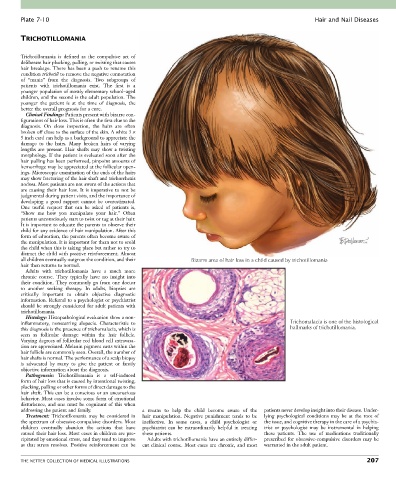
Plate 7-10                                                                                            Hair and Nail Diseases


        TRICHOTILLOMANIA


        Trichotillomania  is  defined  as  the  compulsive  act  of
        deliberate hair plucking, pulling, or twisting that causes
        hair breakage. There has been a push to rename this
        condition trichotill to remove the negative connotation
        of  “mania”  from  the  diagnosis.  Two  subgroups  of
        patients  with  trichotillomania  exist.  The  first  is  a
        younger population of mostly elementary school–aged
        children, and the second is the adult population. The
        younger  the  patient  is  at  the  time  of  diagnosis,  the
        better the overall prognosis for a cure.
          Clinical Findings: Patients present with bizarre con-
        figurations of hair loss. This is often the first clue to the
        diagnosis.  On  close  inspection,  the  hairs  are  often
        broken off close to the surface of the skin. A white 3 ×
        5 inch card can help as a background to appreciate the
        damage  to  the  hairs.  Many  broken  hairs  of  varying
        lengths  are  present.  Hair  shafts  may  show  a  twisting
        morphology. If the patient is evaluated soon after the
        hair pulling has been performed, pinpoint amounts of
        hemorrhage may be appreciated at the follicular open-
        ings. Microscopic examination of the ends of the hairs
        may show fracturing of the hair shaft and trichorrhexis
        nodosa. Most patients are not aware of the actions that
        are  causing  their  hair  loss.  It  is  imperative  to  not  be
        judgmental during patient visits, and the importance of
        developing  a  good  rapport  cannot  be  overestimated.
        One  useful  request  that  can  be  asked  of  patients  is,
        “Show  me  how  you  manipulate  your  hair.”  Often
        patients unconsciously start to twist or tug at their hair.
        It is important to educate the parents to observe their
        child for any evidence of hair manipulation. After this
        form of education, the parents often become aware of
        the manipulation. It is important for them not to scold
        the child when this is taking place but rather to try to
        distract the child with positive reinforcement. Almost
        all children eventually outgrow the condition, and their   Bizarre area of hair loss in a child caused by trichotillomania
        hair then returns to normal.
          Adults  with  trichotillomania  have  a  much  more
        chronic  course.  They  typically  have  no  insight  into
        their condition. They commonly go from one doctor
        to  another  seeking  therapy.  In  adults,  biopsies  are
        critically  important  to  obtain  objective  diagnostic
        information. Referral to a psychologist or psychiatrist
        should  be  strongly  considered  for  adult  patients  with
        trichotillomania.
          Histology: Histopathological evaluation show a non-
        inflammatory,  nonscarring  alopecia.  Characteristic  to                                    Trichomalacia is one of the histological
        this diagnosis is the presence of trichomalacia, which is                                    hallmarks of trichotillomania.
        seen  as  follicular  damage  within  the  hair  follicle.
        Varying degrees of follicular red blood cell extravasa-
        tion are appreciated. Melanin pigment casts within the
        hair follicle are commonly seen. Overall, the number of
        hair shafts is normal. The performance of a scalp biopsy
        is  advocated  by  many  to  give  the  patient  or  family
        objective information about the diagnosis.
          Pathogenesis:  Trichotillomania  is  a  self-induced
        form of hair loss that is caused by intentional twisting,
        plucking, pulling or other forms of direct damage to the
        hair shaft. This can be a conscious or an unconscious
        behavior. Most cases involve some form of emotional
        disturbance, and one must be cognizant of this when
        addressing the patient and family.        a  means  to  help  the  child  become  aware  of  the     patients never develop insight into their disease. Under-
          Treatment:  Trichotillomania  may  be  considered  in   hair  manipulation.  Negative  punishment  tends  to  be   lying  psychological  conditions  may  be  at  the  root  of
        the spectrum of obsessive-compulsive disorders. Most   ineffective.  In  some  cases,  a  child  psychologist  or     the issue, and cognitive therapy in the care of a psychia-
        children  eventually  abandon  the  actions  that  have   psychiatrist  can  be  extraordinarily  helpful  in  treating   trist  or  psychologist  may  be  instrumental  in  helping
        caused their hair loss. Most cases in children are pre-  these patients.            these  patients.  The  use  of  medications  traditionally
        cipitated by emotional stress, and they tend to improve   Adults with trichotillomania have an entirely differ-  prescribed for obsessive-compulsive disorders may be
        as  that  stress  resolves.  Positive  reinforcement  can  be     ent  clinical  course.  Most  cases  are  chronic,  and  most   warranted in the adult patient.


        THE NETTER COLLECTION OF MEDICAL ILLUSTRATIONS                                                                          207

