


Page 220 - The Netter Collection of Medical Illustrations - Integumentary System_ Volume 4 ( PDFDrive )
P. 220
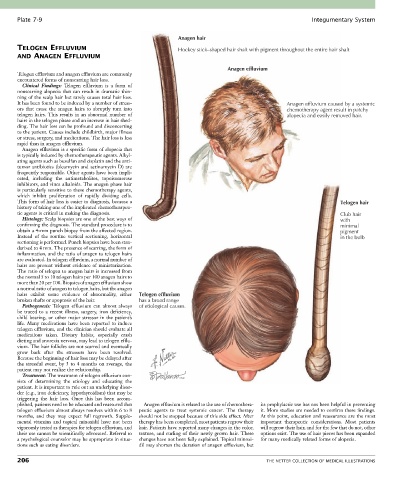
Plate 7-9                                                                                             Integumentary System


                                                               Anagen hair
       TELOGEN EFFLUVIUM                                         Hockey stick–shaped hair shaft with pigment throughout the entire hair shaft
       AND ANAGEN EFFLUVIUM

                                                                                Anagen effluvium
       Telogen effluvium and anagen effluvium are commonly
       encountered forms of nonscarring hair loss.
         Clinical  Findings:  Telogen  effluvium  is  a  form  of
       nonscarring alopecia that can result in dramatic thin-
       ning of the scalp hair but rarely causes total hair loss.
       It has been found to be induced by a number of stress-                                       Anagen effluvium caused by a systemic
       ors  that  cause  the  anagen  hairs  to  abruptly  turn  into                               chemotherapy agent result in patchy
       telogen hairs. This results in an abnormal number of                                         alopecia and easily removed hair.
       hairs in the telogen phase and an increase in hair shed-
       ding. The hair loss can be profound and disconcerting
       to the patient. Causes include childbirth, major illness
       or stress, surgery, and medications. The hair loss is less
       rapid than in anagen effluvium.
         Anagen effluvium is a specific form of alopecia that
       is typically induced by chemotherapeutic agents. Alkyl-
       ating agents such as busulfan and cisplatin and the anti-
       tumor antibiotics (bleomycin and actinomycin D) are
       frequently responsible. Other agents have been impli-
       cated,  including  the  antimetabolites,  topoisomerase
       inhibitors, and vinca alkaloids. The anagen phase hair
       is particularly sensitive to these chemotherapy agents,
       which  inhibit  proliferation  of  rapidly  dividing  cells.
       This form of hair loss is easier to diagnosis, because a                                                        Telogen hair
       history of taking one of the implicated chemotherapeu-
       tic agents is critical in making the diagnosis.                                                                 Club hair
         Histology: Scalp biopsies are one of the best ways of                                                         with
       confirming the diagnosis. The standard procedure is to                                                          minimal
       obtain a 4-mm punch biopsy from the affected region.                                                            pigment
       Instead  of  the  routine  vertical  sectioning,  horizontal                                                    in the bulb
       sectioning is performed. Punch biopsies have been stan-
       darized to 4 mm. The presence of scarring, the form of
       inflammation, and the ratio of anagen to telogen hairs
       are evaluated. In telogen effluvium, a normal number of
       hairs are present without evidence of miniaturization.
       The ratio of telogen to anagen hairs is increased from
       the normal 5 to 10 telogen hairs per 100 anagen hairs to
       more than 20 per 100. Biopsies of anagen effluvium show
       a normal ratio of anagen to telogen hairs, but the anagen
       hairs  exhibit  some  evidence  of  abnormality,  either   Telogen effluvium
       broken shafts or apoptosis of the hair.   has a broad range
         Pathogenesis:  Telogen  effluvium  can  almost  always   of etiological causes.
       be  traced  to  a  recent  illness,  surgery,  iron  deficiency,
       child bearing, or other major stressor in the patient’s
       life.  Many  medications  have  been  reported  to  induce
       telogen effluvium, and the clinician should evaluate all
       medications  taken.  Dietary  habits,  especially  crash
       dieting and anorexia nervosa, may lead to telogen efflu-
       vium. The hair follicles are not scarred and eventually
       grow  back  after  the  stressors  have  been  resolved.
       Because the beginning of hair loss may be delayed after
       the stressful event, by 3 to 4 months on average, the
       patient may not realize the relationship.
         Treatment: The treatment of telogen effluvium con-
       sists  of  determining  the  etiology  and  educating  the
       patient. It is important to rule out an underlying disor-
       der (e.g., iron deficiency, hypothyroidism) that may be
       triggering  the  hair  loss.  Once  this  has  been  accom-
       plished, patients need to be educated and reassured that   Anagen effluvium is related to the use of chemothera-  its prophylactic use has not been helpful in preventing
       telogen effluvium almost always resolves within 6 to 8   peutic  agents  to  treat  systemic  cancer.  The  therapy   it. More studies are needed to confirm these findings.
       months,  and  they  may  expect  full  regrowth.  Supple-  should not be stopped because of this side effect. After   At this point, education and reassurance are the most
       mental  vitamins  and  topical  minoxidil  have  not  been   therapy has been completed, most patients regrow their   important  therapeutic  considerations.  Most  patients
       vigorously tested as therapies for telogen effluvium, and   hair. Patients have reported many changes in the color,   will regrow their hair, and for the few that do not, other
       their use cannot be scientifically advocated. Referral to   texture, and curling of their newly grown hair. These   options exist. The use of hair pieces has been expanded
       a psychological counselor may be appropriate in situa-  changes have not been fully explained. Topical minoxi-  for many medically related forms of alopecia.
       tions such as eating disorders.           dil may shorten the duration of anagen effluvium, but

       206                                                                                   THE NETTER COLLECTION OF MEDICAL ILLUSTRATIONS

