


Page 22 - The Netter Collection of Medical Illustrations - Integumentary System_ Volume 4 ( PDFDrive )
P. 22
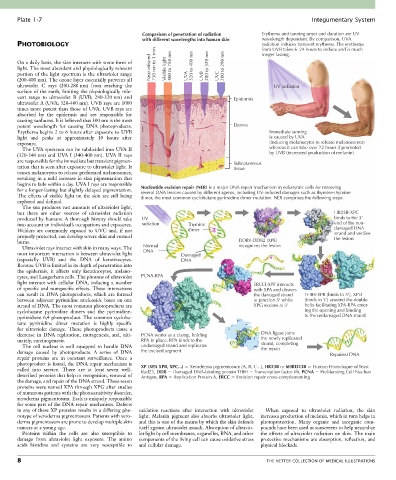
Plate 1-7                                                                                             Integumentary System

                                                  Comparison of penetration of radiation   Erythema and tanning onset and duration are UV
                                                  with different wavelengths into human skin  wavelength dependent. By comparison, UVA
       PHOTOBIOLOGY                                                                        radiation induces transient erythema. The erythema
                                                                                           from UVB takes 6–24 hours to induce and is much

       On a daily basis, the skin interacts with some form of   750 nm to 1 mm                                  longer lasting.
       light. The most abundant and physiologically relevant   Near infrared    Visible light   400 to 750 nm   320 to 400 nm  280 to 320 nm  200 to 290 nm
       portion  of  the  light  spectrum  is  the  ultraviolet  range   UVA                    UVB   UVC
       (200-400 nm). The ozone layer essentially prevents all
       ultraviolet  C  rays  (200-280 nm)  from  reaching  the                                  UV radiation
       surface of the earth, limiting the physiologically rele-
       vant  range  to  ultraviolet  B  (UVB;  280-320 nm)  and                   Epidermis
       ultraviolet A (UVA; 320-400 nm). UVB rays are 1000
       times more potent than those of UVA. UVB rays are
       absorbed  by  the  epidermis  and  are  responsible  for
       causing sunburns. It is believed that 300 nm is the most
       potent  wavelength  for  causing  DNA  photoproducts.                      Dermis
       Erythema begins 2 to 6 hours after exposure to UVB                                     Immediate tanning
       light  and  peaks  at  approximately  10  hours  after                                 is caused by UVA
       exposure.                                                                              (inducing melanocytes to release melanosomes)
         The UVA spectrum can be subdivided into UVA II                                       whereas it can take over 72 hours if promoted
       (320-340 nm) and UVA I (340-400 nm). UVA II rays                                       by UVB (increased production of melanin)
       are responsible for the immediate but transient pigmen-                    Subcutaneous
       tation that is seen after exposure to ultraviolet light. It                tissue
       causes melanocytes to release preformed melanosomes,
       resulting in a mild increase in skin pigmentation that
       begins to fade within a day. UVA I rays are responsible
       for a longer-lasting but slightly delayed pigmentation.   Nucleotide excision repair (NER) is a major DNA repair mechanism in eukaryotic cells for removing
                                                  several DNA lesions caused by different agents, including UV-induced damages such as thymine-thymine
       The effects of visible light on the skin are still being   dimer, the most common cyclobutane pyrimidine dimer mutation. NER comprises the following steps:
       explored and defined.
         The sun produces vast amounts of ultraviolet light,
       but  there  are  other  sources  of  ultraviolet  radiation                                                  HR23B-XPC
       produced by humans. A thorough history should take   UV                                                      binds to the 3’
       into account an individual’s occupations and exposures.   radiation  Thymine                                 end of the non-
       Welders  are  commonly  exposed  to  UVC  and,  if  not    dimer                                             damaged DNA
       properly protected, can develop severe skin and corneal                                                      strand and verifies
                                                                                                                    the lesion
       burns.                                                                      DDB1-DDB2 (XPE)
         Ultraviolet rays interact with skin in many ways. The   Normal            recognizes the lesion
       most important interaction is between ultraviolet light   DNA  Damaged
       (especially  UVB)  and  the  DNA  of  keratinocytes.     DNA
       Because UVB is limited in its depth of penetration into
       the  epidermis,  it  affects  only  keratinocytes,  melano-
       cytes, and Langerhans cells. The photons of ultraviolet   PCNA-RPA
       light  interact  with  cellular  DNA,  inducing  a  number                        ERCCI-XPF interacts
       of  specific  and  nonspecific  effects.  These  interactions                     with XPA and cleaves
       can  result  in  DNA  photoproducts,  which  are  formed                          the damaged strand   TFIIH-XPB (binds to 5’), XPD
       between adjacent pyrimidine nucleoside bases on one                               at junction 5’ while   (binds to 3’) unwind the double
       strand of DNA. The most common photoproducts are                                  XPG excises at 3’      helix facilitating XPA-RPA enter-
       cyclobutane  pyrimidine  dimers  and  the  pyrimidine-                                             ing the opening and binding
       pyrimidone 6,4 photoproduct. The common cyclobu-                                                   to the undamaged DNA strand
       tane  pyrimidine  dimer  mutation  is  highly  specific
       for  ultraviolet  damage.  These  photoproducts  cause  a
       decrease  in  DNA  replication,  mutagenesis,  and,  ulti-  PCNA works as a clamp, holding   DNA ligase joins
       mately, carcinogenesis.                    RPA in place. RPA binds to the           the newly replicated
         The  cell  nucleus  is  well  equipped  to  handle  DNA   undamaged strand and replicates   strand, completing
       damage  caused  by  photoproducts.  A  series  of  DNA   the excised segment        the repair              Repaired DNA
       repair  proteins  are  in  constant  surveillance.  Once  a
       photoproduct is found, the DNA repair mechanism is
       called  into  service.  There  are  at  least  seven  well-  XP (XPA XPB, XPC...)   Xeroderma pigmentosum (A, B, C...), HR23B or hHRD23B   Human Homologue of Yeast
                                                  Rad23, DDB   Damaged DNA-binding protein TFIIH   Transcription factor iih, PCNA   Proliferating Cell Nuclear
       described proteins that help in recognition, removal of   Antigen, RPA   Replication Protein A, ERCC   Excision repair cross-complementing
       the damage, and repair of the DNA strand. These seven
       proteins were named XPA through XPG after studies
       of numerous patients with the photosensitivity disorder,
       xeroderma pigmentosum. Each is uniquely responsible
       for some part of the DNA repair mechanism. Defects
       in any of these XP proteins results in a differing phe-  oxidation  reactions  after  interaction  with  ultraviolet   When  exposed  to  ultraviolet  radiation,  the  skin
       notype of xeroderma pigmentosum. Patients with xero-  light.  Melanin  pigment  also  absorbs  ultraviolet  light,   increases production of melanin, which in turn helps in
       derma pigmentosum are prone to develop multiple skin   and this is one of the means by which the skin defends   photoprotection.  Many  organic  and  inorganic  com-
       cancers at a young age.                   itself against ultraviolet assault. Absorption of ultravio-  pounds have been used as sunscreens to help neutralize
         Proteins  within  the  cells  are  also  susceptible  to   let light by cell membranes, organelles, RNA, and other   the  effects  of  ultraviolet  radiation  on  skin.  The  main
       damage  from  ultraviolet  light  exposure.  The  amino   components of the living cell can cause oxidative stress   protective mechanisms are absorption, reflection, and
       acids  histidine  and  cysteine  are  very  susceptible  to   and cellular damage.  physical blockade.

       8                                                                                     THE NETTER COLLECTION OF MEDICAL ILLUSTRATIONS

