


Page 20 - The Netter Collection of Medical Illustrations - Integumentary System_ Volume 4 ( PDFDrive )
P. 20
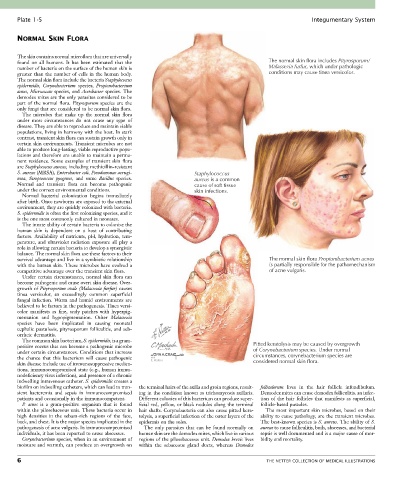
Plate 1-5                                                                                             Integumentary System


       NORMAL SKIN FLORA


       The skin contains normal microflora that are universally
       found  on  all  humans.  It  has  been  estimated  that  the                           The normal skin flora includes Pityrosporum/
       number of bacteria on the surface of the human skin is                                 Malassezia furfur, which under pathologic
       greater than the number of cells in the human body.                                    conditions may cause tinea versicolor.
       The normal skin flora include the bacteria Staphylococcus
       epidermidis,  Corynebacterium  species,  Propionobacterium
       acnes,  Micrococcus  species,  and  Acetobacter  species.  The
       demodex mites are the only parasites considered to be
       part  of  the  normal  flora.  Pityrosporum  species  are  the
       only fungi that are considered to be normal skin flora.
         The  microbes  that  make  up  the  normal  skin  flora
       under  most  circumstances  do  not  cause  any  type  of
       disease. They are able to reproduce and maintain viable
       populations, living in harmony with the host. In stark
       contrast, transient skin flora can sustain growth only in
       certain skin environments. Transient microbes are not
       able to produce long-lasting, viable reproductive popu-
       lations and therefore are unable to maintain a perma-
       nent residence. Some examples of transient skin flora
       are Staphylococcus aureus, including methicillin-resistant
       S. aureus (MRSA), Enterobacter coli, Pseudomonas aerugi-     Staphylococcus
       nosa,  Streptococcus  pyogenes,  and  some  Bacillus  species.   aureus is a common
       Normal  and  transient  flora  can  become  pathogenic       cause of soft tissue
       under the correct environmental conditions.                  skin infections.
         Normal  bacterial  colonization  begins  immediately
       after birth. Once newborns are exposed to the external
       environment, they are quickly colonized with bacteria.
       S. epidermidis is often the first colonizing species, and it
       is the one most commonly cultured in neonates.
         The innate ability of certain bacteria to colonize the
       human  skin  is  dependent  on  a  host  of  contributing
       factors.  Availability  of  nutrients,  pH,  hydration,  tem-
       perature,  and  ultraviolet  radiation  exposure  all  play  a
       role in allowing certain bacteria to develop a synergistic
       balance. The normal skin flora use these factors to their
       survival advantage and live in a symbiotic relationship                                The normal skin flora Propionibacterium acnes
       with the human skin. These microbes have evolved a                                     is partially responsible for the pathomechanism
       competitive advantage over the transient skin flora.                                   of acne vulgaris.
         Under certain circumstances, normal skin flora can
       become pathogenic and cause overt skin disease. Over-
       growth of Pityrosporum ovale (Malassezia furfur) causes
       tinea  versicolor,  an  exceedingly  common  superficial
       fungal  infection.  Warm  and  humid  environments  are
       believed to be factors in the pathogenesis. Tinea versi-
       color  manifests  as  fine,  scaly  patches  with  hyperpig-
       mentation  and  hypopigmentation.  Other  Malassezia
       species  have  been  implicated  in  causing  neonatal
       cephalic pustulosis, pityrosporum folliculitis, and seb-
       orrheic dermatitis.
         The common skin bacterium, S. epidermidis, is a gram-
       positive coccus that can become a pathogenic microbe                             Pitted keratolysis may be caused by overgrowth
       under certain circumstances. Conditions that increase                            of Corynebacterium species. Under normal
       the  chance  that  this  bacterium  will  cause  pathogenic   with               circumstances, corynebacterium species are
                                                     E. Hatton
       skin disease include use of immunosuppressive medica-                            considered normal skin flora.
       tions, immunocompromised state (e.g., human immu-
       nodeficiency virus infection), and presence of a chronic
       indwelling intravenous catheter. S. epidermidis creates a
       biofilm on indwelling catheters, which can lead to tran-  the terminal hairs of the axilla and groin regions, result-  folliculorum  lives  in  the  hair  follicle  infundibulum.
       sient  bacteremia  and  sepsis  in  immunocompromised   ing in the condition known as trichomycosis axillaris.   Demodex mites can cause demodex folliculitis. an infec-
       patients and occasionally in the immunocompetent.  Different colonies of this bacterium can produce super-  tion  of  the  hair  follicles  that  manifests  as  superficial,
         P.  acnes  is  a  gram-positive  organism  that  is  found   ficial red, yellow, or black nodules along the terminal   follicle-based pustules.
       within the pilosebaceous unit. These bacteria occur in   hair shafts. Corynebacteria can also cause pitted kera-  The  most  important  skin  microbes,  based  on  their
       high  densities  in  the  sebum-rich  regions  of  the  face,   tolysis, a superficial infection of the outer layers of the   ability to cause pathology, are the transient microbes.
       back, and chest. It is the major species implicated in the   epidermis on the soles.  The best-known species is S. aureus. The ability of S.
       pathogenesis of acne vulgaris. In immunocompromised   The  only  parasites  that  can  be  found  normally  on   aureus to cause folliculitis, boils, abscesses, and bacterial
       individuals, it has been reported to cause abscesses.  human skin are the demodex mites, which live in various   sepsis is well documented and is a major cause of mor-
         Corynebacterium species, when in an environment of   regions of the pilosebaceous unit. Demodex brevis lives   bidity and mortality.
       moisture and warmth, can produce an overgrowth on   within  the  sebaceous  gland  ducts,  whereas  Demodex

       6                                                                                     THE NETTER COLLECTION OF MEDICAL ILLUSTRATIONS

