


Page 21 - The Netter Collection of Medical Illustrations - Integumentary System_ Volume 4 ( PDFDrive )
P. 21
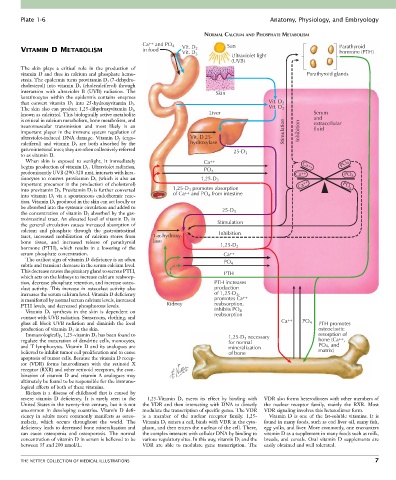
Plate 1-6                                                                             Anatomy, Physiology, and Embryology

                                                                        NORMAL CALCIUM AND PHOSPHATE METABOLISM
                                                    ++
                                                  Ca  and PO 4                 Sun                                    Parathyroid
        VITAMIN D METABOLISM                      in food       Vit. D 2 3       Ultraviolet light                    hormone (PTH)
                                                                Vit. D
                                                                                 (UVB)
        The  skin  plays  a  critical  role  in  the  production  of
        vitamin D and thus in calcium and phosphate hemo-                                                  Parathyroid glands
        stasis. The epidermis turns provitamin D 3  (7-dehydro-
        cholesterol)  into  vitamin  D 3   (cholecalciferol)  through
        interaction  with  ultraviolet  B  (UVB)  radiation.  The           Skin
        keratinocytes  within  the  epidermis  contains  enzymes
        that  convert  vitamin  D 3   into  25-hydroxyvitamin  D 3 .                          Vit. D 2
        The skin also can produce 1,25-dihydroxyvitamin D 3 ,                                 Vit. D 3
        known as calcitriol. This biologically active metabolite         Liver                               Serum
        is critical in calcium metabolism, bone metabolism, and                                              and
                                                                                                             extracellular
        neuromuscular  transmission  and  most  likely  is  an                                               fluid
        important player in the immune system regulation of                                        Stimulation  Inhibition
        ultraviolet-induced  DNA  damage.  Vitamin  D 2   (ergo-   Vit. D 25-
        calciferol)  and  vitamin  D 3   are  both  absorbed  by  the   hydroxylase
        gastrointestinal tract; they are often collectively referred              25-D
        to as vitamin D.                                                              3
          When  skin  is  exposed  to  sunlight,  it  immediately      Ca ++
        begins production of vitamin D 3 . Ultraviolet radiation,      PO                                Ca ++         PO 4
        predominantly UVB (290-320 nm), interacts with kera-              4                            Ca ++            PO
        tinocytes  to  convert  provitamin  D 3   (which  is  also  an   1,25-D 3                                         4
        important precursor in the production of cholesterol)                                           Ca ++          PO 4
        into previtamin D 3 . Previtamin D 3  is further converted   1,25-D  promotes absorption
                                                                  3
                                                                         4
        into  vitamin  D 3   via  a  spontaneous  endothermic  reac-  of Ca ++  and PO  from intestine
        tion. Vitamin D 3  produced in the skin can act locally or
        be absorbed into the systemic circulation and added to                25-D
        the concentration of vitamin D 3  absorbed by the gas-                    3
        trointestinal  tract.  An  elevated  level  of  vitamin  D 3   in
        the general circulation causes increased absorption of              Stimulation
        calcium  and  phosphate  through  the  gastrointestinal              Inhibition
        tract,  increased  mobilization  of  calcium  stores  from   1- -hydroxy-
        bone  tissue,  and  increased  release  of  parathyroid   lase       1,25-D
        hormone  (PTH),  which  results  in  a  lowering  of  the                  3
        serum phosphate concentration.                                        Ca ++
          The earliest sign of vitamin D deficiency is an often               PO
        subtle and transient decrease in the serum calcium level.                4
        This decrease causes the pituitary gland to secrete PTH,              PTH
        which acts on the kidneys to increase calcium reabsorp-
        tion, decrease phosphate retention, and increase osteo-            PTH increases
        clast  activity.  This  increase  in  osteoclast  activity  also   production
        increases the serum calcium level. Vitamin D deficiency            of 1,25-D 3 ,
        is manifested by normal serum calcium levels, increased            promotes Ca ++
        PTH levels, and decreased phosphorous levels.      Kidney          reabsorption,
          Vitamin  D 3   synthesis  in  the  skin  is  dependent  on       inhibits PO 4
        contact with UVB radiation. Sunscreens, clothing, and              reabsorption
        glass  all  block  UVB  radiation  and  diminish  the  local                              Ca ++  PO 4  PTH promotes
        production of vitamin D 3  in the skin.                                                                osteoclastic
          Immunologically, 1,25-vitamin D 3  has been found to                  1,25-D necessary               resorption of
                                                                                     3
        regulate the maturation of dendritic cells, monocytes,                  for normal                     bone (Ca ++ ,
        and T lymphocytes. Vitamin D and its analogues are                      mineralization                 PO4, and
        believed to inhibit tumor cell proliferation and to cause               of bone                        matrix)
        apoptosis of tumor cells. Because the vitamin D recep-
        tor  (VDR)  forms  heterodimers  with  the  retinoid  X
        receptor (RXR) and other retinoid receptors, the com-
        bination  of  vitamin  D  and  vitamin  A  analogues  may
        ultimately be found to be responsible for the immuno-
        logical effects of both of these vitamins.
          Rickets  is  a  disease  of  childhood  that  is  caused  by
        severe  vitamin  D  deficiency.  It  is  rarely  seen  in  the   1,25-Vitamin  D 3   exerts  its  effect  by  binding  with   VDR also forms heterodimers with other members of
        United States in the twenty-first century, but it is not   the  VDR  and  then  interacting  with  DNA  to  directly   the  nuclear  receptor  family,  mainly  the  RXR.  Most
        uncommon  in  developing  countries.  Vitamin  D  defi-  modulate the transcription of specific genes. The VDR   VDR signaling involves this heterodimer form.
        ciency  in  adults  more  commonly  manifests  as  osteo-  is  a  member  of  the  nuclear  receptor  family.  1,25-  Vitamin  D  is  one  of  the  fat-soluble  vitamins.  It  is
        malacia,  which  occurs  throughout  the  world.  The   Vitamin D 3  enters a cell, binds with VDR in the cyto-  found in many foods, such as cod liver oil, many fish,
        deficiency leads to decreased bone mineralization and   plasm, and then enters the nucleus of the cell. There,   egg yolks, and liver. More commonly, one encounters
        can  cause  osteopenia  and  osteoporosis.  The  normal   the complex interacts with cellular DNA by binding to   vitamin D as a supplement in many foods such as milk,
        concentration of vitamin D in serum is believed to be   various regulatory sites. In this way, vitamin D 3  and the   breads,  and  cereals.  Oral  vitamin  D  supplements  are
        between 35 and 200 nmol/L.                VDR  are  able  to  modulate  gene  transcription.  The   easily obtained and well tolerated.


        THE NETTER COLLECTION OF MEDICAL ILLUSTRATIONS                                                                            7

