


Page 24 - The Netter Collection of Medical Illustrations - Integumentary System_ Volume 4 ( PDFDrive )
P. 24
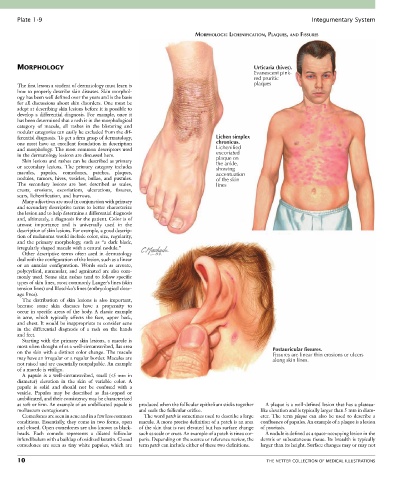
Plate 1-9                                                                                             Integumentary System

                                                                    MORPHOLOGY: LICHENIFICATION, PLAQUES, AND FISSURES


       MORPHOLOGY                                                                        Urticaria (hives).
                                                                                         Evanescent pink-
                                                                                         red pruritic
       The first lesson a student of dermatology must learn is                           plaques
       how to properly describe skin diseases. Skin morphol-
       ogy has been well defined over the years and is the basis
       for all discussions about skin disorders. One must be
       adept at describing skin lesions before it is possible to
       develop  a  differential  diagnosis.  For  example,  once  it
       has been determined that a rash is in the morphological
       category  of  macule,  all  rashes  in  the  blistering  and
       nodular categories can easily be excluded from the dif-
       ferential diagnosis. To get a firm grasp of dermatology,             Lichen simplex
       one must have an excellent foundation in description                 chronicus.
       and morphology. The most common descriptors used                     Lichenified
       in the dermatology lexicon are discussed here.                       excoriated
                                                                            plaque on
         Skin lesions and rashes can be described as primary
       or  secondary  lesions.  The  primary  category  includes            the ankle,
                                                                            showing
       macules,  papules,  comedones,  patches,  plaques,                   accentuation
       nodules,  tumors,  hives,  vesicles,  bullae,  and  pustules.        of the skin
       The  secondary  lesions  are  best  described  as  scales,           lines
       crusts,  erosions,  excoriations,  ulcerations,  fissures,
       scars, lichenification, and burrows.
         Many adjectives are used in conjunction with primary
       and secondary descriptive terms to better characterize
       the lesion and to help determine a differential diagnosis
       and, ultimately, a diagnosis for the patient. Color is of
       utmost  importance  and  is  universally  used  in  the
       description of skin lesions. For example, a good descrip-
       tion of melanoma would include color, size, regularity,
       and  the  primary  morphology,  such  as  “a  dark  black,
       irregularly shaped macule with a central nodule.”
         Other  descriptive  terms  often  used  in  dermatology
       deal with the configuration of the lesion, such as a linear
       or  an  annular  configuration.  Words  such  as  arcuate,
       polycyclical, nummular, and agminated are also com-
       monly used. Some skin rashes tend to follow specific
       types of skin lines, most commonly Langer’s lines (skin
       tension lines) and Blaschko’s lines (embryological cleav-
       age lines).
         The  distribution  of  skin  lesions  is  also  important,
       because  some  skin  diseases  have  a  propensity  to
       occur in specific areas of the body. A classic example
       is  acne,  which  typically  affects  the  face,  upper  back,
       and chest. It would be inappropriate to consider acne
       in  the  differential  diagnosis  of  a  rash  on  the  hands
       and feet.
         Starting  with  the  primary  skin  lesions,  a  macule  is
       most often thought of as a well-circumscribed, flat area                                Postauricular fissures.
       on the skin with a distinct color change. The macule                                    Fissures are linear thin erosions or ulcers
       may have an irregular or a regular border. Macules are                                  along skin lines.
       not raised and are essentially nonpalpable. An example
       of a macule is vitiligo.
         A  papule  is  a  well-circumscribed,  small  (<5 mm  in
       diameter)  elevation  in  the  skin  of  variable  color.  A
       papule  is  solid  and  should  not  be  confused  with  a
       vesicle.  Papules  may  be  described  as  flat-topped  or
       umbilicated, and their consistency may be characterized
       as soft or firm. An example of an umbilicated papule is   produced when the follicular epithelium sticks together   A plaque is a well-defined lesion that has a plateau-
       molluscum contagiosum.                    and seals the follicular orifice.         like elevation and is typically larger than 5 mm in diam-
         Comedones are seen in acne and in a few less common   The word patch is sometimes used to describe a large   eter.  The  term  plaque  can  also  be  used  to  describe  a
       conditions. Essentially, they come in two forms, open   macule. A more precise definition of a patch is an area   confluence of papules. An example of a plaque is a lesion
       and closed. Open comedones are also known as black-  of the skin that is not elevated but has surface change   of psoriasis.
       heads.  Each  comedo  represents  a  dilated  follicular   such as scale or crust. An example of a patch is tinea cor-  A nodule is defined as a space-occupying lesion in the
       infundibulum with a buildup of oxidized keratin. Closed   poris. Depending on the source or reference review, the   dermis or subcutaneous tissue. Its breadth is typically
       comedones  are  seen  as  tiny  white  papules,  which  are   term patch can include either of these two definitions.  larger than its height. Surface changes may or may not

       10                                                                                    THE NETTER COLLECTION OF MEDICAL ILLUSTRATIONS

