


Page 224 - The Netter Collection of Medical Illustrations - Integumentary System_ Volume 4 ( PDFDrive )
P. 224
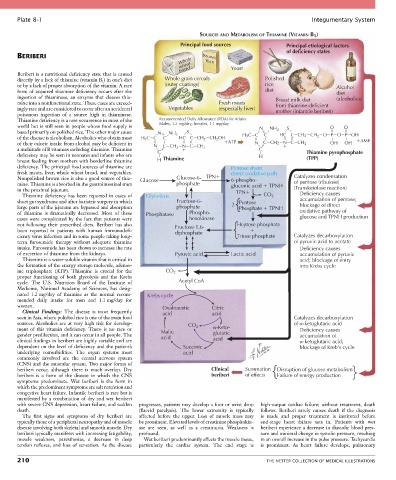
Plate 8-1                                                                                             Integumentary System

                                                                      SOURCES AND METABOLISM OF THIAMINE (VITAMIN B )
                                                                                                             1
                                                               Principal food sources               Principal etiological factors
                                                                                                    of deficiency states
       BERIBERI                                                        Brown
                                                               Whole    Rice
                                                               wheat
       Beriberi is a nutritional deficiency state that is caused   bread         Yeast
       directly by a lack of thiamine (vitamin B 1 ) in one’s diet   Whole grain cereals     Polished
       or by a lack of proper absorption of the vitamin. A rare   (outer coatings)           rice                    Alcohol
       form of acquired thiamine deficiency occurs after the                                 diet                    diet
       ingestion  of  thiaminase,  an  enzyme  that  cleaves  thia-                             Breast milk diet     (alcoholics)
       mine into a nonfunctional state. These cases are exceed-              Fresh meats        from thiamine-deficient
       ingly rare and are considered to occur after an accidental   Vegetables  (especially liver)  mother (infantile beriberi)
       poisonous  ingestion  of  a  source  high  in  thiaminase.
       Thiamine deficiency is a rare occurrence in most of the   Recommended Daily Allowance (RDA) for Adults:
       world but is still seen in people whose food supply is   Males, 1.2 mg/day; females, 1.1 mg/day  N  NH
       based primarily on polished rice. The other major cause      NH 2    S                      2 HC   S           O    O
                                                                                                               2
       of the disease is alcoholism. Alcoholics who obtain most   H C C  N    C    HC   C CH  CH OH  H3C C    C         C CH2 CH  O P O P OH
                                                                       2
                                                                            2


                                                   3


       of their caloric intake from alcohol may be deficient in      C CH  N C CH   ATP  N    C CH2 N C CH 3       OH   OH   AMP
       a multitude of B vitamins including thiamine. Thiamine   N   C     2     3         C                Thiamine pyrophosphate
       deficiency may be seen in neonates and infants who are                             H                (TPP)
       breast feeding from mothers with borderline thiamine   H  Thiamine
       deficiency. The principal food sources of thiamine are                    Pentose shunt
       fresh meats, liver, whole wheat bread, and vegetables.                    direct oxidative path
       Nonpolished brown rice is also a good source of thia-  Glucose  Glucose-6- TPN   6-phospho-    Catalyzes condensation
       mine. Thiamine is absorbed in the gastrointestinal tract   phosphate      gluconic acid   TPNH  of pentose (ribulose)
       in the proximal jejunum.                                                   TPN                 (Transketolase reaction)
         Thiamine  deficiency  has  been  reported  in  cases  of   Glycolysis              CO 2         Deficiency causes
       short gut syndrome and after bariatric surgery in which   Fructose-6-       Pentose               accumulation of pentose;
       large parts of the jejunum are bypassed and absorption   phosphate        2  Phosphate   TPNH     blockage of direct
       of  thiamine  is  dramatically  decreased.  Most  of  these   Phosphatase  Phospho-               oxidative pathway of
       cases were complicated by the fact that patients were      hexokinase                             glucose and TPNH production
       not following their prescribed diets. Beriberi has also   Fructose-1,6-     Heptose phosphate
       been  reported  in  patients  with  human  immunodefi-  diphosphate
       ciency virus infection and in some people taking long-                      Triose phosphate   Catalyzes decarboxylation
       term  furosemide  therapy  without  adequate  thiamine                                         of pyruvic acid to acetate
       intake. Furosemide has been shown to increase the rate                                            Deficiency causes
       of excretion of thiamine from the kidneys.            Pyruvic acid        Lactic acid             accumulation of pyruvic
         Thiamine is a water-soluble vitamin that is critical in                                         acid; blockage of entry
       the formation of the energy storage molecule, adenos-                                             into Krebs cycle
       ine  triphosphate  (ATP).  Thiamine  is  crucial  for  the   CO 2
       proper  functioning  of  both  glycolysis  and  the  Krebs
       cycle.  The  U.S.  Nutrition  Board  of  the  Institute  of   Acetyl CoA
       Medicine,  National  Academy  of  Sciences,  has  desig-
       nated  1.2 mg/day  of  thiamine  as  the  normal  recom-  Krebs cycle
       mended  daily  intake  for  men  and  1.1 mg/day  for
       women.                                            Oxaloacetic      Citric
         Clinical  Findings:  The  disease  is  most  frequently   acid   acid
       seen in Asia, where polished rice is one of the main food                                      Catalyzes decarboxylation
       sources.  Alcoholics  are  at  very  high  risk  for  develop-  CO 2                           of  -ketoglutaric acid
       ment  of  this  vitamin  deficiency.  There  is  no  race  or   Malic   -Keto-                    Deficiency causes
       gender predilection, and it can occur in all people. The   acid     glutaric                      accumulation of
       clinical findings in beriberi are highly variable and are           acid                           -ketoglutaric acid;
       dependent on the level of deficiency and the patient’s   Succinic                                 blockage of Kreb’s cycle
       underlying  comorbidities.  The  organ  systems  most    acid
       commonly  involved  are  the  central  nervous  system
       (CNS) and the muscular system. Two major forms of
       beriberi  occur,  although  there  is  much  overlap.  Dry         Clinical    Summation  Disruption of glucose metabolism
       beriberi  is  a  form  of  the  disease  in  which  the  CNS       beriberi    of effects  Failure of energy production
       symptoms  predominate.  Wet  beriberi  is  the  form  in
       which the predominant symptoms are salt retention and
       congestive heart failure. Infantile beriberi is rare but is
       manifested  by  a  combination  of  dry  and  wet  beriberi
       with severe CNS depression, heart failure, and sudden   progresses, patients may develop a foot or wrist drop   high-output  cardiac  failure;  without  treatment,  death
       death.                                    (flaccid  paralysis).  The  lower  extremity  is  typically   follows.  Beriberi  rarely  causes  death  if  the  diagnosis
         The  first  signs  and  symptoms  of  dry  beriberi  are   affected  before  the  upper.  Loss  of  muscle  mass  may     is  made  and  proper  treatment  is  instituted  before
       typically those of a peripheral neuropathy and of muscle   be prominent. Elevated levels of creatinine phosphokin-  end-stage  heart  failure  sets  in.  Patients  with  wet
       disease involving both skeletal and smooth muscle. Dry   ase  are  seen,  as  well  as  a  creatinuria.  Weakness  is   beriberi experience a decrease in diastolic blood pres-
       beriberi typically manifests with increasing fatigability,   profound.              sure and minimal change in systolic pressure, resulting
       muscle  weakness,  paresthesias,  a  decrease  in  deep   Wet beriberi predominantly affects the muscle tissue,   in an overall increase in the pulse pressure. Tachycardia
       tendon  reflexes,  and  loss  of  sensation.  As  the  disease   particularly  the  cardiac  system.  The  end  stage  is   is  prominent.  As  heart  failure  develops,  pulmonary

       210                                                                                   THE NETTER COLLECTION OF MEDICAL ILLUSTRATIONS

