


Page 229 - The Netter Collection of Medical Illustrations - Integumentary System_ Volume 4 ( PDFDrive )
P. 229
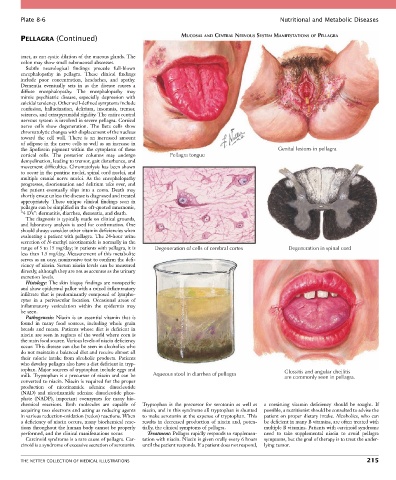
Plate 8-6                                                                                 Nutritional and Metabolic Diseases

        PELLAGRA (Continued)                                    MUCOSAL AND CENTRAL NERVOUS SYSTEM MANIFESTATIONS OF PELLAGRA


        tract, as can cystic dilation of the mucous glands. The
        colon may show small submucosal abscesses.
          Subtle  neurological  findings  precede  full-blown
        encephalopathy  in  pellagra.  These  clinical  findings
        include  poor  concentration,  headaches,  and  apathy.
        Dementia  eventually  sets  in  as  the  disease  causes  a
        diffuse  encephalopathy.  The  encephalopathy  may
        mimic  psychiatric  disease,  especially  depression  with
        suicidal tendency. Other well-defined symptoms include
        confusion,  hallucination,  delirium,  insomnia,  tremor,
        seizures, and extrapyramidal rigidity. The entire central
        nervous system is involved in severe pellagra. Cortical
        nerve  cells  show  degeneration.  The  Betz  cells  show
        chromatolytic changes with displacement of the nucleus
        toward  the  cell  wall.  There  is  an  increased  amount
        of adipose in the nerve cells as well as an increase in
        the  lipofuscin  pigment  within  the  cytoplasm  of  these                              Genital lesions in pellagra
        cortical  cells.  The  posterior  columns  may  undergo   Pellagra tongue
        demyelination, leading to tremor, gait disturbance, and
        movement difficulties. Chromatolysis has been shown
        to occur in the pontine nuclei, spinal cord nuclei, and
        multiple  cranial  nerve  nuclei.  As  the  encephalopathy
        progresses, disorientation and delirium take over, and
        the  patient  eventually  slips  into  a  coma.  Death  may
        shortly ensue unless the disease is diagnosed and treated
        appropriately.  These  unique  clinical  findings  seen  in
        pellagra can be simplified in the oft-quoted mnemonic,
        “4 D’s”: dermatitis, diarrhea, dementia, and death.
          The diagnosis is typically made on clinical grounds,
        and laboratory analysis is used for confirmation. One
        should always consider other vitamin deficiencies when
        evaluating a patient with pellagra. The 24-hour urine
        secretion of N-methyl nicotinamide is normally in the
        range of 5 to 15 mg/day; in patients with pellagra, it is   Degeneration of cells of cerebral cortex  Degeneration in spinal cord
        less than 1.5 mg/day. Measurement of this metabolite
        serves as an easy, noninvasive test to confirm the defi-
        ciency of niacin. Serum niacin levels can be measured
        directly, although they are not as accurate as the urinary
        excretion levels.
          Histology: The skin biopsy findings are nonspecific
        and show epidermal pallor with a mixed inflammatory
        infiltrate that is predominantly composed of lympho-
        cytes  in  a  perivascular  location.  Occasional  areas  of
        inflammatory  vesiculation  within  the  epidermis  may
        be seen.
          Pathogenesis:  Niacin  is  an  essential  vitamin  that  is
        found  in  many  food  sources,  including  whole  grain
        breads  and  meats.  Patients  whose  diet  is  deficient  in
        niacin are seen in regions of the world where corn is
        the main food source. Various levels of niacin deficiency
        occur. This disease can also be seen in alcoholics who
        do not maintain a balanced diet and receive almost all
        their  caloric  intake  from  alcoholic  products.  Patients
        who develop pellagra also have a diet deficient in tryp-
        tophan. Major sources of tryptophan include eggs and                                       Glossitis and angular cheilitis
        milk. Tryptophan is a precursor of niacin and can be   Aqueous stool in diarrhea of pellagra  are commonly seen in pellagra.
        converted to niacin. Niacin is required for the proper
        production  of  nicotinamide  adenine  dinucleotide
        (NAD)  and  nicotinamide  adenine  dinucleotide  phos-
        phate  (NADP),  important  coenzymes  for  many  bio-
        chemical  reactions.  Both  molecules  are  capable  of   Tryptophan  is  the  precursor  for  serotonin  as  well  as   a  coexisting  vitamin  deficiency  should  be  sought.  If
        acquiring two electrons and acting as reducing agents   niacin, and in this syndrome all tryptophan is shunted   possible, a nutritionist should be consulted to advise the
        in various reduction-oxidation (redox) reactions. When   to make serotonin at the expense of tryptophan. This   patient on proper dietary intake. Alcoholics, who can
        a deficiency of niacin occurs, many biochemical reac-  results  in  decreased  production  of  niacin  and,  poten-  be deficient in many B vitamins, are often treated with
        tions throughout the human body cannot be properly   tially, the clinical symptoms of pellagra.  multiple B vitamins. Patients with carcinoid syndrome
        performed, and the clinical manifestations occur.  Treatment: Pellagra rapidly responds to supplemen-  need  to  take  supplemental  niacin  to  avoid  pellagra
          Carcinoid syndrome is a rare cause of pellagra. Car-  tation with niacin. Niacin is given orally every 6 hours   symptoms, but the goal of therapy is to treat the under-
        cinoid is a syndrome of excessive secretion of serotonin.   until the patient responds. If a patient does not respond,   lying tumor.


        THE NETTER COLLECTION OF MEDICAL ILLUSTRATIONS                                                                          215

