


Page 28 - The Netter Collection of Medical Illustrations - Integumentary System_ Volume 4 ( PDFDrive )
P. 28
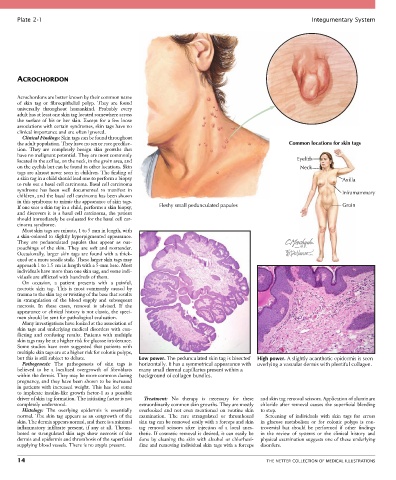
Plate 2-1                                                                                             Integumentary System


       ACROCHORDON


       Acrochordons are better known by their common name
       of  skin  tag  or  fibroepithelial  polyp.  They  are  found
       universally  throughout  humankind.  Probably  every
       adult has at least one skin tag located somewhere across
       the surface of his or her skin. Except for a few loose
       associations with certain syndromes, skin tags have no
       clinical importance and are often ignored.
         Clinical Findings: Skin tags can be found throughout
       the adult population. They have no sex or race predilec-                                      Common locations for skin tags
       tion.  They  are  completely  benign  skin  growths  that
       have no malignant potential. They are most commonly
       located in the axillae, on the neck, in the groin area, and                                      Eyelids
       on the eyelids but can be found in other locations. Skin                                          Neck
       tags are almost never seen in children. The finding of
       a skin tag in a child should lead one to perform a biopsy                                                       Axilla
       to rule out a basal cell carcinoma. Basal cell carcinoma
       syndrome  has  been  well  documented  to  manifest  in                                                         Inframammary
       children, and the basal cell carcinoma has been shown
       in this syndrome to mimic the appearance of skin tags.
       If one sees a skin tag in a child, performs a skin biopsy,   Fleshy small pedunculated papules                  Groin
       and  discovers  it  is  a  basal  cell  carcinoma,  the  patient
       should immediately be evaluated for the basal cell car-
       cinoma syndrome.
         Most skin tags are minute, 1 to 5 mm in length, with
       a skin-colored to slightly hyperpigmented appearance.
       They  are  pedunculated  papules  that  appear  as  out-
       pouchings  of  the  skin.  They  are  soft  and  nontender.
       Occasionally,  larger  skin  tags  are  found  with  a  thick-
       ened or a more sessile stalk. These larger skin tags may
       approach 1 to 1.5 cm in length with a 5-mm base. Most
       individuals have more than one skin tag, and some indi-
       viduals are afflicted with hundreds of them.
         On  occasion,  a  patient  presents  with  a  painful,
       necrotic  skin  tag.  This  is  most  commonly  caused  by
       trauma to the skin tag or twisting of the base that results
       in  strangulation  of  the  blood  supply  and  subsequent
       necrosis.  In  these  cases,  removal  is  advised.  If  the
       appearance or clinical history is not classic, the speci-
       men should be sent for pathological evaluation.
         Many investigations have looked at the association of
       skin tags and underlying medical disorders with con-
       flicting  and  confusing  results.  Patients  with  multiple
       skin tags may be at a higher risk for glucose intolerance.
       Some  studies  have  even  suggested  that  patients  with
       multiple skin tags are at a higher risk for colonic polyps,
       but this is still subject to debate.      Low power. The pedunculated skin tag is bisected  High power. A slightly acanthotic epidermis is seen
         Pathogenesis:  The  pathogenesis  of  skin  tags  is   horizontally. It has a symmetrical appearance with  overlying a vascular dermis with plentiful collagen.
       believed  to  be  a  localized  overgrowth  of  fibroblasts   many small dermal capillaries present within a
       within the dermis. They may be more common during   background of collagen bundles.
       pregnancy, and they have been shown to be increased
       in  patients  with  increased  weight.  This  has  led  some
       to implicate insulin-like growth factor-1 as a possible
       driver of skin tag formation. The initiating factor is not   Treatment:  No  therapy  is  necessary  for  these   and skin tag removal scissors. Application of aluminum
       completely understood.                    extraordinarily common skin growths. They are mostly   chloride  after  removal  causes  the  superficial  bleeding
         Histology:  The  overlying  epidermis  is  essentially   overlooked  and  not  even  mentioned  on  routine  skin   to stop.
       normal. The skin tag appears as an outgrowth of the   examination.  The  rare  strangulated  or  thrombosed   Screening  of  individuals  with  skin  tags  for  errors
       skin. The dermis appears normal, and there is a minimal   skin tag can be removed easily with a forceps and skin   in  glucose  metabolism  or  for  colonic  polyps  is  con-
       inflammatory  infiltrate  present,  if  any  at  all.  Throm-  tag  removal  scissors  after  injection  of  a  local  anes-  troversial  but  should  be  performed  if  other  findings
       bosed  or  strangulated  skin  tags  show  necrosis  of  the   thetic. If cosmetic removal is desired, it can easily be   in  the  review  of  systems  or  the  clinical  history  and
       dermis and epidermis and thrombosis of the superficial   done  by  cleaning  the  skin  with  alcohol  or  chlorhexi-  physical examination suggests one of these underlying
       supplying blood vessels. There is no atypia present.  dine and removing individual skin tags with a forceps   disorders.

       14                                                                                    THE NETTER COLLECTION OF MEDICAL ILLUSTRATIONS

