


Page 32 - The Netter Collection of Medical Illustrations - Integumentary System_ Volume 4 ( PDFDrive )
P. 32
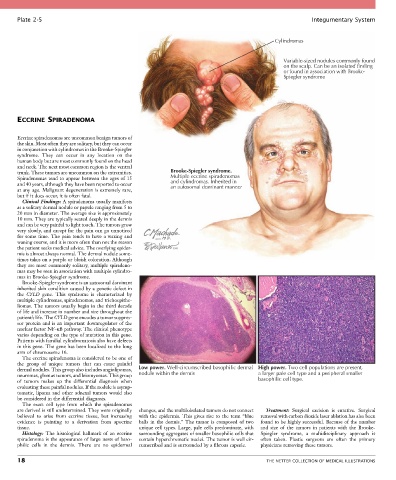
Plate 2-5                                                                                             Integumentary System


                                                                                                Cylindromas


                                                                                                   Variable-sized nodules commonly found
                                                                                                   on the scalp. Can be an isolated finding
                                                                                                   or found in association with Brooke-
                                                                                                   Spiegler syndrome


       ECCRINE SPIRADENOMA


       Eccrine spiradenomas are uncommon benign tumors of
       the skin. Most often they are solitary, but they can occur
       in conjunction with cylindromas in the Brooke-Spiegler
       syndrome.  They  can  occur  in  any  location  on  the
       human body but are most commonly found on the head
       and neck. The next most common region is the ventral
       trunk. These tumors are uncommon on the extremities.   Brooke-Spiegler syndrome.
       Spiradenomas tend to appear between the ages of 15   Multiple eccrine spiradenomas
       and 40 years, although they have been reported to occur   and cylindromas. Inherited in
                                                            an autosomal dominant manner
       at any age. Malignant degeneration is extremely rare,
       but if it does occur, it is often fatal.
         Clinical Findings: A spiradenoma usually manifests
       as a solitary dermal nodule or papule ranging from 5 to
       20 mm in diameter. The average size is approximately
       10 mm. They are typically seated deeply in the dermis
       and can be very painful to light touch. The tumors grow
       very slowly, and except for the pain can go unnoticed
       for some  time.  The  pain  tends  to  have  a waxing  and
       waning course, and it is more often than not the reason
       the patient seeks medical advice. The overlying epider-
       mis is almost always normal. The dermal nodule some-
       times takes on a purple or bluish coloration. Although
       they are most commonly solitary, multiple spiradeno-
       mas may be seen in association with multiple cylindro-
       mas in Brooke-Spiegler syndrome.
         Brooke-Spiegler syndrome is an autosomal dominant
       inherited skin condition caused by a genetic defect in
       the  CYLD  gene.  This  syndrome  is  characterized  by
       multiple cylindromas, spiradenomas, and trichoepithe-
       liomas. The tumors usually begin in the third decade
       of life and increase in number and size throughout the
       patient’s life. The CYLD gene encodes a tumor suppres-
       sor protein and is an important downregulator of the
       nuclear factor NF-κB pathway. The clinical phenotype
       varies depending on the type of mutation in this gene.
       Patients with familial cylindromatosis also have defects
       in this gene. The gene has been localized to the long
       arm of chromosome 16.
         The eccrine spiradenoma is considered to be one of
       the  group  of  unique  tumors  that  can  cause  painful
       dermal nodules. This group also includes angiolipomas,   Low power. Well-circumscribed basophilic dermal High power. Two cell populations are present,
       neuromas, glomus tumors, and leiomyomas. This group   nodule within the dermis     a larger pale cell type and a peripheral smaller
       of  tumors  makes  up  the  differential  diagnosis  when                          basophilic cell type.
       evaluating these painful nodules. If the nodule is asymp-
       tomatic, lipoma and other adnexal tumors would also
       be considered in the differential diagnosis.
         The  exact  cell  type  from  which  the  spiradenomas
       are derived is still undetermined. They were originally   changes, and the multilobulated tumors do not connect   Treatment:  Surgical  excision  is  curative.  Surgical
       believed  to  arise  from  eccrine  tissue,  but  increasing   with the epidermis. This gives rise to the term “blue   removal with carbon dioxide laser ablation has also been
       evidence  is  pointing  to  a  derivation  from  apocrine   balls  in  the  dermis.”  The  tumor  is  composed  of  two   found to be highly successful. Because of the number
       tissue.                                   unique cell types. Large, pale cells predominate, with   and  size  of  the  tumors  in  patients  with  the  Brooke-
         Histology:  The  histological  hallmark  of  an  eccrine   surrounding aggregates of smaller basophilic cells that   Spiegler  syndrome,  a  multidisciplinary  approach  is
       spiradenoma is the appearance of large nests of baso-  contain hyperchromatic nuclei. The tumor is well cir-  often  taken.  Plastic  surgeons  are  often  the  primary
       philic  cells  in  the  dermis.  There  are  no  epidermal   cumscribed and is surrounded by a fibrous capsule.  physicians removing these tumors.

       18                                                                                    THE NETTER COLLECTION OF MEDICAL ILLUSTRATIONS

