


Page 33 - The Netter Collection of Medical Illustrations - Integumentary System_ Volume 4 ( PDFDrive )
P. 33
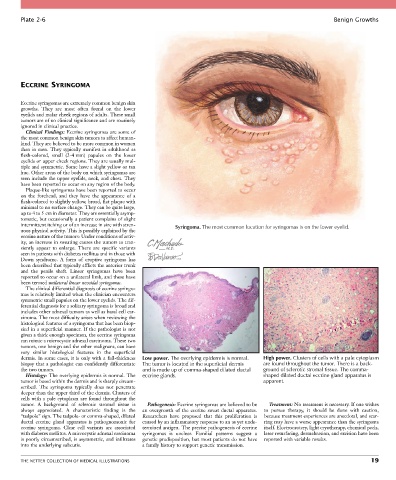
Plate 2-6                                                                                                   Benign Growths


        ECCRINE SYRINGOMA


        Eccrine syringomas are extremely common benign skin
        growths.  They  are  most  often  found  on  the  lower
        eyelids and malar cheek regions of adults. These small
        tumors are of no clinical significance and are routinely
        ignored in clinical practice.
          Clinical Findings: Eccrine syringomas are some of
        the most common benign skin tumors to affect human-
        kind. They are believed to be more common in women
        than in men. They typically manifest in adulthood as
        flesh-colored,  small  (2-4 mm)  papules  on  the  lower
        eyelids or upper cheek regions. They are usually mul-
        tiple and symmetric. Some have a slight yellow or tan
        hue. Other areas of the body on which syringomas are
        seen include the upper eyelids, neck, and chest. They
        have been reported to occur on any region of the body.
          Plaque-like syringomas have been reported to occur
        on  the  forehead,  and  they  have  the  appearance  of  a
        flesh-colored to slightly yellow, broad, flat plaque with
        minimal to no surface change. They can be quite large,
        up to 4 to 5 cm in diameter. They are essentially asymp-
        tomatic, but occasionally a patient complains of slight
        intermittent itching or of an increase in size with stren-   Syringoma. The most common location for syringomas is on the lower eyelid.
        uous physical activity. This is possibly explained by the
        eccrine nature of the tumors: Under conditions of activ-
        ity, an increase in sweating causes the tumors to tran-
        siently  appear  to  enlarge.  There  are  specific  variants
        seen in patients with diabetes mellitus and in those with
        Down  syndrome.  A  form  of  eruptive  syringoma  has
        been described that typically afflicts the anterior trunk
        and  the  penile  shaft.  Linear  syringomas  have  been
        reported to occur on a unilateral limb, and these have
        been termed unilateral linear nevoidal syringomas.
          The clinical differential diagnosis of eccrine syringo-
        mas is relatively limited when the clinician encounters
        symmetric small papules on the lower eyelids. The dif-
        ferential diagnosis for a solitary syringoma is broad and
        includes other adnexal tumors as well as basal cell car-
        cinoma. The most difficulty arises when reviewing the
        histological features of a syringoma that has been biop-
        sied  in  a  superficial  manner.  If  the  pathologist  is  not
        given a thick enough specimen, the eccrine syringoma
        can mimic a microcystic adnexal carcinoma. These two
        tumors, one benign and the other malignant, can have
        very  similar  histological  features  in  the  superficial
        dermis. In some cases, it is only with a full-thickness   Low power. The overlying epidermis is normal.  High power. Clusters of cells with a pale cytoplasm
        biopsy that a pathologist can confidently differentiate   The tumor is located in the superficial dermis  are found throughout the tumor. There is a back-
        the two tumors.                           and is made up of comma-shaped dilated ductal  ground of sclerotic stromal tissue. The comma-
          Histology: The overlying epidermis is normal. The   eccrine glands.               shaped dilated ductal eccrine gland apparatus is
        tumor is based within the dermis and is sharply circum-                             apparent.
        scribed.  The  syringoma  typically  does  not  penetrate
        deeper than the upper third of the dermis. Clusters of
        cells with a pale cytoplasm are found throughout the
        tumor.  A  background  of  sclerotic  stromal  tissue  is   Pathogenesis: Eccrine syringomas are believed to be   Treatment: No treatment is necessary. If one wishes
        always  appreciated.  A  characteristic  finding  is  the   an  overgrowth  of  the  eccrine  sweat  ductal  apparatus.   to  pursue  therapy,  it  should  be  done  with  caution,
        “tadpole” sign. The tadpole- or comma-shaped, dilated   Researchers  have  proposed  that  this  proliferation  is   because treatment experiences are anecdotal, and scar-
        ductal  eccrine  gland  apparatus  is  pathognomonic  for   caused by an inflammatory response to an as yet unde-  ring may have a worse appearance than the syringoma
        eccrine  syringoma.  Clear  cell  variants  are  associated   termined antigen. The precise pathogenesis of eccrine   itself. Electrocautery, light cryotherapy, chemical peels,
        with diabetes mellitus. A microcystic adnexal carcinoma   syringomas  is  unclear.  Familial  patterns  suggest  a   laser resurfacing, dermabrasion, and excision have been
        is poorly circumscribed, is asymmetric, and infiltrates   genetic predisposition, but most patients do not have     reported with variable results.
        into the underlying subcutis.             a family history to support genetic transmission.


        THE NETTER COLLECTION OF MEDICAL ILLUSTRATIONS                                                                           19

