


Page 45 - The Netter Collection of Medical Illustrations - Integumentary System_ Volume 4 ( PDFDrive )
P. 45
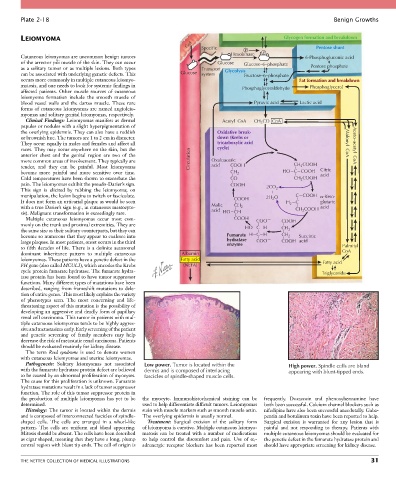
Plate 2-18                                                                                                  Benign Growths


        LEIOMYOMA                                                                                  Glycogen formation and breakdown
                                                                 Gut   Specific                               Pentose shunt
                                                                                      P
        Cutaneous leiomyomas are uncommon benign tumors                          Hexokinase  P            6-Phosphogluconic acid
        of the arrector pili muscle of the skin. They can occur             Glucose  Glucose–6–phosphate
        as a solitary tumor or as multiple lesions. Both types         Transport  Glycolysis                Pentose phosphate
        can be associated with underlying genetic defects. This   Glucose  system    Fructose–6–phosphate
        occurs more commonly in multiple cutaneous leiomyo-                                             Fat formation and breakdown
        matosis, and one needs to look for systemic findings in                      Phosphoglyceraldehyde  Phosphoglycerol
        affected  patients.  Other  muscle  sources  of  cutaneous
        leiomyoma  formation  include  the  smooth  muscle  of
        blood  vessel  walls  and  the  dartos  muscle.  These  rare                     Pyruvic acid    Lactic acid
        forms of cutaneous leiomyomas are named angioleio-
        myomas and solitary genital leiomyomas, respectively.
          Clinical Findings: Leiomyomas manifest as dermal                    Acetyl  CoA  CH 3 CO  CoA
        papules or nodules with a slight hyperpigmentation of
        the overlying epidermis. They can also have a reddish               Oxidative break-
        or brownish hue. The tumors are 1 to 2 cm in diameter.              down (Krebs or
        They occur equally in males and females and affect all              tricarboxylic acid                          Malonyl  CoA  Aceto–acetyl  CoA
        races. They may occur anywhere on the skin, but the                 cycle)
        anterior  chest  and  the  genital  region  are  two  of  the
        more common areas of involvement. They typically are      Circulation  Oxaloacetic
        tender,  and  they  can  be  painful.  Most  leiomyomas           acid   COOH                 CH 2 COOH
                                                                                                       _
                                                                                 _
        become  more  painful  and  more  sensitive  over  time.                 _ CH 2            HO C COOH    Citric
                                                                                                                acid
                                                                                                       _
        Cold temperatures have been shown to exacerbate the                      CO                    CH 2 COOH
                                                                                 _
        pain. The leiomyomas exhibit the pseudo-Darier’s sign.                   COOH        2CO
        This  sign  is  elicited  by  rubbing  the  leiomyoma;  on                               2
        manipulation, the lesion begins to twitch or fasciculate.                            2H O      C COOH  -Keto-
        It does not form an urticarial plaque as would be seen                    COOH         2    H  C _      glutaric
                                                                                  _
                                                                                                     2
        with a true Darier’s sign (e.g., in cutaneous mastocyto-          Malic   _ CH 2               CH 2 COOH  acid
                                                                                                        _
        sis). Malignant transformation is exceedingly rare.               acid  HO CH
                                                                                  _
          Multiple  cutaneous  leiomyomas  occur  most  com-                      COOH    COO
        monly on the trunk and proximal extremities. They are                             _       COOH
                                                                                                   _
        the same size as their solitary counterparts, but they can                    HO C H       _ CH 2
                                                                                          _
        become so numerous that they appear to coalesce into                   Fumarate  H C H    CH 2  Succinic
                                                                                                   _
                                                                                          _
        large plaques. In most patients, onset occurs in the third             hydratase  COO     COOH  acid
                                                                               enzyme
        to fifth decades of  life. There is  a  definite  autosomal                                                    Palmityl
        dominant  inheritance  pattern  to  multiple  cutaneous   Albumin                                              CoA
        leiomyomas. These patients have a genetic defect in the   Fatty acid
        FH gene (also called MCUL1), which encodes the Krebs    (NEFA)                                          Fatty acid
        cycle protein fumarate hydratase. The fumarate hydra-                                                   Triglyceride
        tase protein has been found to have tumor suppressor
        functions. Many different types of mutations have been
        described, ranging from frameshift mutations to dele-
        tion of entire genes. This most likely explains the variety
        of  phenotypes  seen.  The  most  concerning  and  life-
        threatening aspect of this mutation is the possibility of
        developing an aggressive and deadly form of papillary
        renal cell carcinoma. This tumor in patients with mul-
        tiple cutaneous leiomyomas tends to be highly aggres-
        sive and metastasizes early. Early screening of the patient
        and  genetic  screening  of  family  members  may  help
        decrease the risk of metastatic renal carcinoma. Patients
        should be evaluated routinely for kidney disease.
          The  term  Reed  syndrome  is  used  to  denote  women
        with cutaneous leiomyomas and uterine leiomyomas.
          Pathogenesis:  Solitary  leiomyomas  not  associated   Low power. Tumor is located within the  High power. Spindle cells are bland
        with the fumarate hydratase protein defect are believed   dermis and is composed of interlacing  appearing with blunt-tipped ends.
        to be caused by an abnormal proliferation of myocytes.   fascicles of spindle-shaped muscle cells.
        The cause for this proliferation is unknown. Fumarate
        hydratase mutations result in a lack of tumor suppressor
        function. The role of this tumor suppressor protein in
        the  production  of  multiple  leiomyomas  has  yet  to  be   the  myocyte.  Immunohistochemical  staining  can  be   frequently.  Doxazosin  and  phenoxybenzamine  have
        determined.                               used to help differentiate difficult tumors. Leiomyomas   both been successful. Calcium channel blockers such as
          Histology:  The  tumor  is  located  within  the  dermis   stain with muscle markers such as smooth muscle actin.   nifedipine have also been successful anecdotally. Gaba-
        and is composed of interconnected fascicles of spindle-  The overlying epidermis is usually normal.  pentin and botulinum toxin have been reported to help.
        shaped  cells.  The  cells  are  arranged  in  a  whorl-like   Treatment:  Surgical  excision  of  the  solitary  form   Surgical  excision  is  warranted  for  any  lesion  that  is
        pattern.  The  cells  are  uniform  and  bland  appearing.   of leiomyoma is curative. Multiple cutaneous leiomyo-  painful  and  not  responding  to  therapy.  Patients  with
        Mitosis should be absent. The cells have been described   matosis can be treated with a number of medications     multiple cutaneous leiomyomas should be evaluated for
        as cigar shaped, meaning that they have a long, plump   to  help  control  the  discomfort  and  pain.  Use  of  α 1 -  the genetic defect in the fumarate hydratase protein and
        central region with blunt tip ends. The cell of origin is   adrenergic  receptor  blockers  has  been  reported  most   should have appropriate screening for kidney disease.
        THE NETTER COLLECTION OF MEDICAL ILLUSTRATIONS                                                                           31

