


Page 40 - The Netter Collection of Medical Illustrations - Integumentary System_ Volume 4 ( PDFDrive )
P. 40
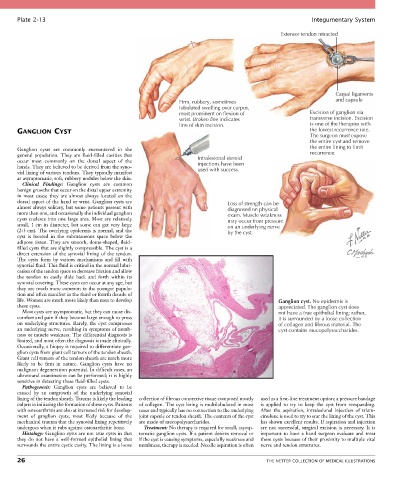
Plate 2-13                                                                                            Integumentary System

                                                                                                  Extensor tendon retracted


                                                                                                                     Carpal ligaments
                                                               Firm, rubbery, sometimes                              and capsule
                                                               lobulated swelling over carpus,
                                                               most prominent on flexion of                 Excision of ganglion via
                                                               wrist. Broken line indicates                 transverse incision. Excision
                                                               line of skin incision.                       is one of the therapies with
       GANGLION CYST                                                                                        the lowest recurrence rate.
                                                                                                            The surgeon must expose
                                                                                                            the entire cyst and remove
       Ganglion  cysts  are  commonly  encountered  in  the                                                 the entire lining to limit
       general  population.  They  are  fluid-filled  cavities  that   Intralesional steroid                recurrence.
       occur  most  commonly  on  the  dorsal  aspect  of  the       injections have been
       hands. They are believed to be derived from the syno-         used with success.
       vial lining of various tendons. They typically manifest
       as asymptomatic, soft, rubbery nodules below the skin.
         Clinical  Findings:  Ganglion  cysts  are  common
       benign growths that occur on the distal upper extremity
       in  most  cases;  they  are  almost  always  located  on  the
       dorsal aspect of the hand or wrist. Ganglion cysts are                   Loss of strength can be
       almost always solitary, but some patients present with                   diagnosed on physical
       more than one, and occasionally the individual ganglion                  exam. Muscle weakness
       cysts coalesce into one large area. Most are relatively                  may occur from pressure
       small,  1 cm  in  diameter,  but  some  can  get  very  large            on an underlying nerve
       (2-3 cm). The overlying epidermis is normal, and the                     by the cyst.
       cyst  is  located  in  the  subcutaneous  space  below  the
       adipose tissue. They are smooth, dome-shaped, fluid-
       filled cysts that are slightly compressible. The cyst is a
       direct  extension  of  the  synovial  lining  of  the  tendon.
       The  cysts  form  by  various  mechanisms  and  fill  with
       synovial fluid. This fluid is critical in the normal lubri-
       cation of the tendon space to decrease friction and allow
       the  tendon  to  easily  slide  back  and  forth  within  its
       synovial covering. These cysts can occur at any age, but
       they are much more common in the younger popula-
       tion and often manifest in the third or fourth decade of
       life. Women are much more likely than men to develop                                      Ganglion cyst. No epidermis is
       these cysts.                                                                              appreciated. The ganglion cyst does
         Most cysts are asymptomatic, but they can cause dis-                                    not have a true epithelial lining; rather,
       comfort and pain if they become large enough to press                                     it is surrounded by a loose collection
       on  underlying  structures.  Rarely,  the  cyst  compresses                               of collagen and fibrous material. The
       an underlying nerve, resulting in symptoms of numb-                                       cyst contains mucopolysaccharides.
       ness or muscle weakness. The differential diagnosis is
       limited, and most often the diagnosis is made clinically.
       Occasionally, a biopsy is required to differentiate gan-
       glion cysts from giant cell tumors of the tendon sheath.
       Giant cell tumors of the tendon sheath are much more
       likely  to  be  firm  in  nature.  Ganglion  cysts  have  no
       malignant degeneration potential. In difficult cases, an
       ultrasound examination can be performed; it is highly
       sensitive in detecting these fluid-filled cysts.
         Pathogenesis:  Ganglion  cysts  are  believed  to  be
       caused  by  an  outgrowth  of  the  underlying  synovial
       lining of the tendon sheath. Trauma is likely the leading   collection of fibrous connective tissue composed mostly   used as a first-line treatment option; a pressure bandage
       culprit in initiating the formation of these cysts. Patients   of collagen. The cyst lining is multilobulated in most   is  applied  to  try  to  keep  the  cyst  from  reexpanding.
       with osteoarthritis are also at increased risk for develop-  cases and typically has no connection to the underlying   After  the  aspiration,  intralesional  injection  of  triam-
       ment  of  ganglion  cysts,  most  likely  because  of  the   joint capsule or tendon sheath. The contents of the cyst   cinolone is used to try to scar the lining of the cyst. This
       mechanical trauma that the synovial lining repetitively   are made of mucopolysaccharides.  has shown excellent results. If aspiration and injection
       undergoes when it rubs against osteoarthritic bone.  Treatment: No therapy is required for small, asymp-  are  not  successful,  surgical  excision  is  necessary.  It  is
         Histology: Ganglion cysts are not true cysts in that   tomatic ganglion cysts. If a patient desires removal or   important  to  have  a  hand  surgeon  evaluate  and  treat
       they  do  not  have  a  well-formed  epithelial  lining  that   if the cyst is causing symptoms, especially weakness and   these cysts because of their proximity to multiple vital
       surrounds the entire cystic cavity. The lining is a loose   numbness, therapy is needed. Needle aspiration is often   nerve and tendon structures.

       26                                                                                    THE NETTER COLLECTION OF MEDICAL ILLUSTRATIONS

