


Page 320 - Clinical Application of Mechanical Ventilation
P. 320
286    Chapter 10


                                                                                           © Cengage Learning 2014


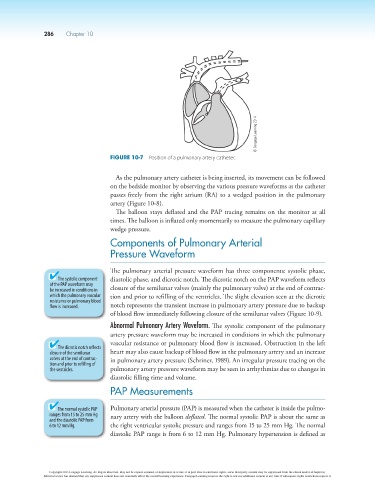
                                            Figure 10-7  Position of a pulmonary artery catheter.


                                             As the pulmonary artery catheter is being inserted, its movement can be followed
                                            on the bedside monitor by observing the various pressure waveforms as the catheter
                                            passes freely from the right atrium (RA) to a wedged position in the pulmonary
                                            artery (Figure 10-8).
                                             The balloon stays deflated and the PAP tracing remains on the monitor at all
                                            times. The balloon is inflated only momentarily to measure the pulmonary capillary
                                            wedge pressure.
                                            Components of Pulmonary Arterial
                                            Pressure Waveform


                                            The pulmonary arterial pressure waveform has three components: systolic phase,
                           The systolic component   diastolic phase, and dicrotic notch. The dicrotic notch on the PAP waveform reflects
                        of the PAP waveform may
                        be increased in conditions in   closure of the semilunar valves (mainly the pulmonary valve) at the end of contrac-
                        which the pulmonary vascular   tion and prior to refilling of the ventricles. The slight elevation seen at the dicrotic
                        resistance or pulmonary blood
                        flow is increased.  notch represents the transient increase in pulmonary artery pressure due to backup
                                            of blood flow immediately following closure of the semilunar valves (Figure 10-9).

                                            Abnormal Pulmonary Artery Waveform. The systolic component of the pulmonary
                                            artery pressure waveform may be increased in conditions in which the pulmonary
                                            vascular resistance or pulmonary blood flow is increased. Obstruction in the left
                           The dicrotic notch reflects
                        closure of the semilunar   heart may also cause backup of blood flow in the pulmonary artery and an increase
                        valves at the end of contrac-  in pulmonary artery pressure (Schriner, 1989). An irregular pressure tracing on the
                        tion and prior to refilling of
                        the ventricles.     pulmonary artery pressure waveform may be seen in arrhythmias due to changes in
                                            diastolic filling time and volume.
                                            PAP Measurements


                          The normal systolic PAP   Pulmonary arterial pressure (PAP) is measured when the catheter is inside the pulmo-
                        ranges from 15 to 25 mm Hg   nary artery with the balloon deflated. The normal systolic PAP is about the same as
                        and the diastolic PAP from
                        6 to 12 mm Hg.      the right ventricular systolic pressure and ranges from 15 to 25 mm Hg. The normal
                                            diastolic PAP range is from 6 to 12 mm Hg. Pulmonary hypertension is defined as


                        Copyright 2013 Cengage Learning. All Rights Reserved. May not be copied, scanned, or duplicated, in whole or in part. Due to electronic rights, some third party content may be suppressed from the eBook and/or eChapter(s).
                      Editorial review has deemed that any suppressed content does not materially affect the overall learning experience. Cengage Learning reserves the right to remove additional content at any time if subsequent rights restrictions require it.

