


Page 396 - Clinical Application of Mechanical Ventilation
P. 396
362    Chapter 11


                                                  800


                                                  600

                                                Volume (mL)  400


                                                  200
                                                                            Initial Point of Inflection
                                                                                                                © Cengage Learning 2014
                                                                        PEEP

                                                              10       20       30       40       50       60
                                                                         Pressure (cm H O)
                                                                                      2
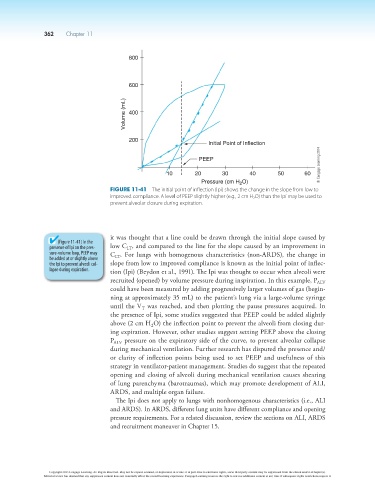
                                            Figure 11-41  The initial point of inflection (Ipi) shows the change in the slope from low to
                                            improved compliance. A level of PEEP slightly higher (e.g., 2 cm H 2 O) than the Ipi may be used to
                                            prevent alveolar closure during expiration.


                                            it was thought that a line could be drawn through the initial slope caused by
                          (Figure 11-41) In the
                        presence of Ipi on the pres-  low C , and compared to the line for the slope caused by an improvement in
                                                 LT
                        sure-volume loop, PEEP may   C .  For  lungs  with  homogenous  characteristics  (non-ARDS),  the  change  in
                        be added at or slightly above   LT
                        the Ipi to prevent alveoli col-  slope from low to improved compliance is known as the initial point of inflec-
                        lapse during expiration.  tion (Ipi) (Beydon et al., 1991). The Ipi was thought to occur when alveoli were
                                            recruited (opened) by volume pressure during inspiration. In this example, P ALV
                                            could have been measured by adding progressively larger volumes of gas (begin-
                                            ning at approximately 35 mL) to the patient’s lung via a large-volume syringe
                                            until the V  was reached, and then plotting the pause pressures acquired. In
                                                      T
                                            the presence of Ipi, some studies suggested that PEEP could be added slightly
                                            above (2 cm H O) the inflection point to prevent the alveoli from closing dur-
                                                         2
                                            ing expiration. However, other studies suggest setting PEEP above the closing
                                            P ALV  pressure on the expiratory side of the curve, to prevent alveolar collapse
                                            during mechanical ventilation. Further research has disputed the presence and/
                                            or clarity of inflection points being used to set PEEP and usefulness of this
                                            strategy in ventilator-patient management. Studies do suggest that the repeated
                                            opening and closing of alveoli during mechanical ventilation causes shearing
                                            of lung parenchyma (barotraumas), which may promote development of ALI,
                                            ARDS, and multiple organ failure.
                                             The Ipi does not apply to lungs with nonhomogenous characteristics (i.e., ALI
                                            and ARDS). In ARDS, different lung units have different compliance and opening
                                            pressure requirements. For a related discussion, review the sections on ALI, ARDS
                                            and recruitment maneuver in Chapter 15.


                        Copyright 2013 Cengage Learning. All Rights Reserved. May not be copied, scanned, or duplicated, in whole or in part. Due to electronic rights, some third party content may be suppressed from the eBook and/or eChapter(s).
                      Editorial review has deemed that any suppressed content does not materially affect the overall learning experience. Cengage Learning reserves the right to remove additional content at any time if subsequent rights restrictions require it.

