


Page 398 - Clinical Application of Mechanical Ventilation
P. 398
364    Chapter 11


                                                     60


                                                     40


                                                     20

                                                   V (L/min)


                                                  ·          100    200    300    400    500    600    700
                                                                            Volume (mL)
                                                   220


                                                                                                                  © Cengage Learning 2014
                                                   240

                                                                                                        Resistance
                                                   260                                                  Reduced

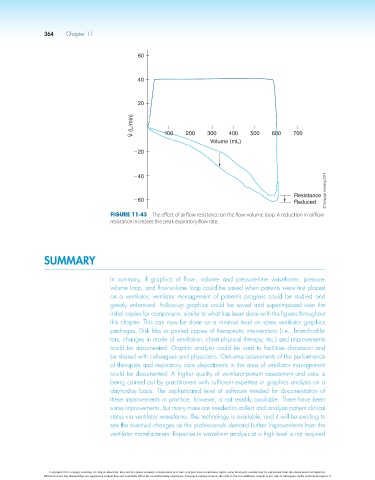
                                            Figure 11-43  The effect of airflow resistance on the flow-volume loop. A reduction in airflow
                                            resistance increases the peak expiratory flow rate.


                      SUMMARY


                                            In  summary,  if  graphics  of  flow-,  volume-  and  pressure-time  waveforms,  pressure-
                                            volume loop, and flow-volume loop could be saved when patients were first placed
                                            on  a  ventilator,  ventilator  management  of  patient’s  progress  could  be  studied  and
                                            greatly enhanced. Follow-up graphics could be saved and superimposed over the
                                            initial copies for comparison, similar to what has been done with the figures throughout
                                            this chapter. This can now be done on a minimal level on some ventilator graphics
                                            packages. Disk files or printed copies of therapeutic interventions (i.e., bronchodila-
                                            tors, changes in mode of ventilation, chest physical therapy, etc.) and improvements
                                            could be documented. Graphic analysis could be used to facilitate discussion and
                                            be shared with colleagues and physicians. Outcome assessments of the performance
                                            of therapists and respiratory care departments in the area of ventilator management
                                            could be documented. A higher quality of ventilator-patient assessment and care is
                                            being carried out by practitioners with sufficient expertise in graphics analysis on a
                                            day-to-day basis. The sophisticated level of software needed for documentation of
                                            these improvements in practice, however, is not readily available. There have been
                                            some improvements, but many more are needed to collect and analyze patient clinical
                                            status via ventilator waveforms. The technology is available, and it will be exciting to
                                            see the eventual changes as the professionals demand further improvements from the
                                            ventilator manufacturers. Expertise in waveform analysis at a high level is not required


                        Copyright 2013 Cengage Learning. All Rights Reserved. May not be copied, scanned, or duplicated, in whole or in part. Due to electronic rights, some third party content may be suppressed from the eBook and/or eChapter(s).
                      Editorial review has deemed that any suppressed content does not materially affect the overall learning experience. Cengage Learning reserves the right to remove additional content at any time if subsequent rights restrictions require it.

