


Page 53 - Clinical Application of Mechanical Ventilation
P. 53
Principles of Mechanical Ventilation  19


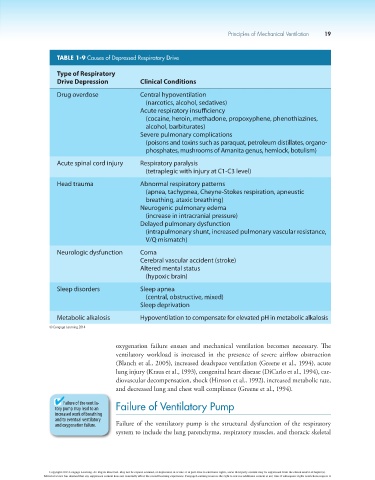
                          TABLE 1-9 Causes of Depressed Respiratory Drive

                          Type of Respiratory
                          Drive Depression           Clinical Conditions

                          Drug overdose              Central hypoventilation
                                                       (narcotics, alcohol, sedatives)
                                                     Acute respiratory insufficiency
                                                       (cocaine, heroin, methadone, propoxyphene, phenothiazines,
                                                       alcohol, barbiturates)
                                                     Severe pulmonary complications
                                                       (poisons and toxins such as paraquat, petroleum distillates, organo-
                                                       phosphates, mushrooms of Amanita genus, hemlock, botulism)

                          Acute spinal cord injury   Respiratory paralysis
                                                       (tetraplegic with injury at C1-C3 level)

                          Head trauma                Abnormal respiratory patterns
                                                       (apnea, tachypnea, Cheyne-Stokes respiration, apneustic
                                                       breathing, ataxic breathing)
                                                     Neurogenic pulmonary edema
                                                       (increase in intracranial pressure)
                                                     Delayed pulmonary dysfunction
                                                       (intrapulmonary shunt, increased pulmonary vascular resistance,
                                                       V/Q mismatch)

                          Neurologic dysfunction     Coma
                                                     Cerebral vascular accident (stroke)
                                                     Altered mental status
                                                       (hypoxic brain)
                          Sleep disorders            Sleep apnea
                                                       (central, obstructive, mixed)
                                                     Sleep deprivation
                          Metabolic alkalosis        Hypoventilation to compensate for elevated pH in metabolic alkalosis
                        © Cengage Learning 2014


                                             oxygenation  failure  ensues  and  mechanical  ventilation  becomes  necessary.  The
                                             ventilatory  workload  is  increased  in  the  presence  of  severe  airflow  obstruction
                                             (Blanch et al., 2005), increased deadspace ventilation (Greene et al., 1994), acute
                                             lung injury (Kraus et al., 1993), congenital heart disease (DiCarlo et al., 1994), car-
                                             diovascular decompensation, shock (Hinson et al., 1992), increased metabolic rate,
                                             and decreased lung and chest wall compliance (Greene et al., 1994).


                            Failure of the ventila-  Failure of Ventilatory Pump
                          tory pump may lead to an
                          increased work of breathing
                          and to eventual ventilatory
                          and oxygenation failure.  Failure of  the ventilatory  pump is the structural  dysfunction of  the respiratory
                                             system to include the lung parenchyma, respiratory muscles, and thoracic skeletal


                        Copyright 2013 Cengage Learning. All Rights Reserved. May not be copied, scanned, or duplicated, in whole or in part. Due to electronic rights, some third party content may be suppressed from the eBook and/or eChapter(s).
                      Editorial review has deemed that any suppressed content does not materially affect the overall learning experience. Cengage Learning reserves the right to remove additional content at any time if subsequent rights restrictions require it.

