


Page 50 - Clinical Application of Mechanical Ventilation
P. 50
16     Chapter 1


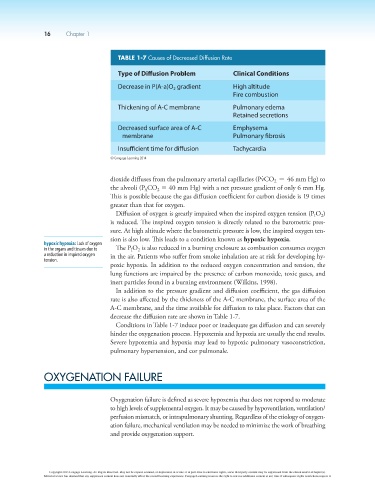
                                              TABLE 1-7 Causes of Decreased Diffusion Rate

                                              Type of Diffusion Problem             Clinical Conditions

                                              Decrease in P(A-a)O  gradient         High altitude
                                                                2
                                                                                    Fire combustion
                                              Thickening of A-C membrane            Pulmonary edema
                                                                                    Retained secretions
                                              Decreased surface area of A-C         Emphysema
                                                 membrane                           Pulmonary fibrosis

                                              Insufficient time for diffusion       Tachycardia
                                            © Cengage Learning 2014

                                                                                             #
                                            dioxide diffuses from the pulmonary arterial capillaries (PvCO = 46 mm Hg) to
                                                                                                 2
                                            the alveoli (P CO  5 40 mm Hg) with a net pressure gradient of only 6 mm Hg.
                                                           2
                                                       A
                                            This is possible because the gas diffusion coefficient for carbon dioxide is 19 times
                                            greater than that for oxygen.
                                             Diffusion of oxygen is greatly impaired when the inspired oxygen tension (P O )
                                                                                                                2
                                                                                                              I
                                            is reduced. The inspired oxygen tension is directly related to the barometric pres-
                                            sure. At high altitude where the barometric pressure is low, the inspired oxygen ten-
                                            sion is also low. This leads to a condition known as hypoxic hypoxia.
                      hypoxic hypoxia: Lack of oxygen
                      in the organs and tissues due to   The P O  is also reduced in a burning enclosure as combustion consumes oxygen
                                                     2
                                                  I
                      a reduction in inspired oxygen   in the air. Patients who suffer from smoke inhalation are at risk for developing hy-
                      tension.
                                            poxic hypoxia. In addition to the reduced oxygen concentration and tension, the
                                            lung functions are impaired by the presence of carbon monoxide, toxic gases, and
                                            inert particles found in a burning environment (Wilkins, 1998).
                                             In addition to the pressure gradient and diffusion coefficient, the gas diffusion
                                            rate is also affected by the thickness of the A-C membrane, the surface area of the
                                            A-C membrane, and the time available for diffusion to take place. Factors that can
                                            decrease the diffusion rate are shown in Table 1-7.
                                             Conditions in Table 1-7 induce poor or inadequate gas diffusion and can severely
                                            hinder the oxygenation process. Hypoxemia and hypoxia are usually the end results.
                                            Severe hypoxemia and hypoxia may lead to hypoxic pulmonary vasoconstriction,
                                            pulmonary hypertension, and cor pulmonale.


                      OXYGENATION FAILURE


                                            Oxygenation failure is defined as severe hypoxemia that does not respond to moderate
                                            to high levels of supplemental oxygen. It may be caused by hypoventilation, ventilation/
                                            perfusion mismatch, or intrapulmonary shunting. Regardless of the etiology of oxygen-
                                            ation failure, mechanical ventilation may be needed to minimize the work of breathing
                                            and provide oxygenation support.


                        Copyright 2013 Cengage Learning. All Rights Reserved. May not be copied, scanned, or duplicated, in whole or in part. Due to electronic rights, some third party content may be suppressed from the eBook and/or eChapter(s).
                      Editorial review has deemed that any suppressed content does not materially affect the overall learning experience. Cengage Learning reserves the right to remove additional content at any time if subsequent rights restrictions require it.

