


Page 391 - ACCCN's Critical Care Nursing
P. 391
368  P R I N C I P L E S   A N D   P R A C T I C E   O F   C R I T I C A L   C A R E


            TABLE 14.10  Common medications prescribed with chest injury: pneumothorax

            Type of drug  Generic medication  Route/actions                Nursing considerations
            Opioids       Morphine           IV.                           Sedative effect with respiratory depression,
                                             Activates opioid receptors in the brain   decreased cough reflex, bradycardia
                                               and spinal cord.            Histamine release may lead to flushing of face or
                                             Depresses respiratory centre and   hypotension, nausea and vomiting.
                                               cough reflex.               Reduces gastrointestinal motility.
                                             Alters pain perception and CNS   Reversed by naloxone.
                                               modulation of painful stimuli.
                          Fentanyl           Epidural and IV.              Sedative effect with respiratory depression
                                             A synthetic phenylpiperidine   Can obscure the clinical course of patients with
                                               derivative.                  head injury.
                                             Pharmacological actions are similar to   Slow IV injection reduces the risk of respiratory
                                               those of morphine, but action is   muscle rigidity.
                                               more prompt and less prolonged,   Use with caution in patients with renal and
                                               and fentanyl appears to have less   hepatic impairment, as action will be prolonged.
                                               emetic activity.            Respiratory depression can be reversed by
                                                                            naloxone. Bradycardia can be reversed by
                                                                            atropine.
            Antibiotic    Cephalosporin      IV.                           Active against a wide range of gram-positive and
                            (1st generation)    Bactericidal as a result of inhibition of   gram-negative bacilli. Highly active against
                            for 24 hours       bacterial cell wall synthesis.  Staphylococcus aureus, including strains resistant
                                                                            to penicillin.


                                                              addresses the risks and benefits of treatments for medical,
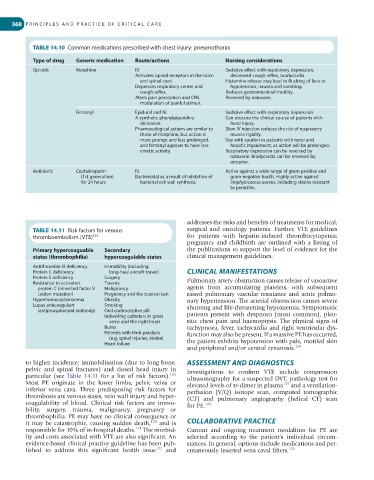
            TABLE 14.11  Risk factors for venous              surgical  and  oncology  patients.  Further,  VTE  guidelines
            thromboembolism (VTE) 123                         for  patients  with  heparin-induced  thrombocytopenia;
                                                              pregnancy and childbirth are outlined with a listing of
            Primary hypercoaguable   Secondary                the publications to support the level of evidence for the
            states (thrombophilia)  hypercoagulable states    clinical management guidelines.
            Antithrombin III deficiency  Immobility (including
            Protein C deficiency     long-haul aircraft travel)  CLINICAL MANIFESTATIONS
            Protein S deficiency   Surgery                    Pulmonary artery obstruction causes release of vasoactive
            Resistance to activated    Trauma
             protein C (inherited factor V   Malignancy       agents  from  accumulating  platelets,  with  subsequent
             Leiden mutation)      Pregnancy and the puerperium  raised  pulmonary  vascular  resistance  and  acute  pulmo-
            Hyperhomocysteinaemia  Obesity                    nary hypertension. The arterial obstruction causes severe
            Lupus anticoagulant    Smoking                    shunting and life-threatening hypoxaemia. Symptomatic
             (antiphospholipid antibody)  Oral contraceptive pill
                                   Indwelling catheters in great   patients  present  with  dyspnoea  (most  common),  pleu-
                                     veins and the right heart  ritic  chest  pain  and  haemoptysis.  The  physical  signs  of
                                   Burns                      tachypnoea, fever, tachycardia and right ventricular dys-
                                   Patients with limb paralysis   function may also be present. If a massive PE has occurred,
                                     (e.g. spinal injuries, stroke)  the patient exhibits hypotension with pale, mottled skin
                                   Heart failure
                                                              and peripheral and/or central cynanosis. 124
         to higher incidence: immobilisation (due to long bone,   ASSESSMENT AND DIAGNOSTICS
         pelvic  and  spinal  fractures)  and  closed  head  injury  in   Investigations  to  confirm  VTE  include  compression
         particular  (see  Table  14.11  for  a  list  of  risk  factors). 123    ultrasonography for a suspected DVT, pathology test for
         Most  PE  originate  in  the  lower  limbs,  pelvic  veins  or   elevated levels of D-dimer in plasma 125  and a ventilation-
         inferior  vena  cava.  Three  predisposing  risk  factors  for   perfusion  (V/Q)  isotope  scan,  computed  tomographic
         thrombosis are venous stasis, vein wall injury and hyper-  (CT)  and  pulmonary  angiography  (helical  CT)  scan
         coagulability  of  blood.  Clinical  risk  factors  are  immo-  for PE. 122
         bility,  surgery,  trauma,  malignancy,  pregnancy  or
         thrombophilia. PE may have no clinical consequence or
                                                  123
         it may be catastrophic, causing sudden death,  and is   COLLABORATIVE PRACTICE
         responsible for 10% of in-hospital deaths. 124  The morbid-  Current  and  ongoing  treatment  modalities  for  PE  are
         ity and costs associated with VTE are also significant. An   selected  according  to  the  patient’s  individual  circum-
         evidence-based clinical practice guideline has been pub-  stances. In general, options include medications and per-
         lished  to  address  this  significant  health  issue 122   and   cutaneously inserted vena caval filters. 126

