


Page 51 - Concise Pathology for Exam Preparation ( PDFDrive )
P. 51
36    SECTION I  General Pathology

                     Chemoattractants

                       1.  Exogenous—bacterial products
                       2.  Endogenous—C5a, leukotrienes and cytokines
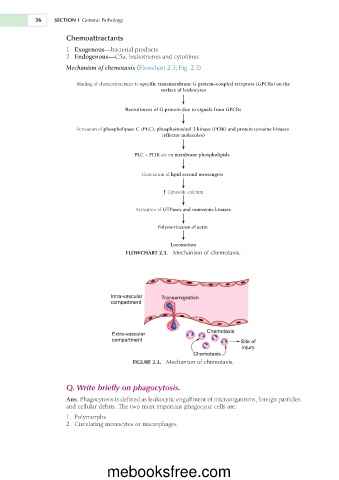
                     Mechanism of chemotaxis (Flowchart 2.3; Fig. 2.3)


                         Binding of chemoattractants to specific transmembrane G protein–coupled receptors (GPCRs) on the
                                                   surface of leukocytes

                                        Recruitment of G protein due to signals from GPCRs


                         Activation of phospholipase C (PLC), phosphoinositol 3 kinase (PI3K) and protein tyrosine kinases
                                                   (effector molecules)

                                          PLC + PI3K act on membrane phospholipids


                                             Generation of lipid second messengers

                                                   ↑ Cytosolic calcium


                                           Activation of GTPases and numerous kinases

                                                  Polymerization of actin

                                                      Locomotion
                                        FLOWCHART 2.3.  Mechanism of chemotaxis.


                                          FIGURE 2.3.  Mechanism of chemotaxis.


                     Q. Write briefly on phagocytosis.
                     Ans. Phagocytosis is defined as leukocytic engulfment of microorganisms, foreign particles
                     and cellular debris. The two most important phagocytic cells are:
                       1.  Polymorphs
                       2.  Circulating monocytes or macrophages


                                  mebooksfree.com

