


Page 1394 - Hematology_ Basic Principles and Practice ( PDFDrive )
P. 1394
1240   Part VII  Hematologic Malignancies


                                                           cyclin D1                             p53


          A                           B                    C                D                    E
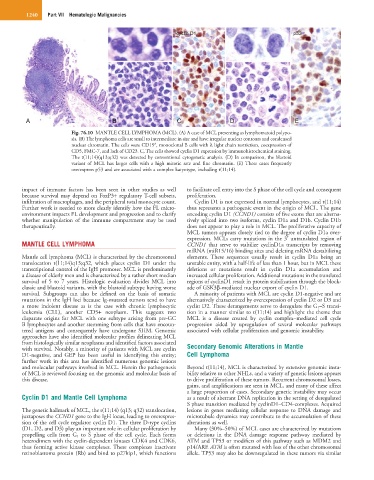
                        Fig. 76.10  MANTLE CELL LYMPHOMA (MCL). (A) A case of MCL presenting as lymphomatoid polypo-
                        sis. (B) The lymphoma cells are small to intermediate in size and have irregular nuclear contours and condensed
                                                    +
                        nuclear chromatin. The cells were CD19 , monoclonal B cells with λ light chain restriction, coexpression of
                        CD5, FMC-7, and lack of CD23. C, The cells showed cyclin D1 expression by immunohistochemical staining.
                        The t(11;14)(q13;q32) was detected by conventional cytogenetic analysis. (D) In comparison, the blastoid
                        variant  of  MCL  has  larger  cells  with  a  high  mitotic  rate  and  fine  chromatin.  (E) These  cases  frequently
                        overexpress p53 and are associated with a complex karyotype, including t(11;14).


        impact  of  immune  factors  has  been  seen  in  other  studies  as  well   to facilitate cell entry into the S phase of the cell cycle and consequent
        because survival may depend on FoxP3+ regulatory T-cell subsets,   proliferation.
        infiltration of macrophages, and the peripheral total monocyte count.   Cyclin D1 is not expressed in normal lymphocytes, and t(11;14)
        Further work is needed to more clearly identify how the FL micro-  thus represents a pathogenic event in the origin of MCL. The gene
        environment impacts FL development and progression and to clarify   encoding cyclin D1 (CCND1) consists of five exons that are alterna-
        whether  manipulation  of  the  immune  compartment  may  be  used   tively spliced into two isoforms, cyclin D1a and D1b. Cyclin D1b
        therapeutically.                                      does not appear to play a role in MCL. The proliferative capacity of
                                                              MCL tumors appears closely tied to the degree of cyclin D1a over-
                                                              expression. MCLs carry mutations in the 3′ untranslated region of
        MANTLE CELL LYMPHOMA                                  CCND1  that  serve  to  stabilize  cyclinD1a  transcripts  by  removing
                                                              miRNA (miR15/16) binding sites and deleting mRNA destabilizing
        Mantle cell lymphoma (MCL) is characterized by the chromosomal   elements.  These  sequences  usually  result  in  cyclin  D1a  being  an
        translocation  t(11;14)q13;q32,  which  places  cyclin  D1  under  the   unstable entity, with a half-life of less than 1 hour, but in MCL these
        transcriptional control of the IgH promoter. MCL is predominantly   deletions  or  mutations  result  in  cyclin  D1a  accumulation  and
        a disease of elderly men and is characterized by a rather short median   increased cellular proliferation. Additional mutations in the translated
        survival  of  5  to  7  years.  Histologic  evaluation  divides  MCL  into   regions of cyclinD1 result in protein stabilization through the block-
        classic and blastoid variants, with the blastoid subtype having worse   ade of GSK3β-mediated nuclear export of cyclin D1.
        survival.  Subgroups  can  also  be  defined  on  the  basis  of  somatic   A minority of patients with MCL are cyclin D1-negative and are
        mutations in the IgH loci because Ig-mutated tumors tend to have   alternatively characterized by overexpression of cyclin D2 or D3 and
        a  more  indolent  disease  as  is  the  case  with  chronic  lymphocytic   cyclin D2. These derangements serve to deregulate the G 1 –S transi-
        leukemia  (CLL),  another  CD5+  neoplasm.  This  suggests  two   tion in a manner similar to t(11;14) and highlight the theme that
        disparate  origins  for  MCL  with  one  subtype  arising  from  pre-GC   MCL  is  a  disease  created  by  cyclin  complex–mediated  cell  cycle
        B lymphocytes and another stemming from cells that have encoun-  progression  aided  by  upregulation  of  several  molecular  pathways
        tered  antigens  and  consequently  have  undergone  SHM.  Genomic   associated with cellular proliferation and genomic instability.
        approaches have also identified molecular profiles delineating MCL
        from histologically similar neoplasms and identified factors associated
        with survival. Notably, a minority of patients with MCL are cyclin   Secondary Genomic Alterations in Mantle
        D1-negative,  and  GEP  has  been  useful  in  identifying  this  entity;   Cell Lymphoma
        further work in this area has identified numerous genomic lesions
        and molecular pathways involved in MCL. Herein the pathogenesis   Beyond t(11;14), MCL is characterized by extensive genomic insta-
        of MCL is reviewed focusing on the genomic and molecular basis of     bility relative to other NHLs, and a variety of genetic lesions appears
        this disease.                                         to drive proliferation of these tumors. Recurrent chromosomal losses,
                                                              gains, and amplifications are seen in MCL, and many of these affect
                                                              a large proportion of cases. Secondary genetic instability may occur
        Cyclin D1 and Mantle Cell Lymphoma                    as a result of aberrant DNA replication in the setting of deregulated
                                                              S phase transition mediated by cyclinD1–CD4-complexes. Acquired
        The genetic hallmark of MCL, the t(11;14) (q13; q32) translocation,   lesions  in  genes  mediating  cellular  response  to  DNA  damage  and
        juxtaposes the CCND1 gene to the IgH locus, leading to overexpres-  microtubule dynamics may contribute to the accumulation of these
        sion of the cell cycle regulator cyclin D1. The three D-type cyclins   alterations as well.
        (D1, D2, and D3) play an important role in cellular proliferation by   Many (30%–50%) of MCL cases are characterized by mutations
        propelling  cells  from  G 1   to  S  phase  of  the  cell  cycle.  Each  forms   or  deletions  in  the  DNA  damage  response  pathway  mediated  by
        heterodimers with the cyclin-dependent kinases CDK4 and CDK6,   ATM and TP53 or modifiers of this pathway such as MDM2 and
        thus  forming  active  kinase  complexes. These  complexes  inactivate   p14/ARF. ATM is often mutated with loss of the other chromosomal
        retinoblastoma protein (Rb) and bind to p27kip1, which functions   allele. TP53 may also be downregulated in these tumors via similar

