


Page 1572 - Hematology_ Basic Principles and Practice ( PDFDrive )
P. 1572
Chapter 86  Plasma Cell Neoplasms  1399


                          1.0                                             1.0

                       Progression-free survival  (probability)  0.6   Overall survival  (probability)  0.6
                                                                          0.8
                          0.8


                          0.4
                                                                          0.4
                                   Median PFS
                                                                                   Median OS
                          0.2     R-ISS I     66 months                   0.2     R-ISS I     NR
                                  R-ISS II    42 months                           R-ISS II    83 months
                                  R-ISS III   29 months                           R-ISS III   43 months
                            0                                              0
                              0   12  24   36  48   60   72                  0   12   24  36   48  60   72
                                      Time (months)                                  Time (months)
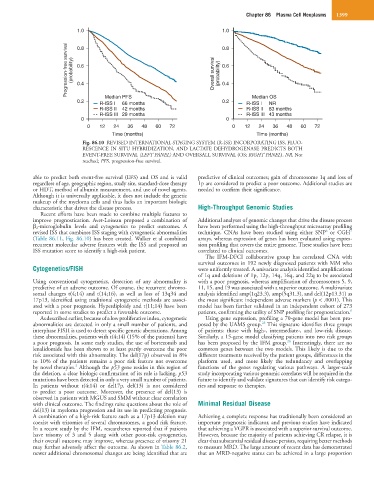
                            Fig. 86.10  REVISED INTERNATIONAL STAGING SYSTEM (R-ISS) INCORPORATING ISS, FLUO-
                            RESCENCE IN SITU HYBRIDIZATION, AND LACTATE DEHYDROGENASE PREDICTS BOTH
                            EVENT-FREE SURVIVAL (LEFT PANEL) AND OVERSALL SURVIVAL (OS; RIGHT PANEL). NR, Not
                            reached; PFS, progression-free survival.


            able to predict both event-free survival (EFS) and OS and is valid   predictive of clinical outcomes; gain of chromosome 1q and loss of
            regardless of age, geographic region, study site, standard-dose therapy   1p are considered to predict a poor outcome. Additional studies are
            or HDT, method of albumin measurement, and use of novel agents.   needed to confirm their significance.
            Although it is universally applicable, it does not include the genetic
            makeup of the myeloma cells and thus lacks an important biologic
            characteristic that drives the disease process.       High-Throughput Genomic Studies
              Recent efforts have been made to combine multiple features to
            improve  prognostication.  Avet-Loiseau  proposed  a  combination  of   Additional analyses of genomic changes that drive the disease process
            β 2 -microglobulin  levels  and  cytogenetics  to  predict  outcomes.  A   have been performed using the high-throughput microarray profiling
                                                                                                                    7
                                                                                                            6
            revised ISS that combines ISS staging with cytogenetic abnormalities   technique.  CNAs  have  been  studied  using  either  SNP   or  CGH
            (Table 86.11, Fig. 86.10) has been created. Walker et al combined   arrays, whereas expression of genes has been evaluated using expres-
            recurrent molecular adverse features with the ISS and proposed an   sion profiling that covers the entire genome. These studies have been
            ISS mutation score to identify a high-risk patient.   correlated to clinical outcomes.
                                                                    The  IFM-DFCI  collaborative  group  has  correlated  CNA  with
                                                                  survival outcomes in 192 newly diagnosed patients with MM who
            Cytogenetics/FISH                                     were uniformly treated. A univariate analysis identified amplifications
                                                                  of 1q and deletions of 1p, 12p, 14q, 16q, and 22q to be associated
            Using  conventional  cytogenetics,  detection  of  any  abnormality  is   with a poor prognosis, whereas amplification of chromosomes 5, 9,
            predictive of an adverse outcome. Of course, the recurrent chromo-  11, 15, and 19 was associated with a superior outcome. A multivariate
            somal  changes  t(4;14)  and  t(14;16),  as  well  as  loss  of  13q34  and   analysis identified amp(1q23.3), amp(5q31.3), and del(12p13.31) as
            17p13, identified using traditional cytogenetic methods are associ-  the most significant independent adverse markers (p < .0001). This
            ated with a poor prognosis. Hyperdiploidy and t(11;14) have been   model has been further validated in an independent cohort of 273
            reported in some studies to predict a favorable outcome.  patients, confirming the utility of SNP profiling for prognostication. 6
              As described earlier, because of a low proliferative index, cytogenetic   Using gene expression, profiling a 70-gene model has been pro-
                                                                                       23
            abnormalities are detected in only a small number of patients, and   posed by the UAMS group.  This signature identifies three groups
            interphase FISH is used to detect specific genetic aberrations. Among   of  patients:  those  with  high-,  intermediate-,  and  low-risk  disease.
            these abnormalities, patients with t(4;14) (15% of the patients) have   Similarly, a 15-gene model classifying patients into two risk groups
                                                                                               24
            a poor prognosis. In some early studies, the use of bortezomib and   has been proposed by the IFM group.  Interestingly, there are no
            lenalidomide has been shown to at least partly overcome the poor   common genes between the two models. This likely is due to the
            risk associated with this abnormality. The del(17p) observed in 8%   different treatments received by the patient groups, differences in the
            to  10%  of  the  patients  remains  a  poor  risk  feature  not  overcome   platform  used,  and  more  likely  the  redundancy  and  overlapping
                          3
            by novel therapies.  Although the p53 gene resides in this region of   functions  of  the  genes  regulating  various  pathways.  A  larger-scale
            the deletion, a clear biologic confirmation of its role is lacking. p53   study incorporating various genomic correlates will be required in the
            mutations have been detected in only a very small number of patients.   future to identify and validate signatures that can identify risk catego-
            In  patients  without  t(4;14)  or  del17p,  del(13)  is  not  considered   ries and response to therapies.
            to  predict  a  poor  outcome.  Moreover,  the  presence  of  del(13)  is
            observed in patients with MGUS and SMM without clear correlation
            with clinical outcome. The findings raise questions about the role of   Minimal Residual Disease
            del(13) in myeloma progression and its use in predicting prognosis.
            A combination of a high-risk feature such as a 17p13 deletion may   Achieving a complete response has traditionally been considered an
            coexist with trisomies of several chromosomes, a good risk feature.   important prognostic indicator, and previous studies have indicated
            In a recent study by the IFM, researcheres reported that if patients   that achieving a VGPR is associated with a superior survival outcome.
            have  trisomy  of  3  and  5  along  with  other  poor-risk  cytogenetics,   However, because the majority of patients achieving CR relapse, it is
            their overall outcome may improve, whereas presence of trisomy 21   clear that substantial residual disease persists, requiring better methods
            may further adversely affect the outcome. As shown in Table 86.2,   to measure MRD. The large amount of recent data has demonstrated
            newer additional chromosomal changes are being identified that are   that an MRD-negative status can be achieved in a large proportion

