


Page 1573 - Hematology_ Basic Principles and Practice ( PDFDrive )
P. 1573
1400   Part VII  Hematologic Malignancies


                100                                           100                  MRD-negative
                                 MRD-negative                                      N= 599
                                 N = 660                                           MRD-positive
                                 MRD-positive                                      N= 501
                 80                           χ =134.4         80                            χ =25.27
                                                                                              2
                                               2
                                 N = 613       1                                              1
                                              P >.00001                                      P = .0000005
               % PFS  60                                      cumulative % surviving  60
                 40                                            40

                 20                                            20


                  0       2     4      6     8      10    12     0       2     4      6     8     10     12
                                   Time (years)                                   Time (years)
                  No. at risk:                                   No. at risk:
                  MRD negative: 457  214  70   12      1                508   359    139    26     4
                  MRD positive: 308  113  28    4      1                390   250    105    17     5
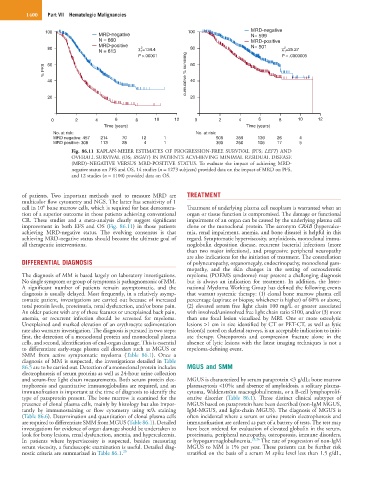
                        Fig. 86.11  KAPLAN-MEIER ESTIMATES OF PROGRESSION-FREE SURVIVAL (PFS; LEFT) AND
                        OVERALL SURVIVAL (OS; RIGHT) IN PATIENTS ACVHIEVING MINIMAL RESIDUAL DISEASE
                        (MRD)–NEGATIVE  VERSUS  MRD-POSITIVE  STATUS.  To  evaluate  the  impact  of  achieving  MRD-
                        negative status on PFS and OS, 14 studies (n = 1273 subjects) provided data on the impact of MRD on PFS,
                        and 12 studies (n = 1100) provided data on OS.


        of  patients.  Two  important  methods  used  to  measure  MRD  are   TREATMENT
        multicolor flow cytometry and NGS. The latter has sensitivity of 1
               6
        cell in 10  bone marrow cells, which is required for best demonstra-  Treatment of underlying plasma cell neoplasm is warranted when an
        tion of a superior outcome in those patients achieving conventional   organ or tissue function is compromised. The damage or functional
        CR.  These  studies  and  a  meta-analysis  clearly  suggest  significant   impairment of an organ can be caused by the underlying plasma cell
        improvement  in  both  EFS  and  OS  (Fig.  86.11)  in  those  patients   clone or the monoclonal protein. The acronym CRAB (hypercalce-
        achieving  MRD-negative  status.  The  evolving  consensus  is  that   mia, renal impairment, anemia, and bone disease) is helpful in this
        achieving MRD-negative status should become the ultimate goal of   regard. Symptomatic hyperviscosity, amyloidosis, monoclonal immu-
        all therapeutic interventions.                        noglobulin  deposition  disease,  recurrent  bacterial  infections  (more
                                                              than two major infections), and progressive peripheral neuropathy
                                                              are also indications for the initiation of treatment. The constellation
        DIFFERENTIAL DIAGNOSIS                                of polyneuropathy, organomegaly, endocrinopathy, monoclonal gam-
                                                              mopathy,  and  the  skin  changes  in  the  setting  of  osteosclerotic
        The diagnosis of MM is based largely on laboratory investigations.   myeloma (POEMS syndrome) may present a challenging diagnosis
        No single symptom or group of symptoms is pathognomonic of MM.   but  is  always  an  indication  for  treatment.  In  addition,  the  Inter-
        A  significant  number  of  patients  remain  asymptomatic,  and  the   national Myeloma Working Group has defined the following events
        diagnosis is usually delayed. Most frequently, in a relatively asymp-  that warrant systemic therapy: (1) clonal bone marrow plasma cell
        tomatic patient, investigations are carried out because of increased   percentage (aspirate or biopsy, whichever is higher) of 60% or above,
        total protein levels, proteinuria, renal dysfunction, and/or bone pain.   (2) elevated serum free light chain 100 mg/L or greater associated
        An older patient with any of these features or unexplained back pain,   with involved/uninvolved free light chain ratio ≤100, and/or (3) more
        anemia,  or  recurrent  infection  should  be  screened  for  myeloma.   than  one  focal  lesion  visualized  by  MRI.  One  or  more  osteolytic
        Unexplained and marked elevation of an erythrocyte sedimentation   lesions >1 cm in size identified by CT or PET-CT, as well as lytic
        rate also warrants investigation. The diagnosis is pursued in two steps:   lesion(s) noted on skeletal surveys, is an acceptable indication to initi-
        first, the detection of a monoclonal protein and monoclonal plasma   ate  therapy.  Osteoporosis  and  compression  fracture  alone  in  the
        cells, and second, identification of end-organ damage. This is essential   absence of lytic lesions with the latest imaging techniques is not a
        to differentiate early-stage plasma cell disorders such as MGUS or   myeloma-defining event.
        SMM  from  active  symptomatic  myeloma  (Table  86.1).  Once  a
        diagnosis of MM is suspected, the investigations detailed in Table
        86.5 are to be carried out. Detection of a monoclonal protein includes   MGUS and SMM
        electrophoresis of serum proteins as well as 24-hour urine collection
        and serum-free light chain measurements. Both serum protein elec-  MGUS is characterized by serum paraprotein <3 g/dL; bone marrow
        trophoresis and quantitative immunoglobulins are required, and an   plasmacytosis <10%; and absence of amyloidosis, a solitary plasma-
        immunofixation is important at the time of diagnosis to identify the   cytoma, Waldenström macroglobulinemia, or a B-cell lymphoprolif-
        type of paraprotein present. The bone marrow is examined for the   erative  disorder  (Table  86.1).  Three  distinct  clinical  subtypes  of
        presence of clonal plasma cells, mainly by histology but also impor-  MGUS based on paraprotein have been described (non-IgM MGUS,
        tantly  by  immunostaining  or  flow  cytometry  using  κ/λ  staining   IgM-MGUS, and light-chain MGUS). The diagnosis of MGUS is
        (Table 86.6). Determination and quantitation of clonal plasma cells   often incidental where a serum or urine protein electrophoresis and
        are required to differentiate SMM from MGUS (Table 86.1). Detailed   immunofixation are ordered as part of a battery of tests. The test may
        investigations for evidence of organ damage should be undertaken to   have been ordered for evaluation of elevated globulin in the serum,
        look for bony lesions, renal dysfunction, anemia, and hypercalcemia.   proteinuria, peripheral neuropathy, osteoporosis, immune disorders,
        In  patients  where  hyperviscosity  is  suspected,  besides  measuring   or hypogammaglobulinemia. 25,26  The rate of progression of non-IgM
        serum viscosity, a funduscopic examination is useful. Detailed diag-  MGUS to MM is 1% per year. These patients can be further risk
        nostic criteria are summarized in Table 86.1. 20      stratified on the basis of a serum M spike level less than 1.5 g/dL,

