


Page 1579 - Hematology_ Basic Principles and Practice ( PDFDrive )
P. 1579
1406   Part VII  Hematologic Malignancies


          TABLE   Lenalidomide Regimens in Newly Diagnosed Multiple Myeloma
          86.17
         Trial           Regimen               Number of Patients   ORR (%)       Median PFS (Mo)     Median OS
         Rajkumar        RD/pulse Dex                21               91          59% at 2 yr         85% at 3 yr
                         RD/pulse Dex + SCT          13                           83% at 2 yr         92% at 3 yr
         Niesvizky       BiRD                        72               90          75% at 2 yr         86% at 1 yr
         Rajkumar        RD                         223               79          38% at 3 yr         87% at 2 yr
                         Rd                         222               68          43% at 3 yr         75% at 2 yr
         Palumbo         MPR                         54               81          92% at 1 yr         100% at 1 yr
         BiRD, clarithromycin-lenalidomide-dexamethasone; Dex, dexamethasone; MPR, melphalan-prednisone-lenalidomide; ORR, Overall response rate; OS, overall survival;
         PFS, progression-free survival; RD,; Rd, lenalidomide-dexamethasone; SCT, stem cell transplant.


                           100                                  100
                            80                                   80
                          Patients (%)  60                     Patients (%)  60

                            40
                                                                 40
                            20                                   20

                             0                                    0
                                TD   Rd BzDex VTD VRD* CRD            MP   MPT   MPR  MPV  VMPT
                                            PR                                   PR
                                            VGPR                                 VGPR
                         A  *Phase I/II trial  CR             B                  CR
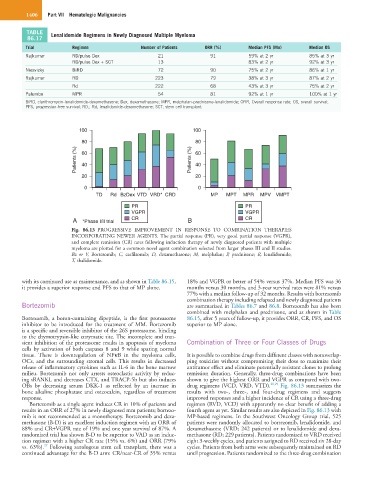
                        Fig.  86.13  PROGRESSIVE  IMPROVEMENT  IN  RESPONSE  TO  COMBINATION  THERAPIES
                        INCORPORATING NEWER AGENTS. The partial response (PR), very good partial response (VGPR),
                        and complete remission (CR) rates following induction therapy of newly diagnosed patients with multiple
                        myeloma are plotted for a common novel agent combination selected from larger phases III and II studies.
                        Bz  or  V,  Bortezomib;  C,  carfilzomib;  D,  dexamethasone;  M,  melphalan;  P,  prednisone;  R,  lenalidomide;
                        T, thalidomide.


        with its continued use as maintenance, and as shown in Table 86.15,   18% and VGPR or better of 54% versus 37%. Median PFS was 36
        it provides a superior response and PFS to that of MP alone.  months versus 30 months, and 3-year survival rates were 81% versus
                                                              77% with a median follow-up of 32 months. Results with bortezomib
                                                              combination therapy including relapsed and newly diagnosed patients
        Bortezomib                                            are summarized in Tables 86.7 and 86.8. Bortezomib has also been
                                                              combined with melphalan and prednisone, and as shown in Table
        Bortezomib,  a  boron-containing  dipeptide,  is  the  first  proteasome   86.15, after 5 years of follow-up, it provides ORR, CR, PFS, and OS
        inhibitor  to  be  introduced  for  the  treatment  of  MM.  Bortezomib   superior to MP alone.
        is a specific and reversible inhibitor of the 26S proteasome, binding
        to the chymotrypsin-like enzymatic site. The incomplete and tran-
        sient inhibition of the proteasome results in apoptosis of myeloma   Combination of Three or Four Classes of Drugs
        cells  by  activation  of  both  caspases  8  and  9  while  sparing  normal
        tissue.  There  is  downregulation  of  NFκB  in  the  myeloma  cells,   It is possible to combine drugs from different classes with nonoverlap-
        OCs,  and  the  surrounding  stromal  cells. This  results  in  decreased   ping toxicities without compromising their dose to maximize their
        release of inflammatory cytokines such as IL-6 in the bone marrow   antitumor effect and eliminate potentially resistant clones to prolong
        milieu.  Bortezomib  not  only  arrests  osteoclastic  activity  by  reduc-  remission  duration.  Generally,  three-drug  combinations  have  been
        ing sRANKL and decreases CTX, and TRACP-5b but also induces   shown to give the highest ORR and VGPR as compared with two-
        OBs  by  decreasing  serum  DKK-1  as  reflected  by  an  increase  in   drug regimens (VCD, VRD, VTD). 28,29  Fig. 86.13 summarizes the
        bone  alkaline  phosphatase  and  osteocalcin,  regardless  of  treatment     results  with  two-,  three-,  and  four-drug  regimens  and  suggests
        response.                                             improved responses and a higher incidence of CR using a three-drug
           Bortezomib as a single agent induces CR in 10% of patients and   regimen (RVD, VCD) with apparently no clear benefit of adding a
        results in an ORR of 27% in newly diagnosed mm patients; bortezo-  fourth agent as yet. Similar results are also depicted in Fig. 86.13 with
        mib is not recommended as a monotherapy. Bortezomib and dexa-  MP-based  regimens.  In  the Southwest  Oncology  Group trial, 525
        methasone (B-D) is an excellent induction regimen with an ORR of   patients were randomly allocated to bortezomib, lenalidomide, and
        88% and CR+VGPR rate of 19% and one year survival of 87%. A   dexamethasone (VRD; 242 patients) or to lenalidomide and dexa-
        randomized trial has shown B-D to be superior to VAD as an induc-  methasone (RD; 229 patients). Patients randomized to VRD received
        tion regimen with a higher CR rate (15% vs. 6%) and ORR (79%   eight 3-weekly cycles, and patients assigned to RD received six 28-day
               27
        vs. 63%).  Following autologous stem cell transplant, there was a   cycles. Patients from both arms were subsequently maintained on RD
        continued advantage for the B-D arm: CR/near-CR of 35% versus   until progression. Patients randomized to the three-drug combination

