


Page 1584 - Hematology_ Basic Principles and Practice ( PDFDrive )
P. 1584
Chapter 86  Plasma Cell Neoplasms  1411


                                      100                                                 100
                                       90                            Autologous transplant  90
                                     Probability of survival (%)  60  HLA-matched sibling,  60
                                                                                          80
                                       80
                                       70
                                                                                          70
                                                                     (n = 22,254)
                                                                                          50
                                       50
                                                                                          40
                                       40
                                                        allogeneic (n = 878)
                                       30
                                                                                          30
                                       20
                                                                                          10
                                       10                    Unrelated, allogeneic (n = 143)  20
                                            P <.0001
                                        0                                                 0
                                          0       1      2       3       4      5       6
                                                               Years
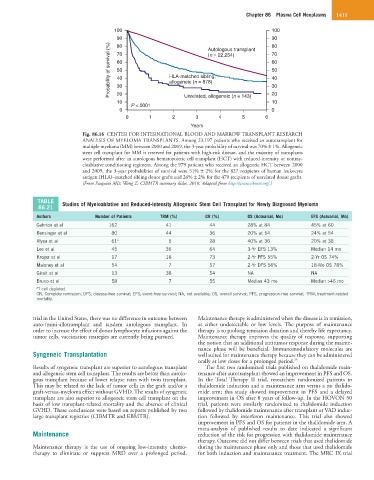
                            Fig. 86.16  CENTER FOR INTERNATIONAL BLOOD AND MARROW TRANSPLANT RESEARCH
                            ANALYSIS OF MYELOMA TRANSPLANTS. Among 23,197 patients who received an autotransplant for
                            multiple myeloma (MM) between 2000 and 2009, the 3-year probability of survival was 70% ± 1%. Allogeneic
                            stem cell transplant for MM is reserved for patients with high-risk disease, and the majority of transplants
                            were performed after an autologous hematopoietic cell transplant (HCT) with reduced-intensity or nonmy-
                            eloablative conditioning regimens. Among the 979 patients who received an allogeneic HCT between 2000
                            and 2009, the 3-year probabilities of survival were 51% ± 2% for the 827 recipients of human leukocyte
                            antigen (HLA)–matched sibling donor grafts and 26% ± 2% for the 470 recipients of unrelated donor grafts.
                            (From Pasquini MD, Wang Z: CIBMTR summary slides, 2010. Adapted from http://www.cibmtr.org/.)

             TABLE   Studies of Myeloablative and Reduced-Intensity Allogeneic Stem Cell Transplant for Newly Diagnosed Myeloma
              86.21
             Authors            Number of Patients   TRM (%)        CR (%)        OS (Actuarial, Mo)   EFS (Actuarial, Mo)
             Gahrton et al           162               41             44          28% at 84            45% at 60
             Bensinger et al          80               44             36          20% at 54            24% at 54
             Alyea et al              61 a              5             28          40% at 36            20% at 38
             Lee et al                45               36             64          3-Yr EFS 13%         Median 14 mo
             Kroger et al             17               18             73          2-Yr PFS 55%         2-Yr OS 74%
             Maloney et al            54                7             57          2-Yr DFS 56%         18-Mo OS 78%
             Giralt et al             13               38             54          NA                   NA
             Bruno et al              58                7             55          Median 43 mo         Median >46 mo
             a T cell depleted.
             CR, Complete remission; DFS, disease-free survival; EFS, event-free survival; NA, not available; OS, overall survival; PFS, progression-free survival; TRM, treatment-related
             mortality.


            trial in the United States, there was no difference in outcome between   Maintenance therapy is administered when the disease is in remission,
            auto-/mini-allotransplant  and  tandem  autologous  transplant.  In   at  either  undetectable  or  low  levels. The  purpose  of  maintenance
            order to increase the effect of donor lymphocyte infusions against the   therapy is to prolong remission duration and thereby life expectancy.
            tumor cells, vaccination strategies are currently being pursued.  Maintenance therapy improves the quality of response, supporting
                                                                  the notion that an additional antitumor response during the mainte-
                                                                  nance  phase  will  be  beneficial.  Immunomodulatory  molecules  are
            Syngeneic Transplantation                             well suited for maintenance therapy because they can be administered
                                                                  orally at low doses for a prolonged period. 36
            Results of syngeneic transplant are superior to autologous transplant   The first two randomized trials published on thalidomide main-
            and allogeneic stem cell transplant. The results are better than autolo-  tenance after autotransplant showed an improvement in PFS and OS.
            gous transplant because of lower relapse rates with twin transplant.   In  the  Total  Therapy  II  trial,  researchers  randomized  patients  to
            This may be related to the lack of tumor cells in the graft and/or a   thalidomide induction and a maintenance arm versus a no thalido-
            graft-versus-myeloma effect without GVHD. The results of syngeneic   mide  arm;  this  study  showed  improvement  in  PFS  and  a  delayed
            transplant are also superior to allogeneic stem cell transplant on the   improvement in OS after 8 years of follow-up. In the HOVON 50
            basis of low transplant-related mortality and the absence of clinical   trial,  patients  were  similarly  randomized  to  thalidomide  induction
            GVHD. These conclusions were based on reports published by two   followed by thalidomide maintenance after transplant or VAD induc-
            large transplant registries (CIBMTR and EBMTR).       tion  followed  by  interferon  maintenance.  This  trial  also  showed
                                                                  improvement in PFS and OS for patients in the thalidomide arm. A
                                                                  meta-analysis  of  published  results  to  date  indicated  a  significant
            Maintenance                                           reduction of the risk for progression with thalidomide maintenance
                                                                  therapy. Outcome did not differ between trials that used thalidomide
            Maintenance  therapy  is  the  use  of  ongoing  low-intensity  chemo-  during the maintenance phase only and those that used thalidomide
            therapy  to  eliminate  or  suppress  MRD  over  a  prolonged  period.   for both induction and maintenance treatment. The MRC IX trial

