


Page 2258 - Hematology_ Basic Principles and Practice ( PDFDrive )
P. 2258
Chapter 135  Hemophilia A and B  2005


             NH2                                       COOH                                 HNF4
                                                                       DBP         AR     COUP-TF
              SP  PrP   Gla   EGF1  EGF2  AP     Catalytic            C/EBP       HNF4      ARP     C/EBP

                                         CC

                     1                 145 180            415      5′   4           3        2         1       F9
                                                                                                              gene
                                           FXIa and/or FVIIa-TF    –220   –190


                        Gla   EGF1  EGF2         Catalytic                       –26 –21       –6    +6  +11
                                                                                    –20        –5    +8
                                                                                    –19
                                         CC
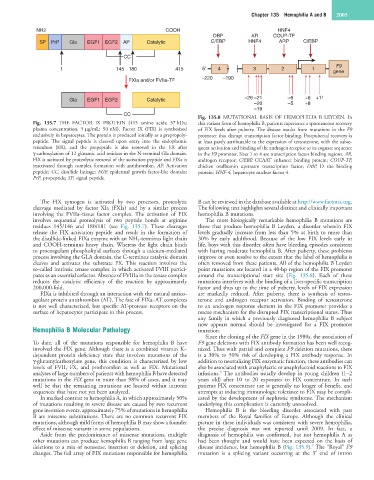
                                                                  Fig.  135.8  MUTATIONAL  BASIS  OF  HEMOPHILIA  B  LEYDEN.  In
            Fig.  135.7  THE  FACTOR  IX  PROTEIN  (415  amino  acids;  57 kDa;   this variant form of hemophilia B, patients experience a spontaneous recovery
            plasma  concentration,  5 µg/mL;  90 nM).  Factor  IX  (FIX)  is  synthesized   of  FIX  levels  after  puberty. The  disease  results  from  mutations  in  the  F9
            exclusively in hepatocytes. The protein is produced initially as a prepropoly-  promoter that disrupt transcription factor binding. Postpubertal recovery is
            peptide.  The  signal  peptide  is  cleaved  upon  entry  into  the  endoplasmic   at least partly attributable to the expression of testosterone, with the subse-
            reticulum  (ER),  and  the  propeptide  is  also  removed  in  the  ER  after   quent activation and binding of the androgen receptor to its cognate sequence
            γ-carboxylation of 12 glutamic acid residues in the N-terminal Gla domain.   in the F9 promoter. Sites 1 to 4 are transcription factor binding regions. AR,
            FIX is activated by proteolytic removal of the activation peptide and FIXa is   androgen  receptor;  C/EBP,  CCAAT  enhancer  binding  protein;  COUP-TF,
            inactivated through complex formation with antithrombin. AP, Activation   chicken  ovalbumin  upstream  transcription  factor;  DBP,  D  site  binding
            peptide; CC, disulfide linkage; EGF, epidermal growth factor-like domain;   protein; HNF-4, hepatocyte nuclear factor 4.
            PrP, propeptide; SP, signal peptide.


              The  FIX  zymogen  is  activated  by  two  processes,  proteolytic   B can be reviewed in the database available at http://www.factorix.org.
            cleavage  mediated  by  factor  XIa  (FXIa)  and  by  a  similar  process   The following text highlights several distinct and clinically important
            involving  the  FVIIa–tissue  factor  complex. The  activation  of  FIX   hemophilia B mutations.
            involves  sequential  proteolysis  of  two  peptide  bonds  at  arginine   The  most  biologically  remarkable  hemophilia  B  mutations  are
            residues  145/146  and  180/181  (see  Fig.  135.7).  These  cleavages   those  that  produce  hemophilia  B  Leyden,  a  disorder  wherein  FIX
            release  the  FIX  activation  peptide  and  result  in  the  formation  of   levels  gradually  increase  from  less  than  5%  at  birth  to  more  than
            the disulfide-linked FIXa enzyme with an NH 2 -terminus light chain   30%  by  early  adulthood.  Because  of  the  low  FIX  levels  early  in
            and COOH-terminus heavy chain. Whereas the light chain binds   life, boys with this disorder often have bleeding episodes consistent
            to procoagulant phospholipid surfaces through a calcium-mediated   with having moderate hemophilia B. After puberty, these problems
            process involving the GLA domain, the C-terminus catalytic domain   improve or even resolve to the extent that the label of hemophilia is
            cleaves  and  activates  the  substrate  FX.  This  reaction  involves  the   often removed from these patients. All of the hemophilia B Leyden
            so-called intrinsic tenase complex in which activated FVIII partici-  point mutations are located in a 40-bp region of the FIX promoter
            pates as an essential cofactor. Absence of FVIIIa in the tenase complex   around  the  transcriptional  start  site  (Fig.  135.8).  Each  of  these
            reduces  the  catalytic  efficiency  of  the  reaction  by  approximately    mutations interferes with the binding of a liver-specific transcription
            200,000-fold.                                         factor and thus up to the time of puberty, levels of FIX expression
              FIXa is inhibited through an interaction with the natural antico-  are  markedly  reduced.  After  puberty,  there  is  synthesis  of  testos-
            agulant protein antithrombin (AT). The fate of FIXa–AT complexes   terone  and  androgen  receptor  activation.  Binding  of  testosterone
            is not well characterized, but specific AT-protease receptors on the   to  an  androgen  response  element  in  the  FIX  promoter  provides  a
            surface of hepatocytes participate in this process.   rescue mechanism for the disrupted FIX transcriptional status. Thus
                                                                  any  family  in  which  a  previously  diagnosed  hemophilia  B  subject
                                                                  now  appears  normal  should  be  investigated  for  a  FIX  promoter
            Hemophilia B Molecular Pathology                      mutation.
                                                                    Since the cloning of the FIX gene in the 1980s, the association of
            To  date,  all  of  the  mutations  responsible  for  hemophilia  B  have   F9 gene deletions with FIX antibody formation has been well recog-
            involved the FIX gene. Although there is a combined vitamin K–  nized. Thus with partial and complete F9 deletion mutations, there
            dependent  protein  deficiency  state  that  involves  mutations  of  the   is  a  30%  to  50%  risk  of  developing  a  FIX  antibody  response.  In
            γ-glutamylcarboxylase  gene,  this  condition  is  characterized  by  low   addition to neutralizing FIX enzymatic function, these antibodies can
            levels  of  FVII,  FX,  and  prothrombin  as  well  as  FIX.  Mutational   also be associated with anaphylactic or anaphylactoid reactions to FIX
                                                                         6
            analyses of large numbers of patients with hemophilia B have detected   infusions.  The antibodies usually develop in young children (1–2
            mutations in the FIX gene in more than 98% of cases, and it may   years  old)  after  10  to  20  exposures  to  FIX  concentrate.  In  such
            well  be  that  the  remaining  mutations  are  located  within  intronic   patients FIX concentrate use is generally no longer of benefit, and
            sequences that have not yet been analyzed.            attempts at inducing immunologic tolerance to FIX may be compli-
              In marked contrast to hemophilia A, in which approximately 50%   cated by the development of nephrotic syndrome. The mechanism
            of mutations resulting in severe disease are caused by two recurrent   underlying this complication is currently unresolved.
            gene inversion events, approximately 75% of mutations in hemophilia   Hemophilia  B  is  the  bleeding  disorder  associated  with  past
            B are missense substitutions. There are no common recurrent FIX   members  of  the  Royal  families  of  Europe.  Although  the  clinical
            mutations, although mild forms of hemophilia B may show a founder   picture in these individuals was consistent with severe hemophilia,
            effect of missense variants in some populations.      the  precise  diagnosis  was  not  reported  until  2009.  In  fact,  a
              Aside  from  the  predominance  of  missense  mutations,  multiple   diagnosis  of  hemophilia  was  confirmed,  but  not  hemophilia  A  as
            other mutations can produce hemophilia B ranging from large gene   had  been  thought  and  would  have  been  expected  on  the  basis  of
                                                                                                       7
            deletions to a mix of nonsense, insertion or deletion, and splicing   disease incidence, but hemophilia B (Fig. 135.9).  The “Royal” F9
            changes. The full array of FIX mutations responsible for hemophilia   mutation  is  a  splicing  variant  occurring  at  the  3′  end  of  intron

