


Page 2259 - Hematology_ Basic Principles and Practice ( PDFDrive )
P. 2259
2006   Part XII  Hemostasis and Thrombosis


                                                                TABLE
           5′                                          3′       135.3   Methods of Factor VIII Measurement
                                                                                                 Comments
               1    2 3  4       5  6       7   8
                                                               1.  FVIII antigen ELISA           Rarely used clinically
                                                               2.  FVIII functional   One-stage clotting   >98% of clinical
                    Intron 3  Exon 4                              assays           assay           laboratories. Assay
                    ctcaaag  ATC                                                                   CV <10%.
                                                                                  Chromogenic assay  May detect FVIII
                       g                                                          Two-stage clotting   instability mutants
                                                                                   assay
               Normal and mutant exon 3/exon 4 AA sequences    3.  Indirect       Global assays e.g.,   Not readily available
               .....Y V D G D Q C E S N P C L.....  Normal        measurement      thrombin        or standardized
               .....Y V E M E  I  S V S P  I  H V Stop  Mutant                     generation assay
                                                               CV, Coefficient of variation; ELISA, enzyme-linked immunosorbent assay; FVIII,
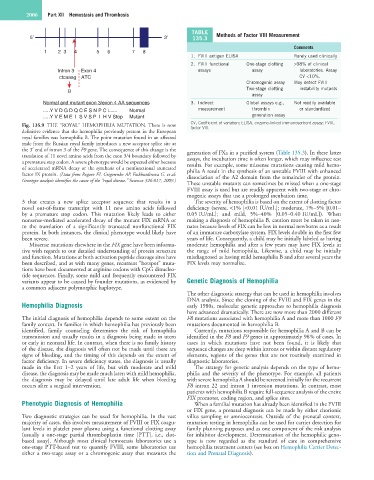
        Fig.  135.9  THE  “ROYAL”  HEMOPHILIA  MUTATION. There  is  now   factor VIII.
        definitive evidence that the hemophilia previously present in the European
        royal families was hemophilia B. The point mutation found in an affected
        male from the Russian royal family introduces a new acceptor splice site at
        the 3′ end of intron 3 of the F9 gene. The consequence of this change is the   generation of FXa in a purified system (Table 135.3). In these latter
        translation of 11 novel amino acids from the exon 3/4 boundary followed by   assays, the incubation time is often longer, which may influence test
        a premature stop codon. A severe phenotype would be expected either because   results. For example, some missense mutations causing mild hemo-
        of accelerated mRNA decay or the synthesis of a nonfunctional truncated   philia A result in the synthesis of an unstable FVIII with enhanced
        factor IX protein. (Data from Rogaev EI, Grigorenko AP, Faskhutdinova G, et al:   dissociation of the A2 domain from the remainder of the protein.
        Genotype analysis identifies the cause of the “royal disease.” Science 326:817, 2009.)
                                                              These unstable mutants can sometimes be missed when a one-stage
                                                              FVIII assay is used but are readily apparent with two-stage or chro-
                                                              mogenic assays that use a prolonged incubation time.
        3  that  creates  a  new  splice  acceptor  sequence  that  results  in  a   The severity of hemophilia is based on the extent of clotting factor
        novel  out-of-frame  transcript  with  11  new  amino  acids  followed   deficiency (severe, <1% [<0.01 IU/mL]; moderate, 1%–5% [0.01–
        by  a  premature  stop  codon.  This  mutation  likely  leads  to  either   0.05 IU/mL];  and  mild,  5%–40%  [0.05–0.40 IU/mL]).  When
        nonsense-mediated accelerated decay of the mutant FIX mRNA or   making a diagnosis of hemophilia B, caution must be taken in neo-
        to  the  translation  of  a  significantly  truncated  nonfunctional  FIX   nates because levels of FIX can be low in normal newborns as a result
        protein. In both instances, the clinical phenotype would likely have     of an immature carboxylase system. FIX levels double in the first few
        been severe.                                          years of life. Consequently, a child may be initially labeled as having
           Missense mutations elsewhere in the FIX gene have been informa-  moderate hemophilia and after a few years may have FIX levels in
        tive with regards to our detailed understanding of protein structure   the  range  of  mild  hemophilia.  Likewise,  a  child  may  be  initially
        and function. Mutations at both activation peptide cleavage sites have   misdiagnosed as having mild hemophilia B and after several years the
        been described, and as with many genes, recurrent “hotspot” muta-  FIX levels may normalize.
        tions have been documented at arginine codons with CpG dinucleo-
        tide sequences. Finally, some mild and frequently encountered FIX
        variants appear to be caused by founder mutations, as evidenced by   Genetic Diagnosis of Hemophilia
        a common adjacent polymorphic haplotype.
                                                              The other diagnostic strategy that can be used in hemophilia involves
                                                              DNA analysis. Since the cloning of the FVIII and FIX genes in the
        Hemophilia Diagnosis                                  early 1980s, molecular genetic approaches to hemophilia diagnosis
                                                              have advanced dramatically. There are now more than 2000 different
        The initial diagnosis of hemophilia depends to some extent on the   F8 mutations associated with hemophilia A and more than 1000 F9
        family context. In families in which hemophilia has previously been   mutations documented in hemophilia B.
        identified,  family  counseling  determines  the  risk  of  hemophilia   Currently, mutations responsible for hemophilia A and B can be
        transmission and usually results in a diagnosis being made in utero   identified in the F8 and F9 genes in approximately 98% of cases. In
        or early in neonatal life. In contrast, when there is no family history   cases  in  which  mutations  have  not  been  found,  it  is  likely  that
        of the disease, the diagnosis will often not be made until there are   sequence changes are deep within introns or within distant regulatory
        signs of bleeding, and the timing of this depends on the extent of   elements,  regions  of  the  genes  that  are  not  routinely  examined  in
        factor deficiency. In severe deficiency states, the diagnosis is usually   diagnostic laboratories.
        made  in  the  first  1–2  years  of  life,  but  with  moderate  and  mild   The strategy for genetic analysis depends on the type of hemo-
        disease, the diagnosis may be made much later; with mild hemophilia,   philia and the severity of the phenotype. For example, all patients
        the  diagnosis  may  be  delayed  until  late  adult  life  when  bleeding   with severe hemophilia A should be screened initially for the recurrent
        occurs after a surgical intervention.                 F8 intron 22 and intron 1 inversion mutations. In contrast, most
                                                              patients with hemophilia B require full-sequence analysis of the entire
                                                              FIX promoter, coding region, and splice sites.
        Phenotypic Diagnosis of Hemophilia                       When a familial mutation has already been identified in the FVIII
                                                              or FIX gene, a prenatal diagnosis can be made by either chorionic
        Two  diagnostic  strategies  can  be  used  for  hemophilia.  In  the  vast   villus  sampling  or  amniocentesis.  Outside  of  the  prenatal  context,
        majority of cases, this involves measurement of FVIII or FIX coagu-  mutation testing in hemophilia can be used for carrier detection for
        lant levels in platelet poor plasma using a functional clotting assay   family planning purposes and as one component of the risk analysis
        (usually  a  one-stage  partial  thromboplastin  time  [PTT],  i.e.,  clot-  for inhibitor development. Determination of the hemophilic geno-
        based  assay).  Although  most  clinical  hemostasis  laboratories  use  a   type  is  now  regarded  as  the  standard  of  care  in  comprehensive
        one-stage PTT-based test to quantify FVIII, some laboratories use   hemophilia treatment centers (see box on Hemophilia Carrier Detec-
        either  a  two-stage  assay  or  a  chromogenic  assay  that  measures  the   tion and Prenatal Diagnosis).

