


Page 957 - Hematology_ Basic Principles and Practice ( PDFDrive )
P. 957
840    Part VII  Hematologic Malignancies


                                                              frequently observed in older children. These 1p32 rearrangements are
                                                              less frequent in adult ALL. TAL1-positive ALL is characterized by an
                                                                                        +
                                                                                             +
                                                              arrest in differentiation at the CD4 CD8  stage of thymocyte devel-
           1           2          3         4          5      opment, when TAL1 gene is normally silent. TAL1 gene encodes a
                                                              transcription factor and several of the core components of the tran-
                                                              scription complex include GATA3, LIM domain only, and RUNX1.
                                                                 TAL2, residing at 9q32, is detected in rare t(7;9)(q34;q32) rear-
                                                              rangement  as  a  result  of  juxtaposition  of  TAL2  to  TCRB.  LYL1,
         6       7       8       9       10     11      12    originally  described  as  a  fusion  partner  of  TCRB  in  rare  (7;19)
                                                              (q34;p13), and is associated with poor prognosis. Rearrangements of
                                                              HOX11L2, which include cryptic t(5;14)(q35;q32), t(5;7)(q35;q21),
                                                              and  other  variants,  occur  at  a  frequency  of  24%  in  children  and
         13        14       15       16       17       18     represent a predictor of poor outcome, regardless of treatment strate-
                                                              gies. Similarly, the presence of t(10;11)(p13;q14), which results in
                                                              the CALM-MLL10 fusion gene and occurs at a frequency of 2% to
                                                              5% in children, may be associated with poor outcome. Abnormalities
         19       20        21         22       X        Y    of HOX11 are more common in adults than in children (31% versus
                                                              7%) and are associated with t(10;14)(q34;q24) and t(7;10)(q34;q24).
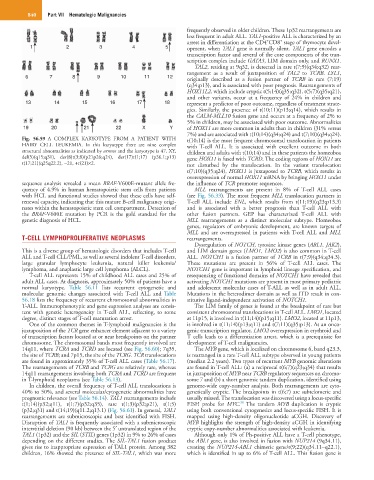
        Fig.  56.59  A  COMPLEX  KARYOTYPE  FROM  A  PATIENT  WITH   t(10;14) is the most frequent chromosomal translocation in patients
        HAIRY  CELL  LEUKEMIA.  In  this  karyotype  there  are  nine  complex   with  T-cell  ALL.  It  is  associated  with  excellent  outcome  in  both
        structural abnormalities as indicated by arrows and the karyotype is 47, XY,   children and adults with t(10;14) and in these patients the homeobox
        del(5)(q15;q31),  der(8)t(3;8)(p21p26;q24),  der(17)t(1;17)  (p36.1;p13)  gene HOX11 is fused with TCRD. The coding regions of HOX11 are
        t(17;21)(q25q22.2), −21, +r(21)×2.                    not  disturbed  by  the  translocation.  In  the  variant  translocation
                                                              t(7;10)(q35;q24), HOX11 is juxtaposed to TCRB, which results in
                                                              overexpression of normal HOX11 mRNA by bringing HOX11 under
        sequence analysis revealed a mean BRAF-V600E-mutant allele fre-  the influence of TCR promoter sequences.
        quency of 4.9% in human hematopoietic stem cells from patients   MLL  rearrangements  are  present  in  8%  of  T-cell  ALL  cases
        with HCL and functional studies showed that these cells have self-  (see Fig. 56.33). The most frequent MLL translocation partners in
        renewal capacity, indicating that this mature B-cell malignancy origi-  T-cell  ALL  include  ENL,  which  results  from  t(11;19)(q23;p13.3)
        nates within the hematopoietic stem cell compartment. Detection of   and  is  associated  with  a  better  prognosis  than  T-cell  ALL  with
        the  BRAF-V600E  mutation  by  PCR  is  the  gold  standard  for  the   other  fusion  partners.  GEP  has  characterized  T-cell  ALL  with
        genetic diagnosis of HCL.                             MLL  rearrangements  as  a  distinct  molecular  subtype.  Homeobox
                                                              genes, regulators of embryonic development, are known targets of
                                                              MLL and are overexpressed in patients with T-cell ALL and MLL
        T-CELL LYMPHOPROLIFERATIVE NEOPLASMS                  rearrangements.
                                                                 Dysregulation of NOTCH, tyrosine kinase genes (ABL1, JAK2),
        This is a diverse group of hematologic disorders that includes T-cell   and LIM domain genes (LMO1, LMO2) is also common in T-cell
        ALL and T-cell CLL/PML, as well as several indolent T-cell disorders,   ALL. NOTCH1 is a fusion partner of TCRB in t(7;9)(q34;q34.3).
        large  granular  lymphocyte  leukemia,  natural  killer  leukemia/  These  mutations  are  present  in  56%  of  T-cell  ALL  cases.  The
        lymphoma, and anaplastic large cell lymphoma (ALCL).  NOTCH1 gene is important in lymphoid lineage specification, and
           T-cell ALL represents 15% of childhood ALL cases and 25% of   resequencing of functional domains of NOTCH1 have revealed that
        adult ALL cases. At diagnosis, approximately 50% of patients have a   activating NOTCH1 mutations are present in most primary pediatric
        normal  karyotype.  Table  56.11  lists  recurrent  cytogenetic  and   and adolescent molecular cases of T-ALL as well as in adult ALL.
        molecular  genomic  changes  associated  with T-cell  ALL  and Table   Mutations in the heterodimer domain as well as ITD result in con-
        56.18 lists the frequency of recurrent chromosomal abnormalities in   stitutive ligand-independent activation of NOTCH1.
        T-ALL. Immunophenotypic and gene expression analyses are consis-  The LIM family of genes is found at the breakpoint of rare but
        tent  with  genetic  heterogeneity  in T-cell  ALL,  reflecting,  to  some   consistent chromosomal translocations in T-cell ALL. LMO1, located
        degree, distinct stages of T-cell maturation arrest.  at 11p15, is involved in t(11;14)(p15;q11). LMO2, located at 11p13,
           One of the common themes in T-lymphoid malignancies is the   is involved in t(11;14)(p13;q11) and t(7;11)(q35;p13). As an onco-
        juxtaposition of the TCR gene enhancer element adjacent to a variety   genic transcription regulator, LMO2 overexpression in erythroid and
        of transcription factors located at or near breakpoints on the partner   T cells leads to a differentiation arrest, which is a prerequisite for
        chromosome. The chromosomal bands most frequently involved are   development of T-cell malignancies.
        14q11, where TCRA and TCRD are located (see Fig. 56.60); 7q35,   The MYB gene, which is localized on chromosome 6, band q23.3,
        the site of TCRB; and 7p15, the site of the TCRG. TCR translocations   is rearranged in a rare T-cell ALL subtype observed in young patients
        are found in approximately 35% of T-cell ALL cases (Table 56.17).   (median 2.2 years). Two types of recurrent MYB genomic alterations
        The rearrangements of TCRB and TCRG are relatively rare, whereas   are found in T-cell ALL: (a) a reciprocal t(6;7)(q23;q34) that results
        14q11 rearrangements involving both TCRA and TCRD are frequent   in juxtaposition of MYB near TCRB regulatory sequences on chromo-
        in T-lymphoid neoplasms (see Table 56.13).            some 7 and (b) a short genomic tandem duplication, identified using
           In children, the overall frequency of T-cell ALL translocations is   genome-wide copy-number analysis. Both rearrangements are cyto-
        40% to 50%, and several molecular/cytogenetic abnormalities have   genetically cryptic. The breakpoints in t(6;7) are subtelomeric and
        prognostic relevance (see Table 56.14). TAL1 rearrangements include   usually missed. The translocation was discovered using a locus-specific
                                                                                30
        t(1;14)(p32;q11),  t(1;7)(p32;q35),  rare  t(1;3)(p32;p21),  t(1;5)  FISH  probe  for  MYC.  The  tandem  MYB  duplication  is  cryptic
        (p32;q31) and t(14;19)(q11.2;q13.1) (Fig. 56.61). In general, TAL1   using both conventional cytogenetics and locus-specific FISH. It is
        rearrangements are submicroscopic and best identified with FISH.   mapped  using  high-density  oligonucleotide  aCGH.  Discovery  of
        Disruption of TAL1 is frequently associated with a submicroscopic   MYB highlights the strength of high-density aCGH in identifying
        interstitial deletion (90 kb) between the 5′ untranslated region of the   cryptic copy-number abnormalities associated with leukemia.
        TAL1 (1p32) and the SIL (STIL) genes (1p32) in 9% to 26% of cases   Although only 1% of Ph-positive ALL have a T-cell phenotype,
        depending on the  different  studies. The  SIL-TAL1  fusion  product   the ABL1 gene, is also involved in fusion with NUP214 (9q34.11),
        gives rise to inappropriate expression of TAL1 protein. Among 382   creating  the  NUP214-ABL1  chimeric  gene/t(9;22)(q34.11–q22.1),
        children, 16% showed the presence of SIL-TAL1, which was more   which is identified in up to 6% of T-cell ALL. This fusion gene is

