


Page 960 - Hematology_ Basic Principles and Practice ( PDFDrive )
P. 960
Chapter 56  Conventional and Molecular Cytogenomic Basis of Hematologic Malignancies  843


                                                                  (q11q32.1),  t(14;14)(q11;q32.1),  and  t(7;14)(q35;q32.1)  (see  Fig.
                                                                  56.60). In patients showing these karyotypic changes, TCL1 is found
                                                                  to be dysregulated.
                                                                    Adult T-cell leukemia/lymphoma is associated with human T-cell
                                                                  lymphotropic virus type 1. The most frequent genetic lesions include
                                                                  altered  expression  of  CDKN2  (cyclin-dependent  kinase  inhibitor)
                                                                  gene on 9p21 (15%–20%) and loss of heterozygosity at 6q15 to q21.
                                                                  The most frequent chromosomal abnormalities are gain of 3p, 7q,
                                                                  and 14q and loss of 6q and 13q. Translocations involving 14q32 or
                                                                  14q11 are frequently observed.
                  9         9           der(9)       der(9)
              A                                                     Natural killer lymphoma/leukemia is a group of highly aggressive
                                                                  lymphoid  malignancies  of  natural  killer  cell  origin.  They  exhibit
                                                                  chromosomal rearrangements in greater than 80% of cases by con-
                                                                  ventional  karyotyping.  The  most  frequent  abnormalities  include
                                                                  del(6)(q21–23) and gain of the X chromosome. FISH, CGH, and
                                                                  spectral  karyotyping  have  confirmed  the  presence  of  del(6)  in
                                                                      −
                                                                  CD3 CD56 tumor cells. Other less common but recurrent karyotypic
                                                                  changes include isochromosome 1q, 6p, and 17q, as well as del(11q),
                                                                  13q, and 17p, and trisomy 8.
                                                                    Angioimmunoblastic T-cell lymphoma and unspecified peripheral
                                                                  T-cell  lymphoma  are  the  most  frequent  nodal  T-cell  lymphomas.
                                                                  Losses of 5q/10q/12q, identified by CGH, characterize a subtype of
                                                                  peripheral T-cell lymphoma associated with a better prognosis. Gain
                                                                  of  11q13  may  represent  a  primary  change  in  angioimmunoblastic
                                                                  T-cell  lymphoma.  In  general,  chromosomal  imbalances  are  more
              B                                                   common in unspecified peripheral T-cell lymphoma than in angioim-
                                                                  munoblastic  T-cell  lymphoma.  Both  disorders  may  share  similar
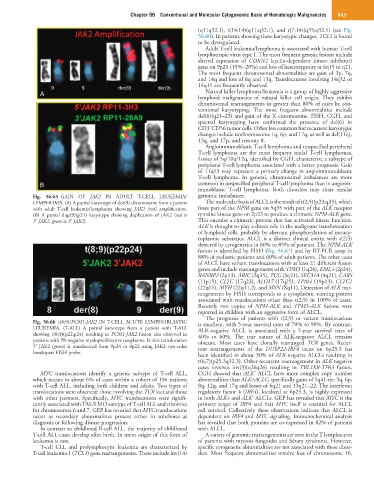
            Fig.  56.65  GAIN  OF  JAK2  IN  ADULT  T-CELL  LEUKEMIA/  genomic imbalances.
            LYMPHOMA. (A) A partial karyotype of der(9) chromosome from a patient   The molecular basis of ALCL is the result of t(2;5)(p23;q35), which
            with  adult  T-cell  leukemia/lymphoma  showing  JAK2  (red)  amplification.   fuses part of the NPM gene on 5q35 with part of the ALK receptor
            (B)  A  partial  dup(9)(p24)  karyotype  showing  duplication  of  JAK2  (red  is   tyrosine kinase gene on 2p23 to produce a chimeric NPM-ALK gene.
            5′ JAK2, green is 3′ JAK2).                           This encodes a chimeric protein that has activated kinase function.
                                                                  ALK is thought to play a direct role in the malignant transformation
                                                                  of lymphoid cells, probably by aberrant phosphorylation of intracy-
                                                                  toplasmic substrates. ALCL is a distinct clinical entity, with t(2;5)
                                                                  detected by cytogenetics in 60% to 85% of patients. The NPM-ALK
                                                                  fusion is identified by FISH (Fig. 56.67) and by RT-PCR assay in
                                                                  88% of pediatric patients and 60% of adult patients. The other cases
                                                                  of ALCL have variant translocations with at least 21 different fusion
                                                                  genes and include rearrangements with TPM3 (1q24), EML4 (2p24),
                                                                  RANBP2 (2q13), ARIC (2q35), TCG (3q21), SEC31A (4q21), CARS
                                                                  (11p15), CLTC (17q23), ALO17 (17q25), TPM4 (19p13), CLTC1
                                                                  (22q11), MYH (22q11.2), and MSN (Xq11). Detection of ALK rear-
                                                                  rangements by FISH corresponds to a cytoplasmic staining pattern
                                                                  associated  with  translocations  other  than  t(2;5)  in  100%  of  cases.
                                                                  Recently  two  copies  of  NPM-ALK  and  TPM3-ALK  fusions  were
                                                                  reported in children with an aggressive form of ALCL.
                                                                    The  prognosis  of  patients  with  t(2;5)  or  variant  translocations
            Fig.  56.66  t(8;9)/PCM1-JAK2  IN T-CELL  ACUTE  LYMPHOBLASTIC   is excellent, with 5-year survival rates of 70% to 90%. By contrast,
            LEUKEMIA.  (T-ALL)  A  partial  karyotype  from  a  patient  with  T-ALL   ALK-negative  ALCL  is  associated  with  a  5-year  survival  rates  of
            showing  t(8;9)(p22;p24)  resulting  in  PCM1-JAK2  fusion  also  observed  in   40%  to  60%.  The  true  nature  of  ALK-negative  ALCL  remains
            patients with Ph-negative myeloproliferative neoplasms. In this translocation   obscure.  Most  cases  have  clonally  rearranged  TCR  genes.  Recur-
            5′ JAK2 (green) is translocated from 9p24 to 8p22 using JAK2 two-color   rent  rearrangements  of  the  DUSP22-IRF4  locus  on  6p25.3  has
            breakapart FISH probe.                                been identified in about 30% of ALK-negative ALCLs resulting in
                                                                  t(6;7)(p25.3q32.3). Other recurrent rearrangement in ALK negative
                                                                  cases  involves  inv(3)(q26q26)  resulting  in  TBL1XR-TP63  fusion.
                                                                                    −
              MYC  translocations  identify  a  genetic  subtype  of  T-cell  ALL,   CGH showed that ALK  ALCL have more complex copy number
            which occurs in about 6% of cases within a cohort of 196 patients   abnormalities than ALK+ACLC, specifically gains of 1q41-ter, 5q, 6p,
            with T-cell ALL, including both children and adults. Two types of   8q, 12q, and 17q and losses of 6q21 and 13q21–22. The interferon
            translocations were observed: those involving the TCR loci and those   regulatory factor 4 (IRF4), localized at 6p25.3, is highly expressed
                                                                                   −
            with  other  partners.  Specifically,  MYC  translocations  were  signifi-  in both ALK+ and ALK  ALCLs. GEP has revealed that MYC is the
            cantly associated with TAL/LMO subtype of T-cell ALL and trisomies   primary target of IRF4 and that MYC itself is essential for ALCL
            for chromosomes 6 and 7. GEP has revealed that MYC translocations   cell survival. Collectively these observations indicate that ALCL is
            occur  as  secondary  abnormalities  present  either  in  subclones  at   dependent on IRF4 and MYC signaling. Immunochemical analysis
            diagnosis or following disease progression.           has revealed that both proteins are co-expressed in 82% of patients
              In contrast to childhood B-cell ALL, the majority of childhood   with ALCL.
            T-cell ALL cases develop after birth. In utero origin of this form of   A variety of genomic rearrangements are seen in the T lymphocytes
            leukemia is rare.                                     of patients with mycosis fungoides and Sézary syndrome. However,
              T-cell  CLL  and  prolymphocytic  leukemia  are  characterized  by   specific cytogenetic abnormalities are not associated with these disor-
            T-cell leukemia 1 (TCL1) gene rearrangements. These include inv(14)  ders. Most frequent abnormalities involve loss of chromosome 10,

