


Page 959 - Hematology_ Basic Principles and Practice ( PDFDrive )
P. 959
842    Part VII  Hematologic Malignancies


                A                             B                               C

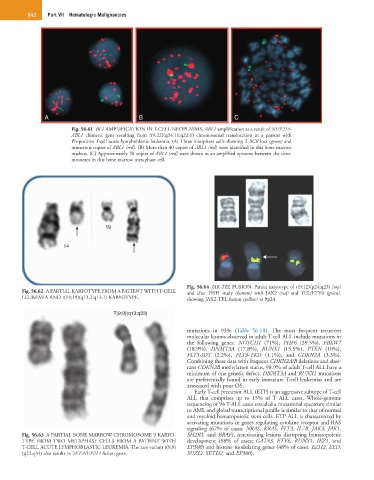
                        Fig. 56.61  BL1 AMPLIFICATION IN T-CELL NEOPLASMS. ABL1 amplification as a result of NUP214-
                        ABL1  chimeric  gene  resulting  from  t(9;22)(q34.11;q22.1)  chromosomal  translocation  in  a  patient  with
                        Ph-positive T-cell acute lymphoblastic leukemia. (A) Three interphase cells showing 2 BCR loci (green) and
                        numerous copies of ABL1 (red). (B) More than 40 copies of ABL1 (red) were identified in this bone marrow
                        nucleus. (C) Approximately 30 copies of ABL1 (red) were shown as an amplified episome between the chro-
                        mosomes in this bone marrow metaphase cell.


                                    19


                      14


                                                              Fig. 56.64  JAK-TEL FUSION. Partial karyotype of t(9;12)(p24;q23) (top)
        Fig. 56.62  A PARTIAL KARYOTYPE FROM A PATIENT WITH T-CELL   and  after  FISH  study  (bottom)  with  JAK2  (red)  and  TEL/ETV6  (green),
        LEUKEMIA AND t(14;19)(q11.2;q13.1) KARYOTYPE.         showing JAK2-TEL fusion (yellow) at 9p24.

                                      T(9;9)(q13;q33)


                                                              mutations  in  93%  (Table  56.18).  The  most  frequent  recurrent
                                                              molecular lesions observed in adult T-cell ALL include mutations in
                                                              the  following  genes:  NOTCH1  (71%),  PHF6  (39.5%),  FBXW7
                                                              (18.9%),  DNMT3A  (17.8%),  RUNX1  (15.5%),  PTEN  (10%),
                                                              FLT3-IDT  (2.2%),  FLT3-TKD  (1.1%),  and  CDKN2A  (3.3%).
                                                              Combining these data with frequent CDKN2A/B deletions and aber-
                                                              rant CDKN2B methylation status, 98.9% of adult T-cell ALL have a
                                                              minimum of one genetic defect. DNMT3A and RUNX1 mutations
                                                              are preferentially found in early immature T-cell leukemias and are
                                                              associated with poor OS.
                                                                 Early T-cell precursor ALL (ETP) is an aggressive subtype of T-cell
                                                              ALL  that  comprises  up  to  15%  of  T  ALL  cases.  Whole-genome
                                                              sequencing of 94 T-ALL cases revealed a mutational spectrum similar
                                                              to AML and global transcriptional profile is similar to that of normal
                                                              and myeloid hematopoietic stem cells. ETP ALL is characterized by
                                                              activating mutations in genes regulating cytokine receptor and RAS
                                                              signaling  (67%  of  cases:  NRAS,  KRAS,  FLT3,  IL7R,  JAK3,  JAK1,
        Fig. 56.63  A PARTIAL BONE MARROW CHROMOSOME 9 KARYO-  SH2B3,  and  BRAF),  inactivating  lesions  disrupting  hematopoietic
        TYPE FROM TWO METAPHASE CELLS FROM A PATIENT WITH     development  (58%  of  cases:  GATA3,  ETV6,  RUNX1,  IKZ1,  and
        T-CELL ACUTE LYMPHOBLASTIC LEUKEMIA. The rare variant t(9;9)  EP300) and histone modulating genes (48% of cases: EZH2, EED,
        (q22;q34) also results in SET-NUP214 fusion gene.     SUZI2, SETD2, and EP300).

