


Page 963 - Hematology_ Basic Principles and Practice ( PDFDrive )
P. 963
846    Part VII  Hematologic Malignancies


        on  the  Y  chromosome  allows  identification  of  male  cells  in  the   length polymorphism, STR analysis, or FISH XY analysis alone may
        background of 100,000 female cells, providing a high sensitivity for   not  definitively  assign  the  origin  of  the  leukemic  clone  because
        mixed chimerism. However, this approach is limited to the 50% of   genomic deletions or amplifications of chromosomal segments may
        patients  who  receive  sex-mismatched  transplants.  Nevertheless,  it   occur during transplantation or disease process. The increased use of
        remains  the  most  sensitive  and  the  fastest  method  of  chimerism   unrelated cord blood as a source of stem cells for allogeneic HCT
        analysis, providing reliable quantitative results within 2 hours.  raises the concern that hematopoietic progenitors containing preleu-
           Detection of SNPs by chimerism analysis (SNP-PCR) is highly   kemic clonal molecular rearrangements may be inadvertently trans-
        sensitive. In one study using 11 different SNP loci, SNP-PCR analysis   planted.  Systematic  screening  of  unselected  cord  blood  samples
        identified independent predictors of relapse after HCT. The two most   revealed putative preleukemic rearrangements such as ETV6-RUNX1
        commonly used methods for detection of chimerism after HCT are   and  RUNX1-RUNXT1.  In  a  study  of  1417  umbilical  cord  blood
        fluorescence-based PCR amplification of short tandem repeats (STR-  samples evidence for the ETV6 or RUNX1/RUNXT1 fusions were
        PCR) and interphase FISH. Both methods are accurate and repro-  not found. However, recent reports comparing clinical characteristics
        ducible. The sensitivity of both methods approaches 1%; however,   of donor-cell derived leukemia (DCL) from the standpoint of the
        STR-PCR is sex independent and can be applied to all patients. FISH   transplant  source,  with  umbilical  cord  blood  and  bone  marrow,
        analysis,  on  the  other  hand,  permits  simultaneous  evaluation  of   showed in some studies, that AML and MDS were recognized more
        chimerism and residual disease in the same cell when high sensitivity   frequently  in  DCL  after  cord  blood  transplant,  but  not  in  other
        is not a requirement. FISH analysis for diagnostic genomic abnor-  studies,  whereas  the  incidence  of AML  and  ALL  was similar after
        malities  in  conjunction  with  conventional  cytogenetics  remains   bone marrow transplant. The median duration between the occur-
        useful  and  reliable  in  determining  the  presence  of  residual  disease   rence of DCL following cord blood and bone marrow transplant was
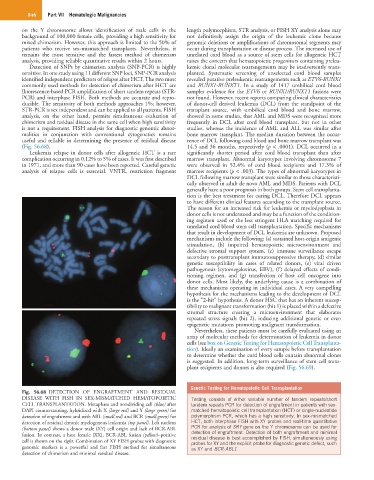
        (Fig. 56.68).                                         14.5 and 36 months, respectively (p < .0001). DCL occurred in a
           Leukemia  relapse  in  donor  cells  after  allogeneic  HCT  is  a  rare   significantly  shorter  period  after  cord  blood  transplant  than  after
        complication occurring in 0.12% to 5% of cases. It was first described   marrow transplant. Abnormal karyotypes involving chromosome 7
        in 1971, and more than 90 cases have been reported. Careful genetic   were  observed  in  52.4%  of  cord  blood  recipients  and  17.3%  of
        analysis  of  relapse  cells  is  essential.  VNTR,  restriction  fragment   marrow recipients (p < .003). The types of abnormal karyotypes in
                                                              DCL following marrow transplant were similar to those characteristi-
                                                              cally observed in adult de novo AML and MDS. Patients with DCL
                                                              generally have a poor prognosis in both groups. Stem cell transplanta-
                                                              tion is the best treatment for curing DCL. Therefore DCL appears
                                                              to have different clinical features according to the transplant source.
                                                              The reason for an increased risk for leukemia or myelodysplasia in
                                                              donor cells is not understood and may be a function of the condition-
                                                              ing regimen used or the less stringent HLA matching required for
                                                              unrelated cord blood stem cell transplantation. Specific mechanisms
                                                              that result in development of DCL leukemia are unknown. Proposed
                                                              mechanisms include the following: (a) sustained host-origin antigenic
                                                              stimulation,  (b)  impaired  hematopoietic  microenvironment  and
                                                              defective  stromal  support  system,  (c)  immune  surveillance  escape
                                                              secondary to posttransplant immunosuppressive therapy, (d) similar
                                                              genetic  susceptibility  in  cases  of  related  donors,  (e)  viral  driven
                                                              pathogenesis (cytomegalovirus, EBV), (f) delayed effects of condi-
                                                              tioning  regimen,  and  (g)  transfection  of  host  cell  oncogene  into
                                                              donor cells. Most likely, the underlying cause is a combination of
                                                              these mechanisms operating in individual cases. A very compelling
                                                              hypothesis for the mechanisms leading to the development of DCL
                                                              is the “2-hit” hypothesis. A donor HSC that has an inherent suscep-
                                                              tibility to malignant transformation (hit 1) is placed within a defective
                                                              stromal  structure  creating  a  microenvironment  that  elaborates
                                                              repeated  stress  signals  (hit  2),  inducing  additional  genetic  or  even
                                                              epigenetic mutations promoting malignant transformation.
                                                                 Nevertheless, these patients must be carefully evaluated using an
                                                              array of molecular methods for determination of leukemia in donor
                                                              cells (see box on Genetic Testing for Hematopoietic Cell Transplanta-
                                                              tion). Ideally an examination of every sample before transplantation
                                                              to determine whether the cord blood cells contain abnormal clones
                                                              is suggested. In addition, long-term surveillance of stem cell trans-
                                                              plant recipients and donors is also required (Fig. 56.69).


                                                               Genetic Testing for Hematopoietic Cell Transplantation
        Fig.  56.68  DETECTION  OF  ENGRAFTMENT  AND  RESIDUAL
        DISEASE  WITH  FISH  IN  SEX-MISMATCHED  HEMATOPOIETIC   Testing  consists  of  either  variable  number  of  tandem  repeats/short
        CELL TRANSPLANTATION. Metaphase and nondividing cell (blue) after   tandem repeats PCR for detection of engraftment in patients with sex-
        DAPI counterstaining, hybridized with X (large red) and Y (large green) for   matched hematopoietic cell transplantation (HCT) or single-nucleotide
        detection of engraftment and with ABL (small red) and BCR (small green) for   polymorphism PCR, which has a high sensitivity. In sex-mismatched
        detection of residual chronic myelogenous leukemia (top panel). Left nucleus   HCT, both interphase FISH with XY probes and real-time quantitative
        (bottom panel) shows a donor male (XY) cell origin and lack of BCR-ABL   PCR for analysis of SRY gene on the Y chromosome can be used for
                                                                detection of engraftment. Detection of both engraftment and minimal
        fusion. In contrast, a host female (XX), BCR-ABL fusion (yellow)–positive   residual disease is best accomplished by FISH, simultaneously using
        cell is shown on the right. Combination of XY FISH probes with diagnostic   probes for XY and the explicit probe for diagnostic genetic defect, such
        genomic  markers  is  a  powerful  and  fast  FISH  method  for  simultaneous   as XY and BCR-ABL1.
        detection of chimerism and minimal residual disease.

