


Page 1080 - Williams Hematology ( PDFDrive )
P. 1080
1054  Part VIII:  Monocytes and Macrophages  Chapter 67:  Structure, Receptors, and Functions of Monocytes and Macrophages  1055


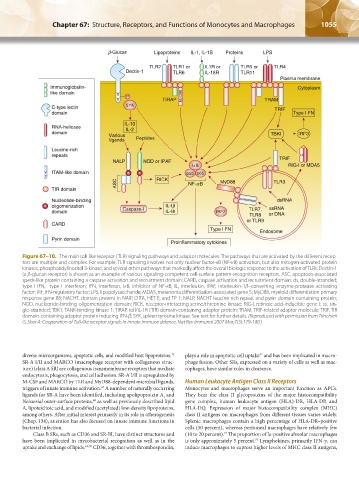
                  Figure 67–10.  The main toll-like receptor (TLR) signaling pathways and adaptor molecules. The pathways that are activated by the different recep-
                  tors are multiple and complex. For example, TLR signaling involves not only nuclear factor-κB (NF-κB) activation, but also mitogen-activated protein
                  kinases, phosphatidylinositol 3-kinase, and several other pathways that markedly affect the overall biologic response to the activation of TLRs. Dectin-1
                  (a β-glucan receptor) is shown as an example of various signaling-competent cell-surface pattern-recognition receptors. ASC, apoptosis-associated
                  speck-like protein containing a caspase activation and recruitment domain; CARD, caspase activation and recruitment domain; ds, double-stranded;
                  type I IFN,  type I interferon; IFN, interferon; IκB, inhibitor of NF-κB; IL, interleukin; IPAF, interleukin-1β–converting enzyme-protease activating
                  factor; IRF, IFN-regulatory factor; LPS, lipopolysaccharide; MDA5, melanoma differentiation-associated gene 5; MyD88, myeloid differentiation primary
                  response gene 88; NACHT, domain present in NAIP, CIITA, HET-E, and TP-1; NALP, NACHT leucine-rich repeat and pyrin-domain-containing protein;
                  NOD, nucleotide-binding oligomerization domain; RICK, receptor-interacting serine/threonine kinase; RIG-I, retinoic acid-inducible gene I; ss, sin-
                  gle-stranded; TBK1, TANK-binding kinase 1; TIRAP, toll/IL-1R (TIR) domain-containing adaptor protein; TRAM, TRIF-related adaptor molecule; TRIF, TIR
                  domain-containing adaptor protein inducing IFN-β; SYK, spleen tyrosine kinase. See text for further details. (Reproduced with permission from Trinchieri
                  G, Sher A: Cooperation of Toll-like receptor signals in innate immune defence. Nat Rev Immunol 2007 Mar;7(3):179-190.)


                                                                    34
                  diverse microorganisms, apoptotic cells, and modified host lipoproteins.    plays a role in apoptotic cell uptake  and has been implicated in macro-
                                                                                                 47
                  SR-A I/II and MARCO (macrophage receptor with collagenous struc-  phage fusion. Other SRs, expressed on a variety of cells as well as mac-
                  ture) (class A SR) are collagenous transmembrane receptors that mediate   rophages, have similar roles in clearance.
                  endocytosis, phagocytosis, and cell adhesion. SR-A I/II is upregulated by
                  M-CSF and MARCO by TLR and MyD88-dependent microbial ligands,   Human Leukocyte Antigen Class II Receptors
                                            67
                  triggers of innate immune activation.  A number of naturally occurring   Monocytes  and macrophages serve an important function as APCs.
                  ligands for SR-A have been identified, including apolipoprotein A  and   They  bear  the  class  II  glycoproteins  of  the  major  histocompatibility
                                                                 1
                  Neisserial outer-surface proteins,  as well as previously described lipid   gene complex, human leukocyte antigen (HLA)-DR, HLA-DP, and
                                         68
                  A, lipoteichoic acid, and modified (acetylated) low-density lipoproteins,   HLA-DQ. Expression of major histocompatibility complex (MHC)
                  among others. After initial interest primarily in its role in atherogenesis   class II antigens on macrophages from different tissues varies widely.
                  (Chap. 134), attention has also focused on innate immune functions in   Splenic macrophages contain a high percentage of HLA-DR–positive
                  bacterial infection.                                  cells (50 percent), whereas peritoneal macrophages have relatively few
                                                                                     71
                     Class B SRs, such as CD36 and SR-BI, have distinct structures and   (10 to 20 percent).  The proportion of Ia-positive alveolar macrophages
                                                                                                72
                  have been implicated in mycobacterial recognition as well as in the   is only approximately 5 percent.  Lymphokines, primarily IFN-γ, can
                  uptake and exchange of lipids. 69,70  CD36, together with thrombospondin,   induce macrophages to express higher levels of MHC class II antigens,


          Kaushansky_chapter 67_p1043-1074.indd   1055                                                                  9/21/15   10:43 AM

