


Page 1085 - Williams Hematology ( PDFDrive )
P. 1085
1060           Part VIII:  Monocytes and Macrophages                                                                                   Chapter 67:  Structure, Receptors, and Functions of Monocytes and Macrophages             1061


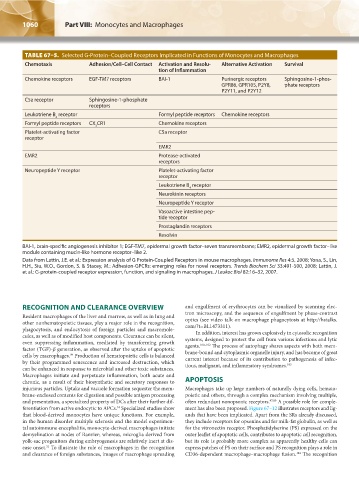
                TABLE 67–5.  Selected G-Protein–Coupled Receptors Implicated in Functions of Monocytes and Macrophages
                Chemotaxis            Adhesion/Cell–Cell Contact  Activation and Resolu-  Alternative Activation  Survival
                                                             tion of Inflammation
                Chemokine receptors   EGF-TM7 receptors      BAI-1                Purinergic receptors   Sphingosine-1-phos-
                                                                                  GPR86, GPR105, P2Y8,   phate receptors
                                                                                  P2Y11, and P2Y12
                C5a receptor          Sphingosine-1-phosphate
                                      receptors
                Leukotriene B  receptor                      Formyl peptide receptors  Chemokine receptors
                           4
                Formyl peptide receptors  CX CR1             Chemokine receptors
                                        3
                Platelet-activating factor                   C5a receptor
                receptor
                                                             EMR2
                EMR2                                         Protease-activated
                                                             receptors
                Neuropeptide Y receptor                      Platelet-activating factor
                                                             receptor
                                                             Leukotriene B  receptor
                                                                       4
                                                             Neurokinin receptors
                                                             Neuropeptide Y receptor
                                                             Vasoactive intestine pep-
                                                             tide receptor
                                                             Prostaglandin receptors
                                                             Resolvin
               BAI-1, brain-specific angiogenesis inhibitor 1; EGF-TM7, epidermal growth factor–seven transmembrane; EMR2, epidermal growth factor–like
               module containing mucin-like hormone receptor–like 2.
               Data from Lattin, J.E. et al.: Expression analysis of G Protein-Coupled Receptors in mouse macrophages. Immunome Res 4:5, 2008; Yona, S., Lin,
               H.H., Siu, W.O., Gordon, S. & Stacey, M.: Adhesion-GPCRs: emerging roles for novel receptors. Trends Biochem Sci 33:491-500, 2008; Lattin, J.
               et al.: G-protein-coupled receptor expression, function, and signaling in macrophages. J Leukoc Biol 82:16–32, 2007.


               RECOGNITION AND CLEARANCE OVERVIEW                     and engulfment of erythrocytes can be visualized by scanning elec-
               Resident macrophages of the liver and marrow, as well as in lung and   tron microscopy, and the sequence of engulfment by phase-contrast
               other nonhematopoietic tissues, play a major role in the recognition,   optics (see video talk on macrophage phagocytosis at http://hstalks.
               phagocytosis, and endocytosis of foreign particles and macromole-  com/?t=BL1473311).
               cules, as well as of modified host components. Clearance can be silent,   In addition, interest has grown explosively in cytosolic recognition
               even suppressing inflammation, mediated by transforming growth   systems, designed to protect the cell from various infectious and lytic
                                                                           100–102
               factor (TGF)-β generation, as observed after the uptake of apoptotic   agents.   The process of autophagy shares aspects with both mem-
               cells by macrophages.  Production of hematopoietic cells is balanced   brane-bound and cytoplasmic organelle injury, and has become of great
                               99
               by their programmed senescence and increased destruction, which   current interest because of its contribution to pathogenesis of infec-
                                                                                                        103
               can be enhanced in response to microbial and other toxic substances.   tious, malignant, and inflammatory syndromes.
               Macrophages initiate and perpetuate inflammation, both acute and
               chronic, as a result of their biosynthetic and secretory responses to   APOPTOSIS
               injurious particles. Uptake and vacuole formation sequester the mem-  Macrophages take up large numbers of naturally dying cells, hemato-
               brane-enclosed contents for digestion and possible antigen processing   poietic and others, through a complex mechanism involving multiple,
               and presentation, a specialized property of DCs after their further dif-  often redundant nonopsonic receptors. 47,99  A possible role for comple-
               ferentiation from active endocytic to APCs.  Specialized studies show   ment has also been proposed. Figure 67–12 illustrates receptors and lig-
                                               33
               that blood-derived monocytes have unique functions. For example,   ands that have been implicated. Apart from the SRs already discussed,
               in the human disorder multiple sclerosis and the model experimen-  they include receptors for opsonins and for milk-fat globulin, as well as
               tal autoimmune encephalitis, monocyte-derived macrophages initiate   for the vitronectin receptor. Phosphatidylserine (PS) expressed on the
               demyelination at nodes of Ranvier; whereas, microglia derived from   outer leaflet of apoptotic cells, contributes to apoptotic cell recognition,
               yolk-sac progenitors during embryogenesis are relatively inert at dis-  but its role is probably more complex as apparently healthy cells can
               ease onset.  To illustrate the role of macrophages in the recognition   express patches of PS on their surface and PS recognition plays a role in
                       31
               and clearance of foreign substances, images of macrophage spreading   CD36-dependent macrophage–macrophage fusion.  The recognition
                                                                                                           104


          Kaushansky_chapter 67_p1043-1074.indd   1060                                                                  9/21/15   10:43 AM

