


Page 1082 - Williams Hematology ( PDFDrive )
P. 1082
1056  Part VIII:  Monocytes and Macrophages  Chapter 67:  Structure, Receptors, and Functions of Monocytes and Macrophages  1057


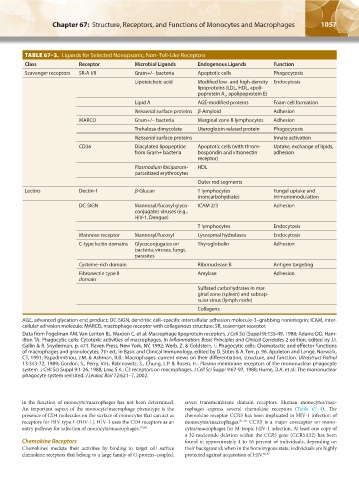
                   TABLE 67–3.  Ligands for Selected Nonopsonic, Non–Toll-Like Receptors
                   Class             Receptor          Microbial Ligands     Endogenous Ligands       Function
                   Scavenger receptors  SR-A I/II      Gram+/– bacteria      Apoptotic cells          Phagocytosis
                                                       Lipoteichoic acid     Modified low- and high-density  Endocytosis
                                                                             lipoproteins (LDL, HDL, apoli-
                                                                             poprotein A , apolipoprotein E)
                                                                                      1
                                                       Lipid A               AGE-modified proteins    Foam cell formation
                                                       Neisserial surface proteins  β-Amyloid         Adhesion
                                     MARCO             Gram+/– bacteria      Marginal zone B lymphocytes  Adhesion
                                                       Trehalose dimycolate  Uteroglobin-related protein  Phagocytosis
                                                       Neisserial surface proteins                    Innate activation
                                     CD36              Diacylated lipopeptide   Apoptotic cells (with throm-  Uptake, exchange of lipids,
                                                       from Gram+ bacteria   bospondin and vitronectin   adhesion
                                                                             receptor)
                                                       Plasmodium falciparum-   HDL
                                                       parasitized erythrocytes
                                                                             Outer rod segments
                   Lectins           Dectin-1          β-Glucan              T lymphocytes            Fungal uptake and
                                                                             (noncarbohydrate)        immunomodulation
                                     DC-SIGN           Mannosyl/fucosyl glyco-  ICAM 2/3              Adhesion
                                                       conjugates viruses (e.g.,
                                                       HIV-1, Dengue)
                                                                             T lymphocytes            Endocytosis
                                     Mannose receptor  Mannosyl/fucosyl      Lysosomal hydrolases     Endocytosis
                                     C-type lectin domains  Glycoconjugates on   Thyroglobulin        Adhesion
                                                       bacteria, viruses, fungi,
                                                       parasites
                                     Cysteine-rich domain                    Ribonuclease B           Antigen targeting
                                     Fibronectin type II                     Amylase                  Adhesion
                                     domain
                                                                             Sulfated carbohydrates in mar-
                                                                             ginal zone (spleen) and subcap-
                                                                             sular sinus (lymph node)
                                                                             Collagens

                  AGE, advanced glycation end product; DC-SIGN, dendritic cell–specific intercellular adhesion molecule-3–grabbing nonintegrin; ICAM, inter-
                  cellular adhesion molecule; MARCO, macrophage receptor with collagenous structure; SR, scavenger receptor.
                  Data from Fogelman AM, Van Lenten BJ, Warden C, et al: Macrophage lipoprotein receptors. J Cell Sci (Suppl 9):135-49, 1988; Adams DO, Ham-
                  ilton TA: Phagocytic cells: Cytotoxic activities of macrophages. In Inflammation: Basic Principles and Clinical Correlates 2 edition, edited by J.I.
                  Gallin & R. Snyderman, p. 471. Raven Press, New York, NY, 1992; Werb, Z. & Goldstein, I.: Phagocytic cells: Chemotactic and effector functions
                  of macrophages and granulocytes, 7th ed., in Basic and Clinical Immunology, edited by D. Stites & A. Terr, p. 96. Appleton and Lange, Norwalk,
                  CT, 1991; Papadimitriou, J.M. & Ashman, R.B.: Macrophages: current views on their differentiation, structure, and function. Ultrastruct Pathol
                  13:343-72, 1989; Gordon, S., Perry, V.H., Rabinowitz, S., Chung, L.P. & Rosen, H.: Plasma membrane receptors of the mononuclear phagocyte
                  system. J Cell Sci Suppl 9:1-26, 1988; Law, S.K.: C3 receptors on macrophages. J Cell Sci Suppl 9:67-97, 1988; Hume, D.A. et al.: The mononuclear
                  phagocyte system revisited. J Leukoc Biol 72:621–7, 2002.


                  in the function of monocyte/macrophages has not been determined.   seven transmembrane domain receptors. Human monocytes/mac-
                  An important aspect of the monocyte/macrophage phenotype is the   rophages express several chemokine receptors (Table 67–4). The
                  presence of CD4 molecules on the surface of monocytes that can act as   chemokine receptor CCR5 has been implicated in HIV-1 infection of
                  receptors for HIV type 1 (HIV-1). HIV-1 uses the CD4 receptors as an   monocytes/macrophages. 81–85  CCR5  is a major coreceptor on mono-
                  entry pathway for infection of monocyte/macrophages. 79,80  cytes/macrophages for M-tropic HIV-1 infection. At least one copy of
                                                                        a 32-nucleotide deletion within the CCR5 gene (CCR5Δ32) has been
                  Chemokine Receptors                                   found in approximately 4 to 16 percent of individuals, depending on
                  Chemokines mediate their activities by binding to target cell surface   their background; when in the homozygous state, individuals are highly
                  chemokine receptors that belong to a large family of G-protein–coupled,    protected against acquisition of HIV. 86,87


          Kaushansky_chapter 67_p1043-1074.indd   1057                                                                  9/21/15   10:43 AM

