


Page 2131 - Williams Hematology ( PDFDrive )
P. 2131
2106           Part XII:  Hemostasis and Thrombosis                                                                                                                                 Chapter 122:  The Vascular Purpuras          2107


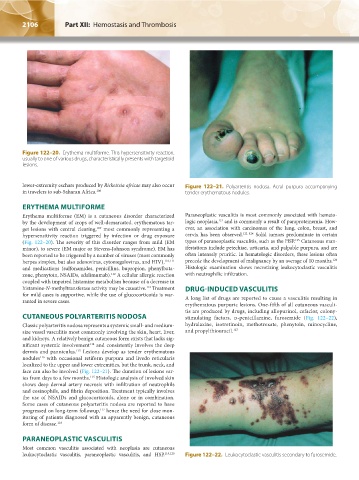
               Figure 122–20.  Erythema multiforme. This hypersensitivity reaction,
               usually to one of various drugs, characteristically presents with targetoid
               lesions.


               lower-extremity eschars produced by Rickettsia africae may also occur   Figure 122–21.  Polyarteritis nodosa. Acral purpura accompanying
               in travelers to sub-Saharan Africa. 108                tender erythematous nodules.

               ERYTHEMA MULTIFORME
               Erythema multiforme (EM) is a cutaneous disorder characterized   Paraneoplastic  vasculitis  is  most  commonly  associated with  hemato-
                                                                                 121
               by the development of crops of well-demarcated, erythematous tar-  logic neoplasia,  and is commonly a result of paraproteinemia. How-
                                        109
               get lesions with central clearing,  most commonly representing a   ever,  an association with carcinomas of  the lung, colon,  breast, and
               hypersensitivity reaction triggered by infection or drug exposure   cervix has been observed. 122–124  Solid tumors predominate in certain
                                                                                                           125
               (Fig. 122–20). The severity of this disorder ranges from mild (EM   types of paraneoplastic vasculitis, such as the HSP.  Cutaneous man-
               minor), to severe (EM major or Stevens-Johnson syndrome). EM has   ifestations include petechiae, urticaria, and palpable purpura, and are
               been reported to be triggered by a number of viruses (most commonly   often intensely pruritic. In hematologic disorders, these lesions often
                                                                                                                       126
               herpes simplex, but also adenovirus, cytomegalovirus, and HIV), 110,111    precede the development of malignancy by an average of 10 months.
               and medications (sulfonamides, penicillins, bupropion, phenylbuta-  Histologic  examination shows necrotizing leukocytoclastic vasculitis
                                             112
               zone, phenytoin, NSAIDs, adalimumab).  A cellular allergic reaction   with neutrophilic infiltration.
               coupled with impaired histamine metabolism because of a decrease in
               histamine-N-methyltransferase activity may be causative.  Treatment   DRUG-INDUCED VASCULITIS
                                                         113
               for mild cases is supportive, while the use of glucocorticoids is war-  A long list of drugs are reported to cause a vasculitis resulting in
               ranted in severe cases.
                                                                      erythematous purpuric lesions. One-fifth of all cutaneous vasculi-
                                                                      tis are produced by drugs, including allopurinol, cefaclor, colony-
               CUTANEOUS POLYARTERITIS NODOSA                         stimulating  factors,  d-penicillamine, furosemide  (Fig. 122–22),
               Classic polyarteritis nodosa represents a systemic small- and medium-  hydralazine, isotretinoin, methotrexate, phenytoin, minocycline,
               size vessel vasculitis most commonly involving the skin, heart, liver,   and propylthiouracil. 127
               and kidneys. A relatively benign cutaneous form exists that lacks sig-
               nificant systemic involvement  and consistently involves the deep
                                      114
               dermis and panniculus.  Lesions develop as tender erythematous
                                 115
               nodules  with occasional retiform purpura and livedo reticularis
                     116
               localized to the upper and lower extremities, but the trunk, neck, and
               face can also be involved (Fig. 122–21). The duration of lesions var-
               ies from days to a few months.  Histologic analysis of involved skin
                                      115
               shows deep dermal artery necrosis with infiltration of neutrophils
               and eosinophils, and fibrin deposition. Treatment typically involves
               the use of NSAIDs and glucocorticoids, alone or in combination.
               Some cases of cutaneous polyarteritis nodosa are reported to have
               progressed on long-term followup,  hence the need for close mon-
                                         117
               itoring of patients diagnosed with an apparently benign, cutaneous
               form of disease. 118
               PARANEOPLASTIC VASCULITIS
               Most common vasculitis associated with neoplasia are cutaneous
               leukocytoclastic vasculitis, paraneoplastic vasculitis, and HSP. 119,120    Figure 122–22.  Leukocytoclastic vasculitis secondary to furosemide.


          Kaushansky_chapter 122_p2097-2112.indd   2106                                                                 9/18/15   10:30 AM

