


Page 2130 - Williams Hematology ( PDFDrive )
P. 2130
2104  Part XII:  Hemostasis and Thrombosis                              Chapter 122:  The Vascular Purpuras          2105


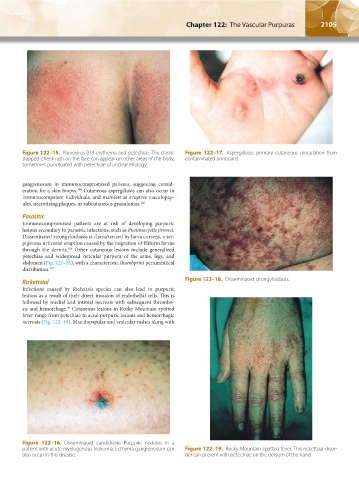
                  Figure 122–15.  Parvovirus B19 erythema and petechiae. The classic   Figure 122–17.  Aspergillosis: primary cutaneous inoculation from
                  slapped-cheek rash on the face can appear on other areas of the body,   contaminated armboard.
                  sometimes punctuated with petechiae of unclear etiology.


                  gangrenosum in immunocompromised patients, suggesting consid-
                  eration for a skin biopsy.  Cutaneous aspergillosis can also occur in
                                    104
                  immunocompetent individuals, and manifest as eruptive maculopap-
                  ules, necrotizing plaques, or subcutaneous granulomas. 105

                  Parasitic
                  Immunocompromised  patients  are  at  risk  of developing  purpuric
                  lesions secondary to parasitic infections, such as Pneumocystis jiroveci.
                  Disseminated strongyloidiasis is characterized by larva currens, a ser-
                  piginous urticarial eruption caused by the migration of filiform larvae
                  through the dermis.  Other cutaneous lesions include generalized
                                 106
                  petechiae and widespread reticular purpura of the arms, legs, and
                  abdomen (Fig. 122–18), with a characteristic thumbprint periumbilical
                  distribution. 107
                                                                        Figure 122–18.  Disseminated strongyloidiasis.
                  Rickettsial
                  Infections caused by  Rickettsia species can also lead to purpuric
                  lesions as a result of their direct invasion of endothelial cells. This is
                  followed by medial and intimal necrosis with subsequent thrombo-
                  sis and hemorrhage.  Cutaneous lesions in Rocky Mountain spotted
                                 86
                  fever range from petechiae to acral purpuric lesions and hemorrhagic
                  necrosis (Fig. 122–19). Maculopapular and vesicular rashes along with


                  Figure 122–16.  Disseminated candidiasis. Purpuric nodules in a
                  patient with acute myelogenous leukemia. Ecthyma gangrenosum can   Figure 122–19.  Rocky Mountain spotted fever. This rickettsial disor-
                  also occur in this disease.                           der can present with petechiae on the dorsum of the hand.


          Kaushansky_chapter 122_p2097-2112.indd   2105                                                                 9/18/15   10:30 AM

