


Page 2128 - Williams Hematology ( PDFDrive )
P. 2128
2102  Part XII:  Hemostasis and Thrombosis                              Chapter 122:  The Vascular Purpuras          2103


                  and bones.  Classically more prominent in middle-aged women, this   HENOCH-SCHÖNLEIN PURPURA
                          70
                  syndrome associates a complex cytokine dysregulation. Other mani-  Henoch-Schönlein purpura (HSP), is a predominantly pediatric vas-
                  festations include respiratory and urinary infections and autoimmune   culitic syndrome characterized by the acute onset of abdominal pain
                  disorders (including rheumatoid arthritis), SLE, inflammatory bowel   and lower-extremity eruption of diffuse urticarial plaques and palpa-
                  disease). Histologic analysis shows a distinct nonvasculitic neutrophilic   ble purpura. It was first described in 1801 by Dr. William Heberden.
                                                                                                                          78
                  infiltrate in the superficial dermis with dermal edema. Systemic glu-  HSP predominantly affects patients 2 to 20 years of age, 90 percent
                  cocorticoid treatment is the standard treatment, while clofazimine,   of patients being younger than 10 years old.  Several environmental
                                                                                                         79
                  dapsone, colchicine, indomethacin, and cyclosporine have also been   triggers precede HSP onset, such as viral (upper respiratory infec-
                  used successfully. 71
                                                                        tions, hepatitis B virus, HCV, parvovirus B19, and HIV) and bacterial
                                                                        (Streptococcus spp., Staphylococcus aureus, and Salmonella spp.) infec-
                  BEHÇET DISEASE                                        tions in children. Adult disease  may  be precipitated  by  medications
                  Besides its classification as a neutrophilic dermatosis, Behçet disease   (nonsteroidal antiinflammatory drugs [NSAIDs], angiotensin-convert-
                  is also an inflammatory disorder that affects multiple organ systems.   ing enzyme inhibitors, and antibiotics), food allergies, vaccinations,
                                                                                    80
                  Clinical features include chronic and relapsing cutaneous manifesta-  and insect bites.  The pathogenesis of HSP leukocytoclastic vasculitis
                  tions, such as palpable purpura, infiltrative erythema, and papulopus-  is complex. It appears to involve IgA  immune complex and comple-
                                                                                                    1
                  tular lesions, as well as oral mucosal and genital ulcers, arthralgias, and   ment deposition on vessel walls. Elevated values of thrombomodulin,
                  gastrointestinal and central nervous system involvement.  Genetic   tissue plasminogen activator, and plasminogen activator inhibitor-1
                                                             72
                  studies show an association between Behçet disease and human leu-  appear to correlate with endothelial injury and fibrinolytic activity in
                  kocyte antigen B51.  Histologic features include leukocytoclastic or   the acute phase of HSP. 81
                                 73
                  lymphocytic vasculitis, hence its previous classification as a vasculitis.   Cutaneous eruptions often begin acutely as urticarial papules and
                  Antitumor necrosis factor-α directed therapies (infliximab, etanercept),   plaques evolving to petechiae, ecchymoses, and palpable and nonpal-
                  interferon-α, immunosuppressive and immunomodulatory agents such   pable purpura over the lower extremities and buttocks (Fig. 122–12).
                  as thalidomide, intravenous immunoglobulin, and even stem cell trans-  Palpable purpura is a universal finding, being present in one series
                                                                                            82
                  plantation are used in Behçet disease. 74,75          in 98.6 percent of patients.  Clinically, lesions may take the form of
                                                                        retiform or patterned purpura, presence of a retiform edge of various
                                                                                                    83
                  SERUM SICKNESS                                        inflammatory lesions, or skin necrosis.  Other common manifestations
                                                                        include localized subcutaneous edema, glomerulonephritis, arthritis,
                  Serum sickness reflects the clinical manifestations of immune complex   and (severe) abdominal pain.
                  formation and deposition. Cutaneous lesions such as urticarial and   In spite of its chronic relapsing pattern, the long-term evolution is
                  morbilliform  eruptions  predominate,  though  palpable  purpura  and   benign in the majority of patients.  The self-limited course of HSP may
                                                                                                 82
                  erythema multiforme can also be encountered. Serum sickness asso-  be contributed by an enhanced apoptosis of immune cells, which dimi-
                  ciated with infection or medical therapy can result in specific charac-  nishes the severity of the acute inflammatory response.  Consequently,
                                                                                                                84
                  teristic lesions. The use of antithymocyte globulin for marrow failure,   treatment is frequently supportive. Immunosuppressive drugs, including
                  for instance, results in 75 percent of patients developing serpiginous   glucocorticoids, are typically reserved for cases with renal involvement.
                                                                                                                          78
                  bands of erythema and purpura on the sides of their hands and feet
                  (Fig. 122–11).  These characteristic lesions consistently appear
                             76
                  1 to 2 days prior to the onset of systemic symptoms of serum sickness,
                  which include fever and malaise. Analysis of biopsies by direct immu-
                  nofluorescence reveals deposition of IgM, IgE, IgA, and C3. This depo-
                  sition appears to activate neutrophils leading to release of lysosomal
                  enzymes and the development of dermal vasculitis. 77


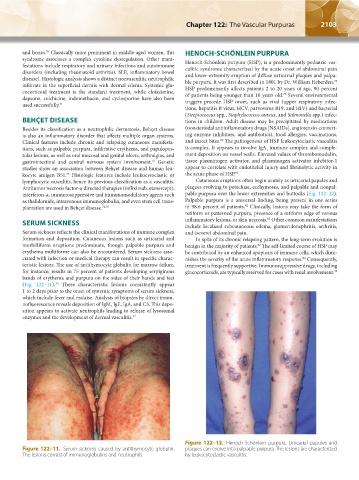
                                                                        Figure 122–12.  Henoch-Schönlein purpura.  Urticarial papules  and
                  Figure 122–11.  Serum sickness caused by antithymocyte globulin.   plaques can evolve into palpable purpura. The lesions are characterized
                  The lesions consist of immunoglobulins and neutrophils.  by leukocytoclastic vasculitis.


          Kaushansky_chapter 122_p2097-2112.indd   2103                                                                 9/18/15   10:30 AM

